wayground logo

Free Printable Worksheets

Font size

S
M
L
XL
Worksheets

Living things and the Environment

Total questions: 25

Worksheet time: 22mins

Name
Class
Date
1.
Put the levels of organization in an ecosystem in order from the largest to the smallest. 
a)
population, organism, community
b)
organism, community, population
c)
community, population, organism
d)
community, organism, population
2.
TRUE or FALSE: A community includes all abiotic and biotic factors.
a)
TRUE
b)
FASLE
3.
Which of the following is the most simple level of ecological organization?
a)
A community
b)
An individual or species
c)
A population
d)
An ecosystem
4.
What level of organization can be seen here?
a)
Species
b)
Population
c)
Community
d)
Ecosystem
5.
TRUE or FALSE: An ecosystem contains only biotic factors.
a)
TRUE
b)
FALSE
6.
What level of organization can be observed in the image?
a)
Species
b)
Population
c)
Community
d)
Ecosystem
7.
The study of organisms and how they interact with one another and their environment is best described as
a)
Biology
b)
Ecology
c)
Zoology
d)
Botany
8.
A collection of organisms that belong to different populations but all live in the same area and interact with one another.
a)
Population
b)
Ecosystem
c)
Community
d)
Ecosphere
9.
Which of the following best describes a community?
a)
sharks, groupers, anemones and shrimp on a coral reef
b)
decorator crabs on the seafloor
c)
loggerhead sea turtles in Atlantic
d)
prairie grassland in Wyoming
10.

The definition of an organism is

a)

something that can grow and reproduce

b)

something that is nonliving

c)

something that provides food, water and shelter

d)

all members of one species in a particular area

11.

An example of an organism is

a)

soil

b)

rainforest

c)

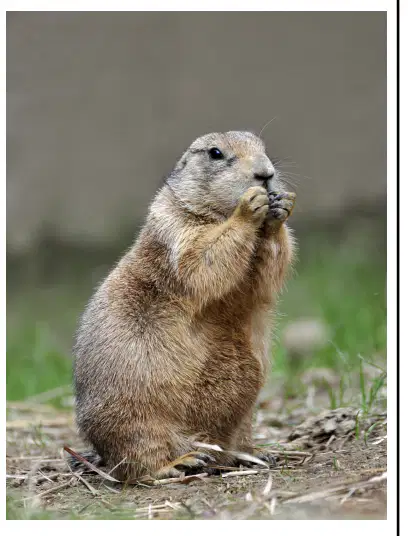
prairie dog

d)

oxygen

12.

An environment that provides the things the organism needs to live is called its

a)

home

b)

niche

c)

community

d)

habitat

13.

Which of these are biotic factors? Select all that are true.

a)

birds

b)

water

c)

worms

d)

mushrooms

14.

Which of the following are abiotic factors? Select all that are true.

a)

bacteria

b)

temperature

c)

sand

d)

oxygen

e)

road

15.

The process where plants make their own food is called

a)

photogenic

b)

spontaneous generation

c)

photosynthesis

d)

sunlight

16.

Fish do not need oxygen

a)

true

b)

false

17.

Which of the following is in order from smallest to biggest?

a)

ecosystem, population, community, organism

b)

organism, population, community, ecosystem

c)

organism, community, population, ecosystem

d)

population, organism, community, ecosystem

18.

What do you call a group of organisms that are physically similar and can mate with each other to produce offspring that can also reproduce?

a)

organisms

b)

community

c)

population

d)

species

19.
true/false: All the populations live in the same sized area
a)
true
b)
false
20.
Which of the following is an example of an organism?
a)
a river
b)
a chair
c)
air
d)
a sunflower
21.
Which of the following is an example of a population?
a)
cats and dogs in your neighborhood
b)
bushes and grass in a park
c)
the rocks in a rock collection
d)
gray wolves in a forest
22.
A prairie dog, a hawk, and a snake are all members of the same ___________
a)
niche
b)
community
c)
species
d)
population
23.
The community of organisms that live in a particular area along with the non-living surroundings as well...
a)
Population
b)
Community
c)
Ecosystem
24.
What is ecology?
a)
The study of living things.
b)
The study of animals and plants.
c)
The study of living and nonliving things.
d)
The study of how organisms interact with their environment.
25.
The smallest unit of ecological organization is a single
a)
population
b)
community
c)
organism
d)
ecosystem