
 Worksheets
Great Depression Test
Total questions: 20
Worksheet time: 10mins
Black Tuesday has been cited many times as the beginning of —
the Dust Bowl.
World War I.
the Great Depression.
the New Deal.
New Deal programs, such as the Works Progress Administration, expanded the role of the federal government by —
employing out-of-work laborers to construct a national highway system without state approval.
acting as an oversight committee that approved and supervised state relief efforts.
becoming directly involved in hiring unemployed individuals and providing relief benefits.
helping states plan and conduct relief efforts based upon large public works projects.
The expansion of the role of the federal government as caretaker of the nation's well-being was a product of the —
Fair Deal.
New Deal.
Gilded Age.
Great Society.
One way in which the Gold Rush in 1849 and the Dust Bowl of the 1930s are similar is that both resulted in —
a war with other countries.
the removal of Native American Indians to reservations.
an increase in westward migration.
the sale of cheap federal land.
The term "Dust Bowl" is most closely associated with which historical circumstance?
An increase in pollution during the 1960s
A major drought that occurred during the 1930s
The migration to the Sun Belt in the 1970s
Logging practices in the Pacific Northwest in the 1950s
Which of the following events happened first?
Publication of The Grapes of Wrath
Passage of New Deal legislation to conserve soil
Development of Dust Bowl conditions
Migration of 300,000 people to California to find work
The main purpose of New Deal measures such as the Securities and Exchange Commission and the Federal Deposit Insurance Corporation was to —
provide immediate employment opportunities.
enable the federal government to take over failing industries.
assure a guaranteed income for American families.
develop rules to limit speculation and safeguard savings.
The Social Security Act of 1935 is considered an important program because it —
extended support to elderly citizens.
established a progressive income tax.
provided employment for those in need of a job.
brought about a quick end to the Great Depression.
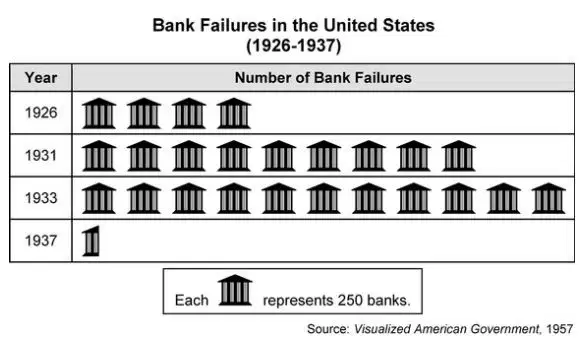
The chart shows bank failures during the 1930s. The major reason for the change in the number of bank failures between the early 1926 and 1937 is that by 1937 —
most Americans had transferred their savings to European banks.
new banking laws had restored public confidence in the nation's banks.
most people were too poor to have any savings.
the government had purchased and was operating the nation's banks.
The Social Security Act (1935) provided—
healthcare for children.
a tax exemption for families.
retirement benefits for seniors.
a stock portfolio.
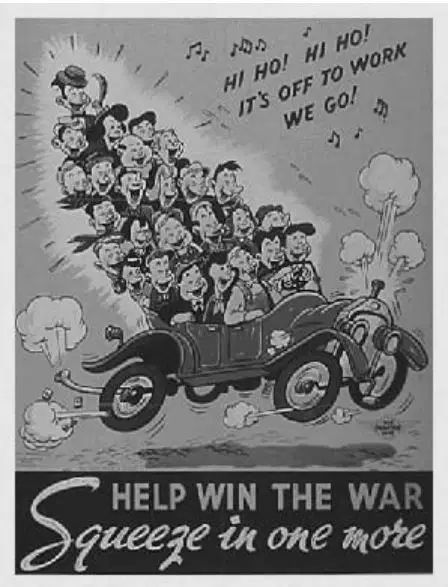
The poster below depicts a civilian activity during World War II. Which feature of life on the home front during World War II is most clearly illustrated by this poster?
Using public transportation
Conserving gasoline supplies
Rationing rubber tires
Sharing car ownership
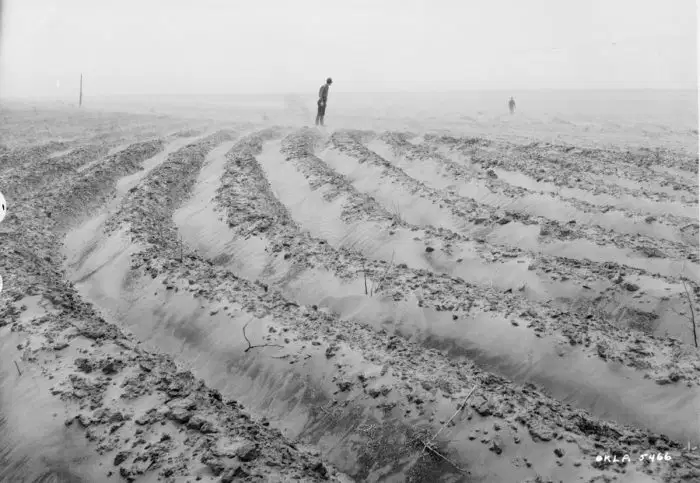
One of the effects of the Dust Bowl of the 1930s was the—
immediate migration of farmers to the American West.
implementation of new farming techniques.
over-cultivation of agricultural land.
start of the Great Depression.
The United States worked its way out of the Great Depression by—
adopting a policy of isolationism at the start of World War II.
importing luxury items from warring nations during World War II.
exporting weapons and raw materials to warring nations during World War II.
reducing its military prior to World War II.
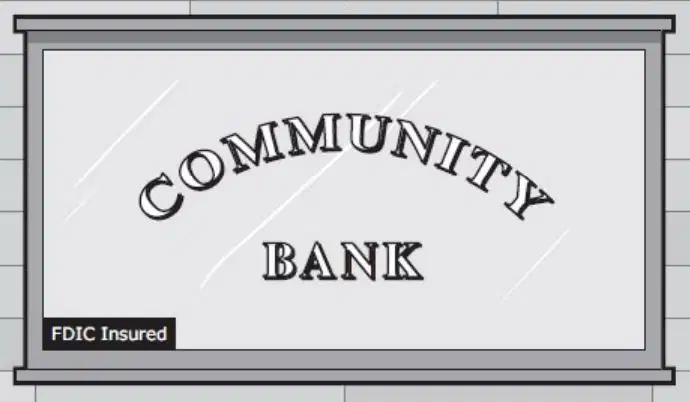
What does the sticker in this illustration represent to patrons of this bank?
Restrictions on the federal government’s ability to set prime interest rates
The power of the federal government to privatize the bank in order to stimulate economic growth
Limitations on the role of the federal government in providing home loans
The federal government’s assurance of protection on individual bank deposits
Which of the following was a significant effect of New Deal legislation?
Income tax rates fell to historic lows.
The federal government took on new roles.
The regulation of intrastate trade was transferred to the states.
States became the sole enforcers of immigration law.
What was one factor that helped turn the Great Plains into the Dust Bowl in the 1930s?
Paying farmers to plant native grasses
Increased demand for tobacco after World War I
Numerous tornadoes occurring in the region
Intense drought in the region
Agencies Created During the New Deal Civilian Conservation Corps Works Progress Administration Farm Credit Administration Home Owners’ Loan Corporation The goals of these New Deal agencies support the conclusion that the New Deal —
gave the federal government a larger role in the day-to-day welfare of its citizens
forced citizens to participate in federal programs
gave preference to state-run agencies over federally run agencies
forced the federal government to adopt isolationist foreign policies
Mussolini is most associated with what?
Syndicalism
Capitalism
Fascism
Communism
The economic turmoil following WW1 and the Great Depression most likely helped which of the following rise to power?
Jurgen Klopp
Adolf Hitler
Ben Chillwell
Winston Churchill
Joseph Jughashvili (Stalin) is most associated with what?
Magocracy
Capitalsim
Fascism
Communism

