
Font size
 Worksheets
The Brain
Total questions: 48
Worksheet time: 55mins
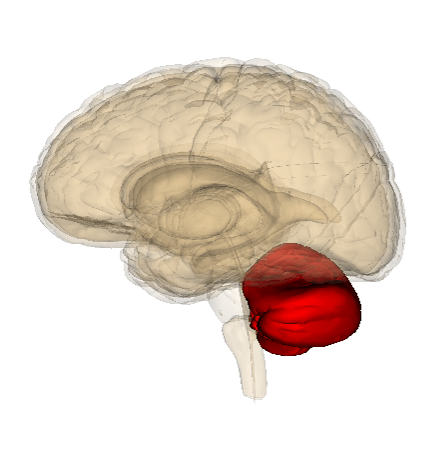
Label each location
Cerebellum
Brain Stem
Diencephelon
Frontal Lobe
Parietal Lobe
Temporal Lobe
Occipital Lobe
Match the location to the name
Spinal Cord
Medulla Oblongata
Pons
Cerebellum
Parietal Lobe
Frontal Lobe
Temporal Lobe
Occipital Lobe
The nerves that connect with the brain are the ________.
frontal nerves
superior nerves
cranial nerves
dorsal nerves
The nerves that connect with the brain are the ________.
frontal nerves
superior nerves
cranial nerves
dorsal nerves
The largest part of the brain is the ________.
cerebrum
cerebellum
pons
midbrain
Which of these is NOT a section of the brain stem?
pons
cerebellum
midbrain
meulla oblongata
The cerebrum and diencephalon are connected with the spinal cord by the __________.
brain stem
cerebellum
diencephalon
cerebrum
Select the 3 main sections of the brain.
Cerebrum
Cerebellum
Brain Stem
Cerebral Cortex
Corpus Callosum
Which hemisphere of the brain would Speech occur?
Left Brain
Right Brain
Both Hemispheres
Which hemisphere of the brain would Creativity occur?
Left Brain
Right Brain
Both Hemispheres

The green line in the picture represents which of the following structures?
Central Sulcus
Lateral Fissure
Longitudinal Fissure
Sylvian Fissure
Which of the following divides the left and right brain hemispheres?
Longitudinal Fissure
Transverse Fissure
Lateral Fissure
Central Sulcus
Which of the following best describes a Gyrus?
A ridge in the cerebrum
A shallow groove in the cerebrum
A deep groove that can separate lobes of the brain
Which of the following best describes a Sulcus?
A ridge in the cerebrum
A shallow groove in the cerebrum
A deep groove that can separate lobes of the brain
Which of the following best describes a Fissure?
A ridge in the cerebrum
A shallow groove in the cerebrum
A deep groove that can separate lobes of the brain

The red line in the picture represents which of the following structures?
Central Sulcus
Lateral Fissure
Longitudinal Fissure
Transverse Fissure

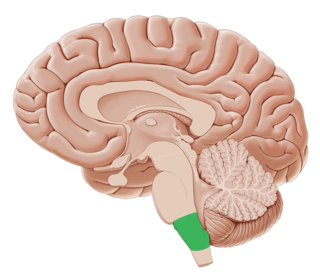
Match the name with the correct label.
Cerebellum
Brain Stem
Temporal Lobe
Amygdala
Frontal lobe
Parietal lobe
Occipital lobe

Which of the following makes up the central nervous system?
Brain only
Spinal cord only
Brain and spinal cord
Brain, spinal cord, and all outside neurons
Label each letter with the correct name.
Diencephalon
Pineal Gland
Amygdala
Spinal Cord
Pons
Cerebellum
Frontal Lobe
Parietal Lobe
Occipital Lobe
Temporal Lobe

Match the letter to the name of the location
Frontal Lobe
A
D
Occipital Lobe
E
F
Temporal Lobe
B

Match the color and structure
Cerebrum
Grey
Cerebellum
Green
Brainstem
Yellow
Dienchephelon
Pink


Which brain part helps regulate body temp., controls water balance, and regulates metabolism?
Cerebellum
Thalamus
Occipital Lobe
Hypothalamus
Which brain function is the pons involved with?
Controlling heart rate
Receiving sensory information
Regulates body temperature
Body movement; alertness
The red line in the picture represents which of the following structures?
Central Sulcus
Lateral Fissure
Longitudinal Fissure
Transverse Fissure

