
 Worksheets
PC U3 L1-L8 Parent Functions and Transformations
Total questions: 99
Worksheet time: 8hrs 49mins
Describe the transformation from the parent absolute value function:
y=∣x∣−5
Shift up 5 units
Shift down 5 units
Shift right 5 units
Shift left 5 units
Describe the transformation from the parent quadratic function:
y=(x−2)2
Shift up 2 units
Shift down 2 units
Shift right 2 units
Shift left 2 units
Describe the transformation from the parent square root function:
y=x+4
Shift up 4 units
Shift down 4 units
Shift right 4 units
Shift left 4 units
Describe the transformation from the parent cubic function:
y=−x3+3
* Select TWO answers *
Shift up 3 units
Shift down 3 units
Reflection over the y-axis
Reflection over the x-axis
Describe the transformation from the parent quadratic function:
y=41x2
Vertical stretch by a factor of ¼
Vertical shrink by a factor of ¼
Describe the transformation from the parent absolute value function:
y=8∣x∣
Vertical stretch by a factor of 8
Vertical shrink by a factor of 8
Describe the transformation from the parent square root function:
y=2 x−5
* Select TWO answers *
Vertical stretch
Vertical shrink
Translation 5 units right
Translation 5 units left
Describe the transformation from the parent absolute value function:
y=−∣x+4∣−3
* Select THREE answers *
Reflection over the x-axis
Translation 4 units left
Translation 4 units up
Translation 3 units left
Translation 3 units down
Describe the transformation from the parent cubic function:
y=(x+6)3−4
* Select TWO answers *
Translation 6 units right
Translation 6 units left
Translation 4 units up
Translation 4 units down

left 2 up 5
right 2 up 5
left 2 down 5
right 2 down 5

Write the equation to match the graph. The parent function is y=|x|
y = Ix + 2I - 1
y = -Ix + 2I - 1
y = -Ix - 2I - 1
y = -Ix + 1I - 2

Describe the transformation from the parent graph
Reflect over x, right 3, down 4
Reflect over y, right 3, down 4
Reflect over x, right 3, up 4
Reflect over y, left 3, down 4

f(x) = 2x
f(x) = x3
f(x) = |x|
f(x) = x

cube root
square root
logarithm
exponential


Range is:
All x values, from left to right.
All y values, from bottom to top.
All x values from bottom to top.
All y values from left to right.


Which graph shows this transformation?


Describe the transformation from the parent cubic function:
y=−x3+3
* Select ALL correct answers *
Shift up 3 units
Shift down 3 units
Reflection over the y-axis
Reflection over the x-axis
Describe the transformation from the parent absolute value function:
y=−∣x+4∣−3
* Select ALL correct answers *
Reflection over the x-axis
Translation 4 units left
Translation 4 units up
Translation 3 units left
Translation 3 units down

What colored graph is the parent function?
Red
Blue
Black
Purple

Match the equation with the graph:
y = (x - 2)2 + 4
y = -(x - 4)2 + 2
y = -(x - 2)2 + 4
y = -(x + 2)2 + 4


On which interval is the graph increasing?
(-5,-3)
(-3,-1)
(1,4)
(5,∞)
On which interval is the graph decreasing?
(-5,-3)
(-3,-1)
(1,4)
(5,∞)
On which interval is the graph constant?
(-5,-3)
(-3,-1)
(1,4)
(-∞,-5)


Where is the function increasing?
(-∞,5)
(-∞,0)
(-∞,2)
(0,2

Describe the function's end behavior.
As x→−∞, y→−∞
As x→∞, y→−∞
As x→−∞, y→−∞
As x→∞, y→∞
As x→−∞, y→∞
As x→∞, y→−∞
As x→−∞, y→∞
As x→∞, y→∞

Identify the intervals where the function is positive and where it is negative.
positive (-1, ∞) and negative (-∞, -1)
positive nowhere and negative (-1, -4)
positive (-∞,-3) and (1,∞) and negative (-3,1)
positive (-∞,∞) and negative (-4,∞)

Identify the function's domain and range.
domain (-∞,∞) and range (-∞,∞)
domain (-∞, ∞) and range (-4,∞)
domain (-∞,∞) and range [-4,∞)
domain [-3, 1] and range [-4,∞)
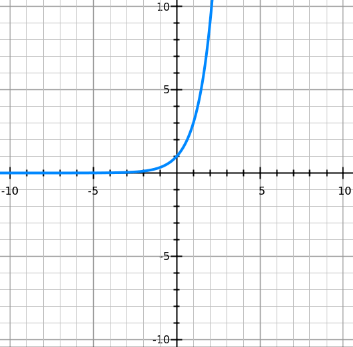

What is the increasing interval for the function below?
(−∞,∞)
(−∞,2)
(−∞,6)
(−6,6)

What is/are the decreasing interval(s) for the function shown?
(2, 4) and (8, ∞)
(−∞, 1) and (8, ∞)
(−∞,1), (−3, 1) and (8, ∞)
(−∞, 1), (2, 4) and (8, ∞)

What is the increasing interval on the function shown?
(−∞, 1)
(−∞, 2)
(2, ∞)
(1, ∞)

What is the increasing interval on the function shown?
(−∞, −3)
(−∞, −4)
(−4, ∞)
(−3, ∞)


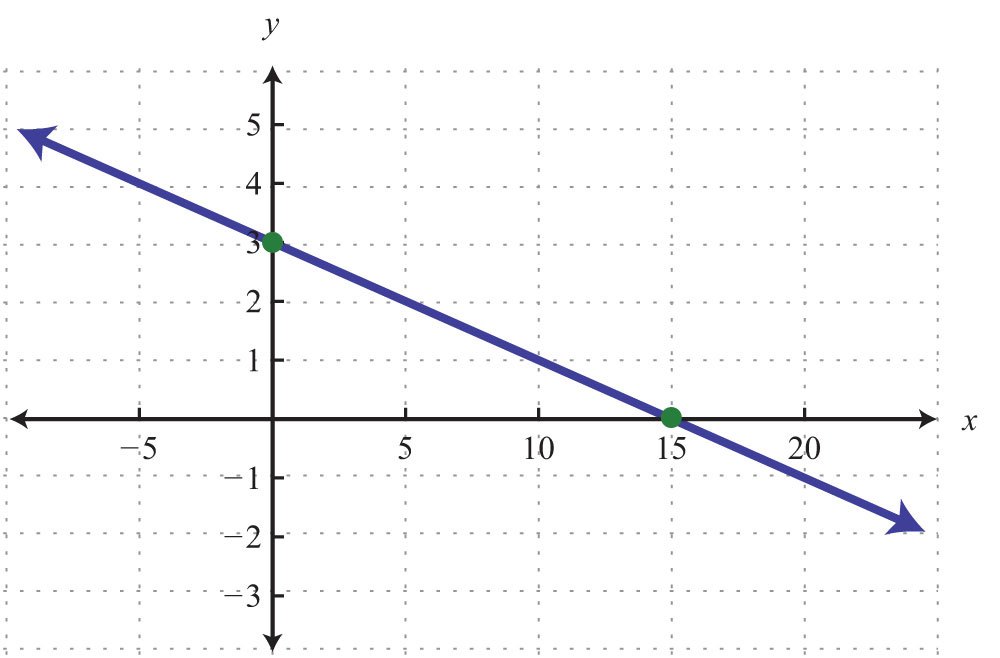


There are no arrows.

Identify where the function is increasing and where it is decreasing.
increasing (-1, ∞) and decreasing (-∞,-1)
increasing (-∞, -1) and decreasing (-1, ∞)
increasing (-∞,∞) and decreasing nowhere
increasing (-1, -4) and decreasing (-3, 1)


How would you describe the behavior of this function on the domain interval −1≤x≤1 ?
increasing
decreasing
constant

Find the function's x- and y-intercepts.
x-int (0,-3) and (0,1)
y-int (-4,0)
x-int (-3,0) and (1,0)
y-int (0,-4)
x-int (-4, 1)
y-int (-4, ∞)
x-int (-3,0) and (1,0)
y-int (0,-3)

Find the function's maximum and minimum points
no maximum
minimum (-4,-1)
no minimum
maximum (-3, 1)
no maximum
minimum (-1,-4)
maximum (-3,1)
minimum (0,-3)
Identify where the function is increasing and where it is decreasing.
increasing x > -1 and decreasing x<-1
increasing x < -1 and decreasing x > -1
increasing ꓣ and decreasing nowhere
increasing -1 < x < 4 and decreasing -3 < x < 1
Identify the intervals where the function is positive and where it is negative.
positive x > -1 and negative x < -1
positive nowhere and negative -4 < x < -1
positive x < -3 and x > 1 and negative -3 < x < 1
positive R and negative x < -4

What was the initial height of the projectile?
50
0
200
6.75

What is the maximum height?
200
50
3
0
Which coordinate is a relative maximum for the graph?
None
(0,4)
(3,1)
(1, -1)
Which coordinate is a relative minimum of the graph?
None
(0,4)
(3,1)
(1, -1)
What is the domain of the function?
x≤5
x<5
x≤2
x<2
What is the range of the function?
y≤5
y < 5
y≤2
y < 2
y-intercept on a graph?


On what interval is the graph decreasing?
y>3
y<3
y≥3
y≤3
On which interval is the graph increasing?
−5≤x≤−3
−3≤x≤−1
1≤x≤4
x≥5

What is the RANGE?
−3<y≤3
All Real Numbers
−4≤y≤5
y≤−4

What is the DOMAIN?
x≥0
x<0
All Real Numbers
{0, 1, 2, 3, 4,...}

Describe the function between x=−2 and x=2 .
Increasing
Decreasing
Constant

Identify the domain of the function.
−4≤x≤4
R
x≥4
x≤4
Identify the range of the function.
−4.5≤y≤2
R
y≥−4.5
y≤2
Describe the transformation that occurred.
g(x) = f(x - 7)
Down 7
up 7
right 7
vertical compression
Describe the transformation of the equation below from the absolute value parent function. SELECT ALL THAT APPLY g(x)=21f(x+3)−2
right 3
left 3
Down 2
Shrink by 1/2
stretch by 2
Describe the transformations that maps f(x) to g(x) = - f(x + 6) - 10
Shifted down 10 units
Shifted left 6 units
Shifted up 10 units
Shifted left 6 units
Shifted up 10 units
Shifted right 6 units
Shifted down 10 units
Shifted left 6 units

If the blue is f(x), then the red must be
g(x)=f(x)-5
g(x)=f(x)+5
g(x)=f(x-5)
g(x)=f(x+5)

g(x) = f(x + 4)
g(x) = f(x - 4)
g(x) = f(x) + 4
g(x) = f(x) - 4
Match the following
f(x+6)
The line shifted 6 units to the left.
f(x-6)
The line shifted 6 units to the right.
f(x)-6
The line shifted 6 units down.
f(x+3)
The line shifted 3 units to the left.
f(x)+3
The line shifted 3 units up.
What is the effect on the graph of the linear parent function, f(x) = x, when f(x) is replaced by f(x- 7)?
Complete the sentence by selecting the correct answers from the drop-down menus.
The graph of the line (a) (b) 7 units.
Create a function given the following transformations for f(x)=2x :
Shift left 1
Shift down 2
Reflect over the x-axis
Vertical stretch by 3
g(x)= ____
Don't include g(x) in answer
The parent function of a square root is represent by f(x)=x
For each function, determine how the parent function was transformed.
f(x)=−x−2 (a)
f(x)=x+1 (b)
f(x)=x+3−7 (c)
f(x)=−x (d)
The function f(x)=x3 was (a) by a factor of 1/3, shifted (b) 2 units, and shifted (c) 4 units to create the function g(x) = 31f(x−2)+4 .
x3 + 2
Vertical translation 2 up
(x-2)3
Horizontal translation 2 right
2x3
Vertical stretch
(x+2)3
Horizontal translation 2 left
0.2x3
Vertical compress
Write the equation for a cubic function that has been vertically compressed by a factor of 3, vertically shifted 5 units down, and horizontally shifted 7 units left.
Describe the transformations of the cubic parent function, f(x)=x3 , that will result in the graph of the function f(x)=−1.5(3x−5)3+2
Choose one of each.
Vertical Stretch or compress: (a)
Horizontal stretch or compress: (b)
Reflection over x-axis or y-axis: (c)
Translation left or right: (d)
Translation up or down: (e)

