
 Worksheets
Electrical Theory Review
Total questions: 20
Worksheet time: 10mins
If the current in the circuit is decreased, the voltage drop across each component will ____.
decrease
become erratic
increase
remain the same
A coulomb of electrons moving past a point in one second is equal to _____.
1 A of current flow
1 Ω of resistance
1 V of electrical potential
1 W of power consumed
What is the applied voltage of the circuit if the resistance is 32 Ω and the current is 2 amperes?
64 V
96 V
16 V
32 V
If a circuit has a current flow of 1.2 amperes and an applied voltage of 120 volts, what is the resistance of the circuit?
100 Ω
120 Ω
144 Ω
1.2 Ω
If a circuit has an applied voltage of 480 volts and a power consumption of 640 watts, what is the resistance of the circuit?
360 Ω
1.155 Ω
1.333 Ω
853.333 Ω
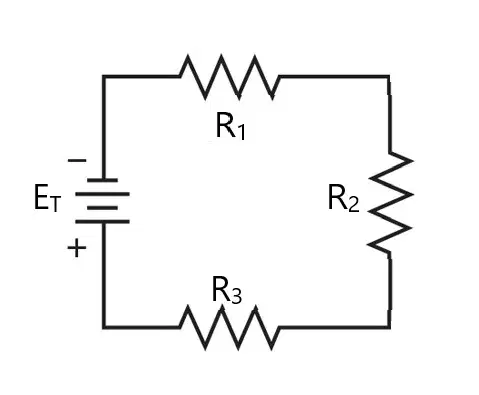
This drawing is an example of a(n) _____ drawing.
schematic
architectural
photographic
pictorial
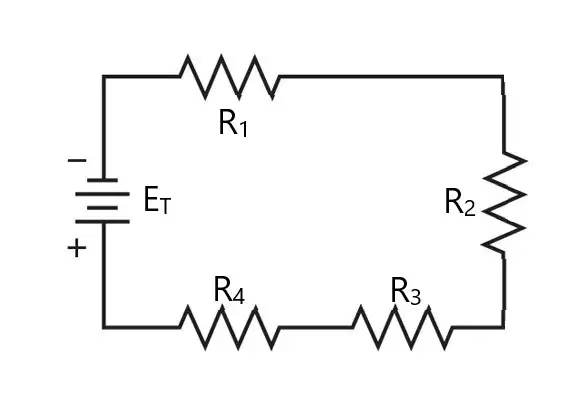
Determine the total current, IT, for the circuit.
Given: ET = 24 V, E1 = 8 V, E3 = 4 V, E4 = 3 V, R2 = 120 Ω.
75 mA
13.3 mA
25 mA
200 mA
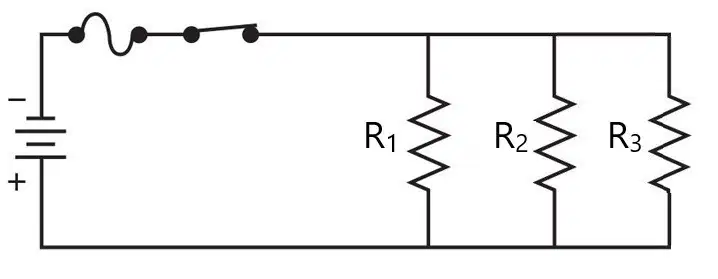
Determine the total resistance in the circuit, given: R1 = 50 Ω, R2 = 75 Ω, and R3 = 150 Ω.
25 Ω
14.29 Ω
50 Ω
275 Ω
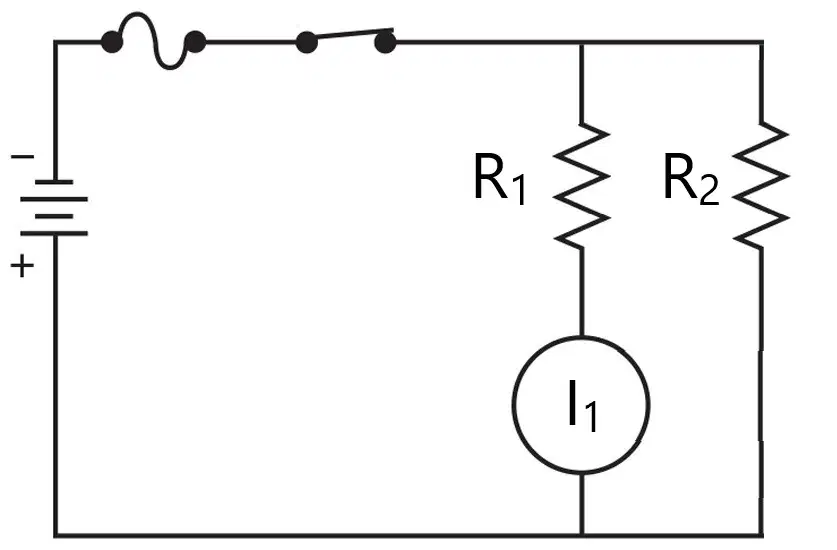
Determine the voltage across resistor R2, given: R1 = 50 Ω, R2 = 75 Ω, I1 = 2.4 A.
120 V
72 V
180 V
300 V
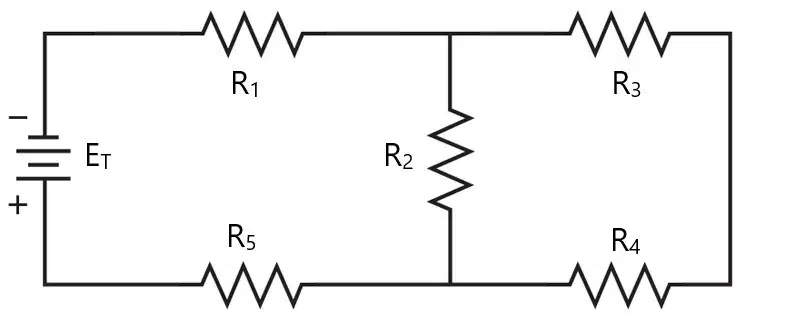
Determine the total resistance of the circuit, given: R1 = 1.6 kΩ, R2 = 2.2 kΩ, R3 = 1.5 kΩ, R4 = 3.3 kΩ, R5 = 960 Ω.
4.07 kΩ
4.3 kΩ
506 Ω
3.74 kΩ
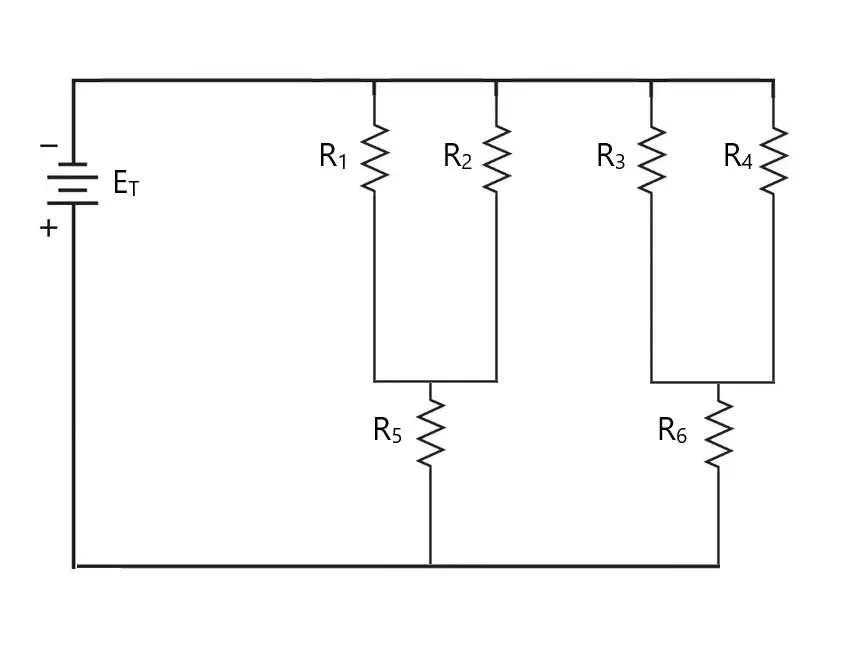
Determine the total resistance of the circuit, given: R1 = 20 Ω, R2 = 30 Ω, R3 = 6 Ω, R4 = 12 Ω, R5 = 36 Ω, R6 = 32 Ω.
20.6 Ω
19.99 Ω
12.56 Ω
32.45 Ω
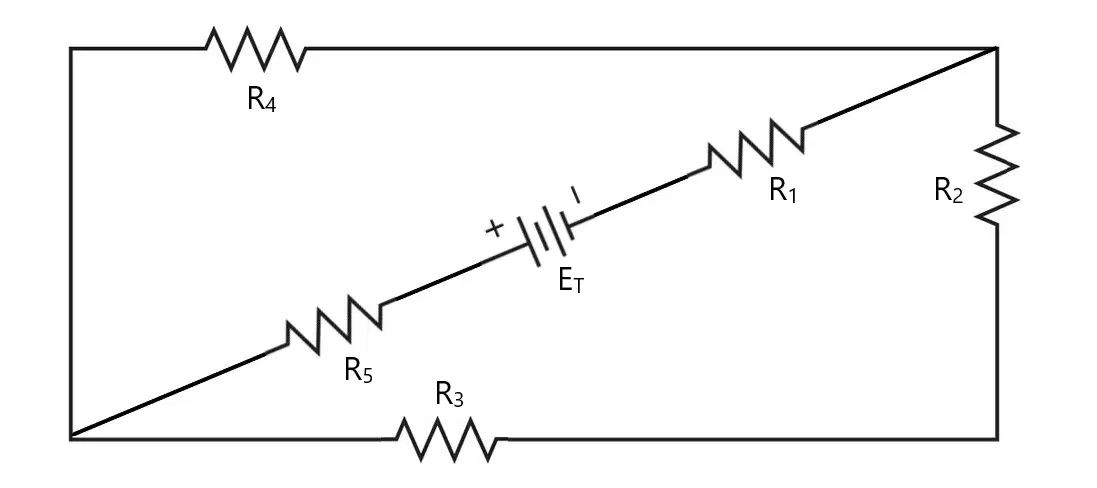
Determine the current through R5, given: R1 = 4 Ω, R2 = 8 Ω, R3 = 14 Ω, R4 = 12 Ω, R5 = 6 Ω, ET = 240 V.
13.5 A
5.5 A
10.2 A
10.6 A
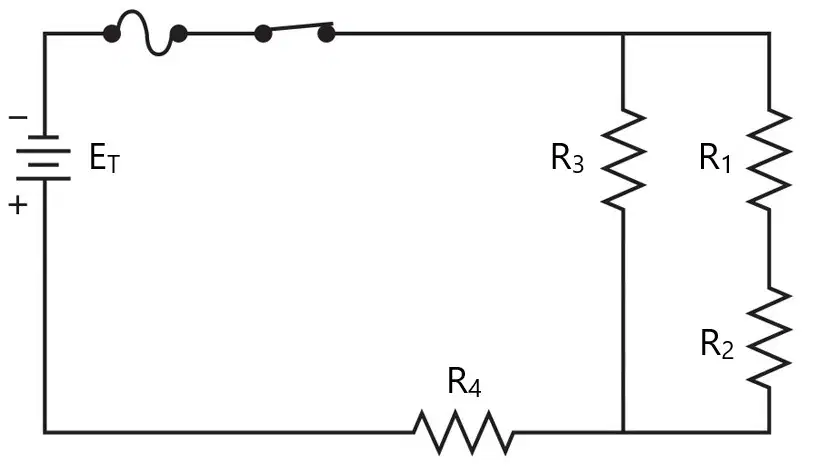
Determine the voltage dropped across R1, given: R1 = 31 Ω, R2 = 64 Ω, R3 = 76 Ω, R4 = 56 Ω, ET = 240 V.
33.7 V
62.3 V
69.5 V
21.3 V
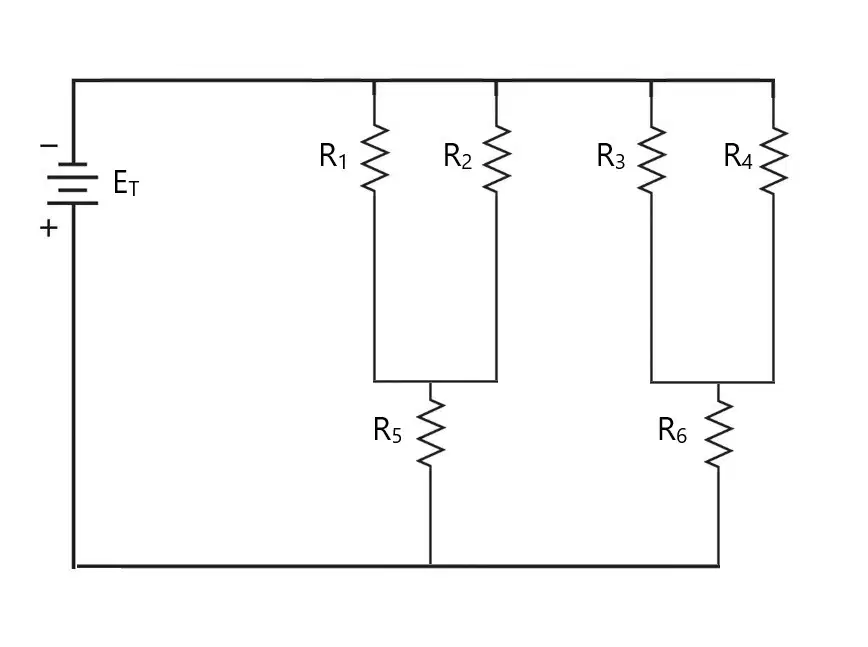
Determine the voltage dropped across R5, given : R1 = 55 Ω, R2 = 62 Ω, R3 = 62 Ω, R4 = 55 Ω, R5 = 27.5 Ω, R6 = 31 Ω, I6 = 2.4 A.
70.1 V
74.3 V
66 V
144.4 V
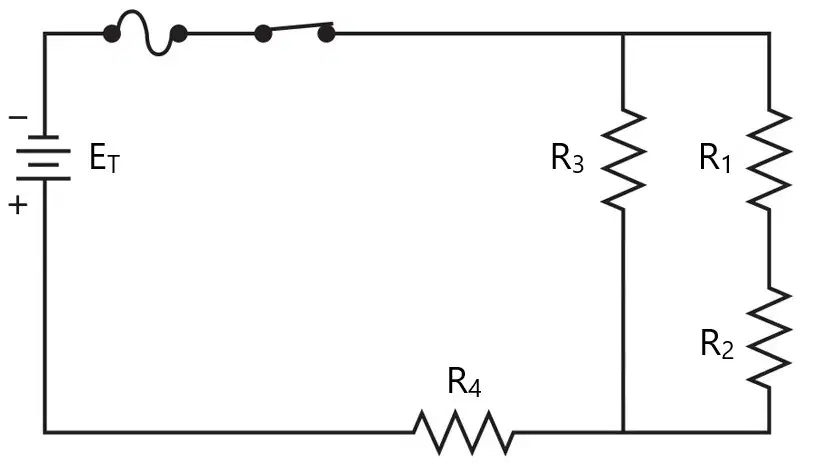
Determine the current through R2, given: R1 = 250 Ω, R2 = 250 Ω, R3 = 1,000 Ω, R4 = 125 Ω, I4 = 54 mA.
36 mA
18 mA
54 mA
72 mA
The unit of measurement for specific _____ is Ω/mil-foot.
resistance
voltage
current
power loss
A _____ switch has two circuits that it makes and breaks and two "ON", or closed, positions.
DPDT
DPST
SPDT
SPST
The number of "ON" positions a switch is able to produce refers to the number of ____ of the switch.
throws
poles
switches
terminals
The three basic items needed to create a voltage are ____.
I. A conductor
II. A magnetic field
III. A voltmeter
IV. Relative motion
I., II., and III.
I., II., and IV.
I., III., and IV.
II., III., and IV.
The armature in a generator is/are the _____.
conductor that is having a voltage induced in it
brushes that ride on the commutator or slip ring
magnetic flux field
slip rings or commutator of the generator

