
 Worksheets
Final Exam
Total questions: 87
Worksheet time: 1hrs 17mins
What is verbal irony?
A type of irony that involves the use of sarcasm.
A form of irony that is expressed through body language.
A figure of speech in which the intended meaning of a statement is different from the literal or usual meaning.
A literary technique that involves the repetition of words or phrases.
What is dramatic irony?
A literary device where the audience knows something that the characters do not
A type of comedy where the plot is predictable
A literary device where the characters know something that the audience does not
A technique used in visual arts to create suspense
What is a metaphor?
A type of literary device that uses exaggerated or over-the-top language.
A type of poem that has a specific rhyme scheme and meter.
A type of punctuation mark used to indicate a pause or break in a sentence.
A figure of speech that compares two different things without using 'like' or 'as'.
What is a simile?
A figure of speech that compares two things using the words 'like' or 'as'.
A type of bird
A figure of speech that compares two things without using like or as
A type of fruit
Which type of irony involves a contrast between what is said and what is meant?
Verbal irony
Literal irony
Situational irony
Dramatic irony
Which type of irony involves a contrast between what the audience knows and what the characters know?
Situational irony
Verbal irony
Satirical irony
Dramatic irony
Which type of irony involves a contrast between what is expected to happen and what actually happens?
Situational irony
Dramatic irony
Verbal irony
Coincidental irony
Which literary device is used in the sentence 'Her smile is a ray of sunshine'?
Simile
Onomatopoeia
Hyperbole
Metaphor
Which literary device is used in the sentence 'He runs like a cheetah'?
Alliteration
Simile
Hyperbole
Metaphor
What is the term for a figure of speech that uses exaggeration for emphasis or dramatic effect?
Hyperbole
Simile
Metaphor
Irony
Which type of irony involves a contrast between what is expected based on a situation's setup and what actually happens?
Verbal irony
Dramatic irony
Situational irony
Literal irony
Which literary device is used in the sentence 'She is drowning in a sea of grief'?
Simile
Metaphor
Hyperbole
Onomatopoeia
What is the definition of protagonist?
The antagonist or villain in a story, play, or movie.
The main character or leading figure in a story, play, or movie.
A minor character in a story, play, or movie.
The narrator or storyteller in a story, play, or movie.
What is the definition of climax?
The resolution of a story
The point of highest tension or drama in a narrative work.
A type of musical instrument
The beginning of a story
What is the definition of dialogue?
A conversation or discussion between two or more people.
A monologue or speech by one person.
A physical fight or altercation between two or more people.
A written exchange of letters or emails.
Which type of irony is used when a fire station burns down?
situational irony
cosmic irony
dramatic irony
verbal irony
Which type of irony is used when a character says, 'What a beautiful day!' during a thunderstorm?
dramatic irony
cosmic irony
situational irony
verbal irony
Which type of irony is used when the audience knows that the main character's best friend is planning a surprise party for them?
verbal irony
situational irony
satirical irony
dramatic irony
Which type of irony is used when a police officer gets arrested for stealing?
cosmic irony
verbal irony
situational irony
dramatic irony
Which type of irony is used when a character says, 'I just love standing in long lines' while waiting impatiently?
dramatic irony
verbal irony
irony of fate
situational irony
Which type of irony is used when the audience knows that the main character's love interest is planning to break up with them?
satirical irony
situational irony
verbal irony
dramatic irony
Which type of irony is used when a weather forecaster gets caught in a rainstorm without an umbrella?
Verbal irony
Situational irony
Dramatic irony
Cosmic irony
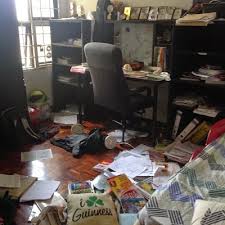
Looking at her son's messy room, Mom says, "Wow, you could win an award for cleanliness!"
verbal
situational
dramatic
not ironic

In Toy Story, human characters are not aware that the toys speak and move, but the audience is aware
verbal irony
dramatic irony
situational irony
not ironic
Match the following pictures to the type of Irony they best represent

Situational Irony

Dramatic Irony

Verbal Irony
Match the following pictures to the type of Irony they best represent

Situational Irony

Dramatic Irony

Verbal Irony
Match the following pictures to the type of Irony they best represent

Situational Irony

Dramatic Irony

Verbal Irony
Match the following pictures to the type of Irony they best represent

Situational Irony

Dramatic Irony

Verbal Irony
The conflict is:
The main part of the story
The problem in the story
The most exciting part of the story
The time and place of the story
The setting includes:
time and characters
place and background
background and characters
time and place
Rising action is:
the most exciting part of the story; turning point
the ending of the story
the action leading to the climax of the story
the conflict in the story
The climax of the story is:
the most exciting part of the story that is resolved
the most exciting part of the story; the turning point
the most exciting part of the story that solves the conflict
the most exciting part of the story in your opinion
The falling action is:
the time and place of the story
the problem in the story
the resolution of the story
the events leading to the resolution of the story
The resolution of the story is:
the ending of the story
the most exciting part of the story; the turning point
the ending of the story and the conflict resolution
the events leading to the conflict resolution
A dynamic character:
does not change throughout the story
is well-rounded; changes throughout the story
is the most annoying character
is not well-rounded, but could change throughout the story

Repeated use of sounds, words, or ideas for effect and emphasis (ex: nevermore)
Repetition
Alliteration
Onomatopoeia

Repetition of the same sound at the beginning of words that are close together (ex: while I nodded, nearly napping)
Repetition
Alliteration
Onomatopoeia

A word that sounds like what it means (ex: boom)
Onomatopoeia
Rhyme
Alliteration

When the test began, the guys grimaced and groaned.
Rhyme
Alliteration
Onomatopoeia

The steaks sizzled on the grill.
Onomatopoeia
Repetition
Rhyme

The apartment was on the top floor—a small living-room, a small dining-room, a small bedroom, and a bath.
Repetition
Alliteration
Onomatopoeia

Using expressions with a different meaning than the literal interpretation
Figurative language
Sound devices

Giving human characteristics to nonliving things
Simile
Metaphor
Personification
In the second paragraph of the story, the children are gathering stones for what seems to be a game. At the end of the story, we learn WHY they were gathering stones. What literary device does this this exemplify?
Foreshadowing
Flashback
Personification
Diction
The lottery is put in the same category as "the square dance, the teenage club, the Halloween program" and other "civic activities." Based on this, how should the winner of the lottery feel?
Fearful, Angry
Bored, Lonely
Excited, Happy
Curious
The climax of the story is when it is revealed that ___________ has the slip with the black dot.
Bill
Tessie
Summers
Mark
Themes of the story include all of the following EXCEPT:
Normalcy of Evil
Tradition & Ritual
Conformity
Follow the rules or else bad things will happen.
What is symbolized by the black dot?
Tradition
Faith
Death
Community
How does the detail "and someone gave little Davey Hutchinson a few pebbles" contribute to the text?
It shows that Davey is pure evil.
it shows that everyone participates in the lottery, even children.
It shows that he loves his mother.
It shows that he wants to help his mother.
Which human trait does Shirley Jackson seem to criticize in "The Lottery"?
Arrogance
Innocence
Conformity
Greed
When is the lottery conducted?
Every 2 weeks
Every year
Any given Sunday
When there is a full moon

In the movie "Snow White," the witch tries to sell Snow White an apple and says, "One bite and all your dreams will come true." In this story, the apple most likely symbolizes...
Love
War
Temptation
Peace
The protagonist of a story is bored at school. She looks out the window and longingly watches a bird fly through the sky. What does the bird most likely symbolize?
freedom
knowledge
danger
re-birth
After struggling through a hard life, in the last chapter of a story the protagonist is twirling around on a spring day surrounded by newly budding trees and blooming flowers. This description of the setting most likely symbolizes...
sadness
royalty
a new beginning
a wealthy future
Ana spent an unhappy night tossing and turning on her bed. The day before, a misstep had caused her to lose the volleyball match. As she sat up in bed the next morning, she could see the sun just peeking over the bushes in her back yard. As the sun rose higher and shined more brightly, Ana felt her spirits lifting. Feeling her confidence return, Ana thought to herself, I know I can work harder, and I'll make the team forget yesterday ever happened.
In this passage, the rising sun symbolizes..
it's morning
volleyball
a second chance
a sleepless night
After a big fight with her parents, Mirah decided to run away from home. She put some essentials in her backpack and then ran and ran, until she was so far from town that she found herself in the desert. As she stopped to rest and sip from her water bottle, Mirah realized she had forgotten to say goodbye to her two best friends and her pet puppy. All the way out here, she wouldn't be able to rant to anyone about her annoying family. Mirah sat down and noticed the sand dunes extending far into the horizon in every direction. She sighed, curled up into a ball, and cried.
What does the desert symbolize in this story?
courage and strength
isolation and loneliness
adventure
sadness


argument
a statement of the author’s point-of-view .
how the author feels about the situation or topic.
an attempt to persuade someone on a topic open to debate.
the explanations of why the author feels the way he or she does .

transitions
when there’s enough support to make the argument convincing
a way to describe an argument when it’s based on logic/common sense
words, phrases, or clauses that help the reader see how your ideas fit together to support your topic
facts, details, examples, etc. that support the writer’s reasoning

author’s point-of-view
a statement of the author’s point-of-view .
how the author feels about the situation or topic.
an attempt to persuade someone on a topic open to debate.
the explanations of why the author feels the way he or she does .

credible source
an opposing claim that disagrees with the thesis
a reliable resource the writer can use to cite information
using a professional choice of words and tone/attitude
to disprove a statement or theory

sufficient evidence
when there’s enough support to make the argument convincing
a way to describe an argument when it’s based on logic/common sense
words, phrases, or clauses that help the reader see how your ideas fit together to support your topic
facts, details, examples, etc. that support the writer’s reasoning

formal style
an opposing claim that disagrees with the thesis
a reliable resource the writer can use to cite information
using a professional choice of words and tone/attitude
to disprove a statement or theory


_____ ruled peoples lives
Fate
Fear
Death
Money
What is a theme, or lesson, of the story "The Monkey's Paw"?
Never make a wish using a monkeys paw.
Mothers always protecting their children.
Hard work pays off.
Be careful what you wish for.

