
Font size
 Worksheets
mrs.warren test tmrw pls study or dead 💀
Total questions: 24
Worksheet time: 15mins
How do you switch between magnifications on the microscope
Turning the eyepiece
Turning the nosepiece
Turning the coarse focus
Turning the fine focus knob
what is simple diffusion and what type of transportation is it?
Diffusion of particles through a transport protein in
the cell membrane
active
passive
Process by which molecules move from an area
of higher concentration to lower concentration
the cell membrane takes in particles into the cell
by changing shape and engulfing the particles
What is the function of all cells
get rid of waste
obtain energy
bring in nutrients and water
having a nucleus
What are the small structures in the cell? (nucleus, mitochondria, etc)
organelles
body parts
chloroplast
none of them
What does the ER (Endoplasmic Reticulum) do?
Convert the energy in food into energy that the cell can use
Surrounds the cell and controls which substances move into and
out of the cell
Processes many substances, including proteins and lipids
Breaks down large food particles and worn out cell parts
What does the lysosome do?
Breaks down large food particles and worn out cell parts
Uses sunlight energy to make food for the plant
Supportive layer that wraps around protects the cell
Gel-like fluid circulates nutrients, proteins and organelles within
the cell
What does the golgi apparatus do?
Gel-like fluid circulates nutrients, proteins and organelles within
the cell
Receives proteins and other materials from ER, packages and
distributes them
Uses sunlight energy to make food for the plant
Gel-like fluid circulates nutrients, proteins and organelles within
the cell
What does the mitochondrion do?
Breaks down large food particles and worn out cell parts
Stores food, water and waste
Convert the energy in food into energy that the cell can use
Supportive layer that wraps around protects the cell
What is the cytoplasm's function?
Convert energy stored in food to energy the cell can use to live and function.
Uses sunlight energy to make food for the plant
Supporting layer that surrounds the cells of plants and some other organisms.
Gel-like fluid circulates nutrients, proteins and organelles within the cell
What color is the chloroplast and what does it do?
green
Receives proteins, packages them, and distributes them to the other parts of the cell.
Uses sunlight energy to make food for the plant
red

What would happen without these missing organelles?
ER and ribosomes
It will not be able to make proteins
No organelles can be directed and it will not be able to function properly.
Golgi apparatus and nucleus
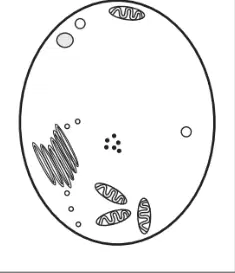
What organelle is missing and what effect will it have by not being there?
Nucleus and ER
nothing
This cell has all its parts and will function normally.
No organelles can be directed and it will not be able to function properly.
what is active transport and what kind of transport is it
The process of moving molecules across the
cell membrane using cellular energy
passive
active
Process by which molecules move from an area
of higher concentration to lower concentration
What is exocytosis and what type of transport?
Diffusion of particles through a transport protein in
the cell membrane
(Passsive)
the cell membrane takes in particles into the cell
by changing shape and engulfing the particles
(Active)
Process by which cells remove large particles
(Active)
The process of moving molecules across the
cell membrane using cellular energy
(Active)
what is endocytosis and what type of transport is it?
the cell membrane takes in particles into the cell
by changing shape and engulfing the particles
Process by which cells remove large particles
active
passive
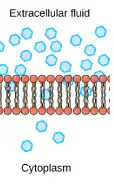
which way will the water go?
into the cytoplasm
down
outside the cytoplasm
to the right

What will happen to the size?
none of the above
it will grow smaller
it won't grow
it will grow bigger because of the water going inside the cell
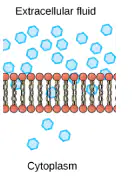
The size of the vacuole will grow...
(a)
The amount of cytoplasm will decrease when water enters the cell
True
False
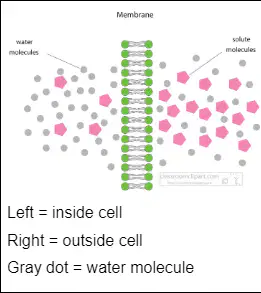
What direction will the water move
It will go outside
it will go inside
it will not move
all of the above

the size of the cell will become...
(a)

the size of the vacuole will become bigger
true
false

What will happen to the amount of cytoplasm?
it won't change
it will gain cytoplasm
It will lose cytoplasm
what is facilitated diffusion and what type of transportation is it?
passive
The process of moving molecules across the
cell membrane using cellular energy
active
Diffusion of particles through a transport protein in
the cell membrane
the cell membrane takes in particles into the cell
by changing shape and engulfing the particles

