
 Worksheets
FINAL-PRACTICE QUIZ
Total questions: 21
Worksheet time: 11mins
The ________ nervous system is composed of the brain and spinal cord.
efferent
afferent
peripheral
autonomic
central
The basic functional unit of the nervous system is the
brain
neuron
glial cell
spinal cord
nerve
The plasma membrane of an axon is called the
axoplasm
axokaryon
axon terminal
axolemma
axon hillock
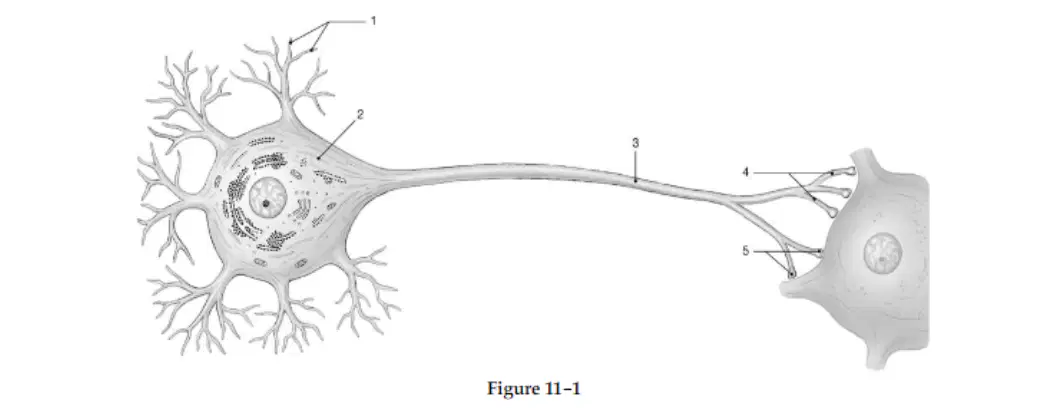
Identify the structures labeled '5.'
synaptic terminals
axons
axosomata
telodendria
dendritic spines
The myelin sheath that covers many CNS axons is formed by
satellite cells
microglia
astrocytes
ependymal cells
oligodendrocytes
The tiny gaps between adjacent Schwann cells are called
gap junctions
internodes
myelinated
nodes
synapses
The separation of plus and negative charges across the membrane creates a ________ difference, or voltage.
potential
concentration
gradient
kinetic
graded
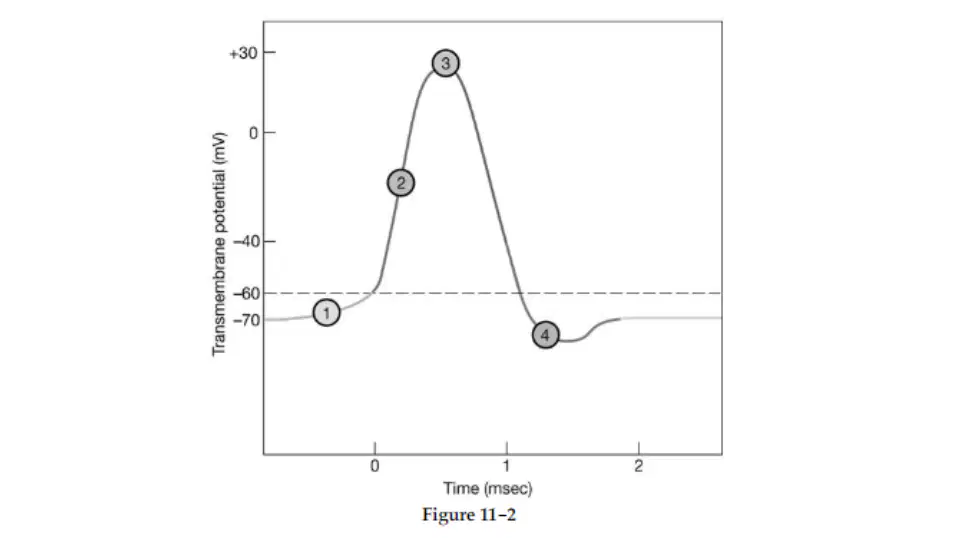
Which point of the graph shows when potassium ion outflow exceeds sodium ion inflow?
1
2
3
4
Define resting membrane potential. (Module 11.7A)
Resting membrane potential is the resting speed a cell can propagate electrical impulses.
Resting membrane potential is a temporary, localized change in the potential of a cell.
Resting membrane potential is the membrane potential of an unstimulated cell.
Resting membrane potential is the minimum ability of a cell to generate electrical
impulses
Resting membrane potential is the change in charge across the inner and outer membrane
of a cell
Which of the following lies between the cerebrum and the brainstem?
pons
medulla oblongata
midbrain
cerebellum
diencephalon
The tracts that connect the cerebellum to the brainstem are located in the
midbrain
thalamus
pons
medulla oblongata
diencephalon
The neural tissue is isolated from the general circulation by the
meninges
blood-brain barrier
dura mater
arachnoid granulations
choroid plexuses
The white matter of the cerebellum forms a branching array called the
fourth ventricle
vermis
arbor vitae
medulla
cortex
The lymphocytes are most important in
helping maintain normal blood volume
fighting infection
transporting lipids from the digestive tract
transporting gases to and away from lymph nodes
eliminating variations in the composition of interstitial fluid
Lymph draining from your right shoulder flows into
the right lymphatic duct
the thoracic duct
Lymphocyte production does not occur in
thymus tissue
the liver
bone marrow
the spleen
peripheral lymphoid tissues
Lymph nodes do all of the following except
monitor the contents of lymph
remove debris and pathogens from the lymph
detect pathogens
remove excess nutrients from the lymph
produce antibodies
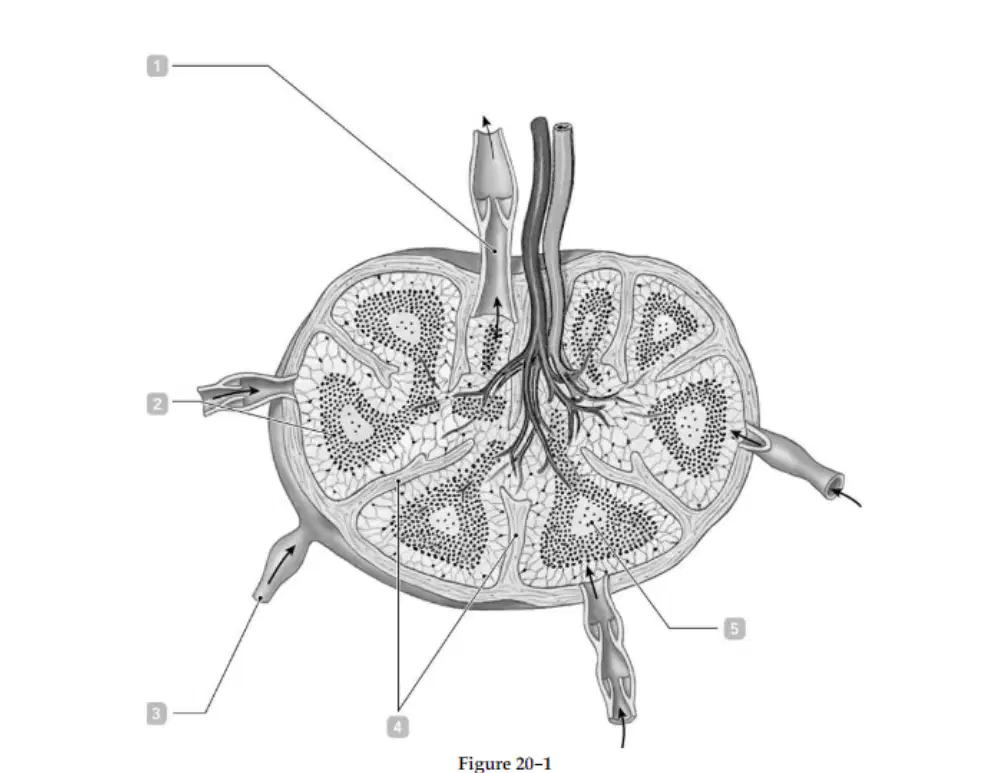
Identify the structure labeled '1.'
venule
efferent lymphatic
afferent lymphatic
lymphatic nodule
trabecula
Stem cells that will form T cells develop in the
kidneys
liver
thymus
bone marrow
spleen
The cell that dominates the deep cortical region of a lymph node is the ________ cell.
cytotoxic T
B
NK
T helper
plasma
________ are large lymphoid nodules that are located in the walls of the pharynx.
Lymph nodes
Tonsils
Spleens
Peyer's patches
Immune complexes

