
 Worksheets
Viruses & Bacteria
Total questions: 30
Worksheet time: 1hrs 5mins
Which term is scientific for the passing of a pathogen from one organism to another?
catching
vector
transmission
infecting
Disease causing agents such as bacteria and viruses are called _______________.
pathogens
antibodies
villians
particles
How are viruses and parasites similar?
Both are living things.
Both are made of cells.
Both harm their host.
Both are good for their host.

Both bacteria and viruses cause disease. Determine whether the descriptions below apply to a virus or a bacterium. (You will not have even numbers)
cause diseases such as Influenza (flu) and COVID-19
considered non-living
can reproduce on their own
larger in size when compared to each other
nucleic acid can only be DNA
An illness caused by a certain virus includes fever, rash, joint pain, red eyes, and headache. The virus is transmitted to people by infected mosquitoes. Symptoms quickly occur within three to twelve days after contracting the virus. There is no vaccine for this virus.
Which description best explains the reproductive cycle of this virus?
Lytic, because the virus is transmitted by mosquitoes
Lysogenic, because there is no way to vaccinate against it
Lytic, because of the quick incubation time
Lysogenic, because the virus causes a fever

Cold sores are caused by the herpes virus. Often this virus is passed from mother to child in the first few months of life. Individuals that carry the virus have ulcers that form on the lips, sometimes years after the initial infection. It is common for these ulcers to heal, only to come back at a later date.
This information on cold sores suggests that the reproductive cycle of the herpes virus is -
Lysogenic, because symptoms do not occur immediately upon infection.
Lysogenic, because the virus is passed from mother to child.
Lytic, because the virus is passed from mother to child.
Lytic, because the virus causes ulcers on the lips.

A diagram of an HIV infection is shown.
Which conclusion about the HIV infection of a host cell is best supported by the diagram?
It takes place outside of living cells.
It relies on the host cell to reproduce.
It involves the process of meiosis.
It requires carbon dioxide.
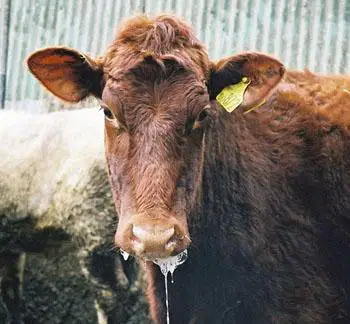
In 1898 Friedrich Loeffer and Paul Frosch found that the cause of the highly contagious hoof and mouth disease in livestock was a microscopic infectious particle. It was discovered that this particle requires a host to reproduce.
Which pathogen is most likely responsible for causing hoof and mouth disease in livestock?
A bacteria because it is contagious
A fungus because it infects livestock
A protist because it is microscopic
A virus because it requires a host cell to reproduce

A student produces a labeled drawing of a virus for a presentation. The student states that the capsid has a function similar to the nuclear membrane found in animal cells.
Which of these describes the similar functions of capsids and nuclear membranes?
Both transport proteins throughout the structures.
Both provide energy for activities in the structures.
Both protect genetic information for the structures.
Both code for the proteins needed for reproduction of the structures.

in the 1880s Louis Pasteur developed a method of weakening viruses. The weakened viruses could be injected into healthy individuals.
How is this method effective in fighting viral diseases?
The immune system develops antibodies in response to the weakened viruses.
The weakened viruses attach to unaffected viruses in the host and interrupt the viral reproductive cycle.
The rate of genetic mutation in the host is decreased due to the introduction of weakened viruses.
Weakened viruses are unable to enter the host organism.
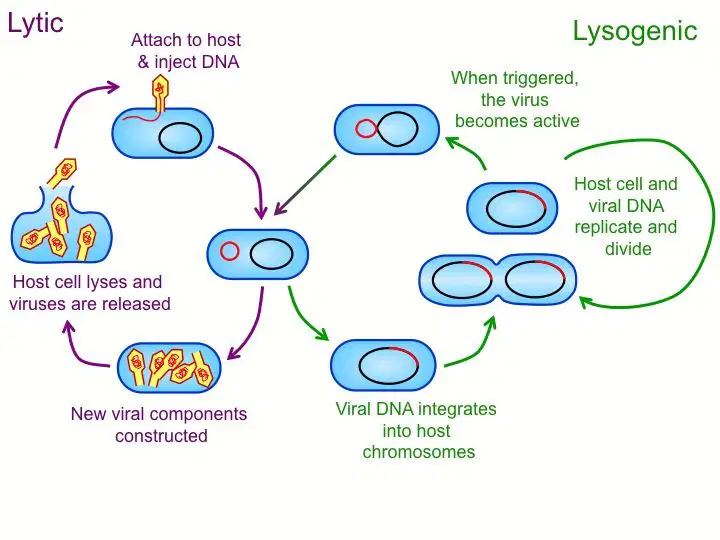
Lysogenic viruses do NOT -
Inject their DNA into the host cell.
Reproduce and lyse the host cell immediately.
Become dormant and divide with the cell's DNA
Infect a host cell.

Norovirus outbreaks have caused many schools to close. Norovirus causes extreme vomiting within as little as 12 hours of exposure. The virus is spread in the air as infected individuals vomit.
Based on this information, which reproductive cycle does the norovirus most likely undergo?
Mitosis
Meiosis
Lytic Cycle
Lysogenic Cycle
What event would indicate that a virus undergoes the lysogenic cycle?
The virus uses protections to attach to specific cells before injecting nucleic acid.
The virus stays dormant for a period of time before starting to reproduce.
The virus reproduces quickly, causing symptoms to arise shortly after injection.
The virus uses a cells endoplasmic reticulum to fold proteins used in the capsid.

Influenza is a virus that infects the cells of the respiratory tract and can cause fever, runny nose, headache, coughing and muscle pain. Scientists develop new vaccines against the influenza virus every year/
Why must scientists create new vaccines for this virus so often?
The virus fights off the vaccine and becomes resistant.
Different people respond to the vaccine differently.
The virus proteins mutate rapidly.
The vaccine is broken down by the immune system.
Which of the following is effective in reducing the number of viral infections?
applying antiseptics
taking antibiotics
getting vaccinated
taking vitamins
Stress can cause a virus that has gone dormant within a human host to begin reproduction.
Which of the following stressors may awaken a virus?
Stress to the immune system
Cell damage, such as from a sunburn
Emotional stress
All of the above

They help the virus attach to and invade its host

Are viruses considered alive?
Yes, viruses are alive
No, viruses can only be considered alive sometimes
No, viruses are not alive that is why the require a host
Yes, viruses are alive once they activate
Complete the following paragraph that describes the action of viruses in causing infectious diseases. Drag each term or phrase into the correct location within the paragraph. Viruses enter the organism they are infecting in a variety of ways, such as through cuts or scrapes or inhaling particles. Once inside, viruses have a particular target called the (a) . Surface (b) on the outside of the virus act like a lock and key, allowing it to enter. Viruses can then engage in one of two common life cycles. The (c) cycle causes immediate infection, commandeering the host cell to make more viral particles. The (d) cycle, however, might remain embedded in the host cell's DNA indefinitely before causing illness.
If someone is sick with a bacterial infection, they may be given (a) . That doesn't work if you are sick with a (b) , because viruses are not alive.
What are some common ways to prevent viral infections?
Practicing good hygiene, avoiding close contact with sick individuals, covering mouth and nose when coughing or sneezing, and getting vaccinated
Not covering mouth and nose when coughing or sneezing, not practicing good hygiene, and not getting vaccinated
Avoiding exercise, staying indoors, and not getting enough sleep
Eating raw meat, not washing hands, and sharing personal items
What is the best way to treat most viral infections?
exercise
antibiotics
heat
rest and fluids
How are virus' like living things?
both made of cells
both contain DNA
Viruses include... (select all that apply)
flu
common cold
measles
chicken pox
food poisoning
Which of these is part of your body's first defenses against disease?
Skin
Antibodies
White blood cells
Heart
If you have immunity to a disease:
It can not enter your body
Your body can fight the disease off before it makes you sick.
The germs change as soon as they enter your body.
You will be able to recover very quickly.
What might happen if your immune system lacked memory cells?
Your body wouldn't be able to fight off diseases.
Diseases would make you sicker than normal.
You might get the same disease over and over.
Your body wouldn't be able to produce antibodies.

Scientists are designing new medicines to fight infectious diseases caused by viruses. One of the most effective ways these medicines could limit the spread of the virus within the body would be to –
prevent viruses from dividing
burst cells infected with viruses
stop viruses from attaching to cells
make it easier for viruses to leave cells

