
NEW
Font size
 Worksheets
Weeks 1-14 Science Studies Weekly
Total questions: 71
Worksheet time: 18hrs 45mins
What tool is used to measure length?
beaker
ruler
scale
What tool is used to measure length?
beaker
ruler
scale
What measurement system do scientists use in their investigations?
customary
metric
universal
Which metric unit measures length?
gram
liter
meter
What is the base unit for measuring mass in the metric system?
gram
liter
ounce
Which metric unit measures volume?
gram
liter
meter
What is a graph?
A picture of data
A picture of science
A picture of math
What is a way to find patterns in data?
In books
In patterns
By graphing
What is a variable?
The part of a test that stays the same
The part of a test that is not tested
The part of a test that changes
What is a hypothesis?
A problem
A confirmed solution to a problem
An unconfirmed solution to a problem
The biggest piece of a pie chart is...
Half of the answer
The most popular answer
The least popular answer
What is one purpose of the "Ask" step?
to test whether the product works
to reflect on how the group worked
to discover if there is already a solution
Which cycle helps engineers solve problems?
Scientific method
Engineering design process
Product development cycle
Why is it important to think about materials in the "Imagine" step?
To decide which material will work best
To gather data on how the product works
To avoid arguments between group members
What is NOT a good way to record data during the "Test" step of the engineering design process?
Making a graph
Creating a chart
Memorizing observations
When are improvements made to the solution?
Before creating a plan
After testing the solution
Before researching solutions
How do scientists use patterns?
To build models
To ask questions
To make predictions
What do astronomers study?
Astronauts
Space
Time
What is a light-year?
The size of a galaxy
The distance that light travels in one year
The amount of light that Earth receive in one year
What is the definition of a system?
A set of parts that work together
A model of a machine and its parts
A prediction of what might happen
Why is the motion of stars not visible?
They do not move.
They are too far away.
They aren’t bright enough.
What is empathy?
A feeling of sadness
Having a positive attitude
The ability to care about someone
Which attitude is part of resilience?
You do not give up.
You don't like change.
You are afraid of mistakes.
What term describes someone who keeps going, even when challenged?
curious
empathetic
persistent
What is a mindset?
Helping the brain grow
An idea that turns into a plan
A personal attitude toward something
Which attitude is part of a growth mindset?
Not trying new things
Learning from mistakes
Becoming discouraged
Which term means how fast and direction?
collision
speed
velocity
The train is passing the boat. Which vehicle has higher velocity?
Train
Boat
They have the same velocity.
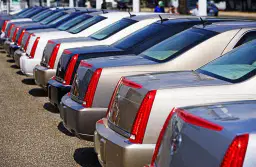
What type of energy do these cars have?
Electric energy
Kinetic energy
Potential energy
How is kinetic energy transferred?
Through collisions
By electric current
When heat is generated
Why does a larger object have more kinetic energy?
It has more mass.
Air pushes against it.
Gravity does not affect it.
What type of energy is stored in human bodies?
Chemical
Kinetic
Potential
What type of energy is in a ball as it moves through the air?
Chemical
Kinetic
Potential
Which force slows a ball as it rolls on the grass?
Friction
Gravity
Drag
What force is used to make a baseball change direction once a batter hits it?
Collision
Friction
Gravity
What makes a softball travel slower than a baseball?
Color
Shape
Surface Area
What is part of the law of conservation of energy?
Energy cannot be used up.
Energy cannot change form.
All energy is chemical energy.
Which type of energy does fire produce?
Chemical
Electricity
Thermal
Which energy is considered “best”?
The one that does the most work
The one that does not create pollution
The one that is never converted into heat
How is electricity generated?
By eating plants and animals
By the spinning motion of the Earth
By converting other types of energy
What is the law of conservation of energy?
Energy can be created, but not destroyed.
Energy cannot be created or destroyed.
Energy can be destroyed, but not created.
Which force causes static electricity to build on an object?
drag
friction
gravity
What type of energy creates lightning?
Solar electricity
hydroelectricity
static electricity
When was the lightbulb created?
1492
1603
1778
Why might a device need more volts to work?
It requires more electricity.
It contains a positive charge.
It has lost too many electrons.
What is a circuit?
Something that stores electricity
A pathway along which electrons flow
The measurement of electricity’s strength
How does gear protect a football player?
It absorbs some of the energy from collisions.
It blocks sunlight from reaching sensitive skin.
It slows down other players so they do not hit hard.
What is one way energy transfers between objects?
Through waves
Through gravity
Through collisions
What is a concussion?
Brain injury
Weak heart
Broken bone
What causes a concussion?
A burst blood vessel
A blow to the head
You are born with it
What happens to the brain during a collision?
It heats up.
It spins quickly.
It bounces around.
What is sound?
air
electricity
vibrations
How does light travel?
In circles
In waves
In a straight line
Which particle is positively charged?
electron
neutron
proton
Which particle makes electricity?
electron
neutron
proton
What happens to energy when it is “lost”?
It is used up.
It disappears.
It is transferred.
What is a Rube Goldberg machine?
A series of connected devices
A machine that uses electricity
A machine that performs a task
Which form of energy can travel long distances?
sound
electricity
springs
Which device converts sound to electricity?
keyboard
microphone
speaker
What is the purpose of Bluetooth technology?
To connect devices wirelessly
To make it easier to take pictures
To increase battery life in devices
Which form of energy do Bluetooth speakers use?
gamma
light
radio
Which nonrenewable resource do cars use?
coal
petroleum
nuclear power
What is the source of petroleum?
Very old rocks
Prehistoric cars
Ancient animals
What is a nonrenewable energy source?
It has a lower level of energy.
It takes a long time to refill.
It is beneficial to the environment.
Which is a renewable energy source?
oil
coal
solar
What is pollution?
Strong wind
Broken rock
Small particles
Why are biofuels attractive as an alternative energy source?
They use waste material.
No other energy is cleaner.
Any vehicle can use them directly.
What is a renewable energy source?
An energy source that cannot be used easily
An energy source that pollutes the environment
An energy source that can be used over and over
What is a drawback to wind energy?
It is the cleanest form of energy.
Wind turbines create light pollution.
Many wild animals are killed each year.
What is a drawback to solar energy?
Lots of sunlight is required.
Only hot climates can use it.
Solar panels cannot get wet.
What is one drawback to hydroelectricity?
There is not enough water.
Dams regularly cause flooding.
Wildlife migrations are disrupted.

