
 Worksheets
APHG Unit 3 Review
Total questions: 50
Worksheet time: 33mins
Which of the following is an example of a cultural landscape?
A coral reef
A stand of pine trees
Terraced fields of crops up a mountainside
Glaciers
Which of the following is a dialect?
Indo-European
Romance
Southern United States
Latin
Compared to popular culture, folk culture is
More limited in their building materials by the resources available in the environment
Less likely to promote religious values
Less resistant to cultural change
More likely to tolerate a variety of social customs and behaviors
Which of the following is NOT an ethnic religion?
Hinduism
Judaism
Shintoism
Buddhism
Acculturation is a process whereby
A more dominant culture adopts most of the traits of the less dominant culture
The dominant culture completely absorbs the less dominant one
Cultural traits are equally exchanged between cultures
The less dominant culture adopts some of the traits of the more influential one
Which of the following is the largest proselytizing religion?
Hinduism
Christianity
Buddhism
Shintoism
Which language has become the world's primary lingua franca?
Mandarin
Hindi
German
English
The modern game of soccer (football) spread to many parts of the world because of British colonization. This is an example of
Expansion diffusion
Hierarchical diffusion
Relocation diffusion
Stimulus diffusion
Which of the following religions are considered to be universalizing religions?
Buddhism, Christianity, & Islam
Islam, Hinduism, & Buddhism
Hinduism, Judaism, & Christianity
Judaism, Islam, Buddhism
A simplified lingua franca created to facilitate communication is known as a:
pidgin language
dialect
creole language
isolated language
Which of the following would be an example of “Popular Culture”?
a small homogenous cultural group
a heterogeneous group in an urban area
a group living in a rural area
groups that have little interaction

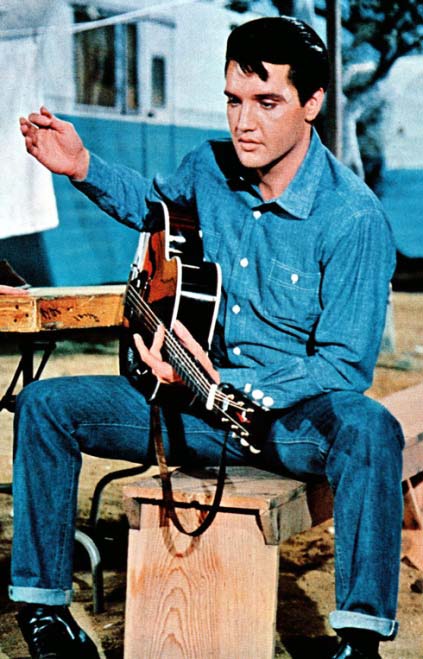
Folk Culture is
Homogenous
Rural
Slowly Changing
All of the above
An example of Hierarchical diffusion
Migrant bringing their food culture to the US
McDonald's building restaurants in India but not serving beef
A celebrity adopting a new hairstyle and starting a trend
Finding out about a new song from your cousin

Dominant language family in the regions above
Niger - Congo
Indo - European
Latin Americano
Sino - Tibetan

Dominant language family in the regions above
Sino -Tibetan
Afro - Asiatic
Niger - Congo
Afrikaans
When two people who speak different languages use English to conduct business, we can consider English a(n)
Assimilated language
Lingua Franca
Pidgin Language
Creole Language

This region of the world is most likely the hearth of what language family?
Austro - Asiatic
Indo - European
Altaic
Sino - Tibetan
The Phenomenon whereby the introduction of new transportation technologies progressively reduce the time it takes to travel between places
Time space continuum
Difusion
Time- Space Convergence
Distance Decay
This type of diffusion involves a wavelike spread of ideas in the manner of a contagious disease, equally moving throughout space.
Hierarchical Diffusion
Stimulus diffusion
Contagious Diffusion
Relocation Diffusion
Which of the following lists religions that all started in Southwest Asia?
Buddhism, Hinduism, Islam
Islam, Judaism, Christianity
Shintoism, Sikhism, Judaism
Taoism, Christianity, Hinduism
Judaism, Animism, Buddhism

Which locations and religions are correctly paired in terms of place or origin/hearth?
Islam: Egypt
Buddhism: India
Hinduism: South America
Judaism: Saudi Arabia
(Abolished in the 90s)
(e.g. Nationalism/Patriotism, Equality, Tolerance)
Organize the world’s languages from biggest classification, to smallest.
language group, language, language family, dialect
language branch, language group, language, language family, dialect
language family, language branch, language group, language, dialect
language
language family, language branch, language group, dialect, language
What country could you find most of the Sino - Tibetan family?
Vietnam
Afghanistan
Russia
China
United States
In which region are ethnic religions most widely practiced?
Asia
South America
North America
North Africa
Which three religions have holy places in Jerusalem?
Sikhism, Islam, Judaism
Islam, Christianity, Hinduism
Hinduism, Sikhism, Buddhism
Islam, Christianity, Judaism
Historically, culture diffusion patterns in the United States have tended to flow in which general direction?
East to West
West to East
North to South
South to North
Northwest to Southeast
A Hindu temple located in Texas is most likely the result of which kind of diffusion?
Expansion
Hierarchical
Contagious
Relocation
Stimulus
Compared to popular cultures, folk cultures are...
More cosmopolitan
More homogeneous
More diffuse
More transitory
More contagious Culture
A new fashion trend originated in New York City that diffuse to Los Angeles, Paris, and Tokyo before reaching rural areas of New York state would be an example of which of the following kinds of diffusion?
Contagious
Hierarchical
Uniform
Relocation
Stimulus
An immigrant who selectively adopts certain customs of the dominant host society in order to advance socioeconomically, while still retaining much of his or her native customs, practices, and beliefs, best illustrates the concept of...
Acculturation
Maladaptive behavior
Assimilation
Ethnocentrism
All of the above
A minaret is an architectural feature common to places of worship in which of the following regions?
Buddhism
Hinduism
Christianity
Judaism
Islam
Which major world religion has its hearth in the Arabian Peninsula?
Hinduism
Islam
Buddhism
Taoism

Which of the following religions would match the green regions on the map?
Christianity
Buddhism
Islam
Sikhism

Southeast Asia, as marked by the pink shaded regions, has a majority of the population that believes in which of the following religions?
Islam
Buddhism
Sikhism
Hinduism
Which of the following is a sacred place is Hinduism?
The Ganges River
The Western Wall
Mt. Everest
The Ka'ba

