
 Worksheets
LITHOSPHERE
Total questions: 50
Worksheet time: 38mins
A. trench
B. mid-ocean ridge
C. folded mountains
D. fault
E. flood
A. transform boundary
B. divergent boundary
C. convergent boundary
D. valley
E. earthquake
A. move toward each other
B. undergo subduction
C. move away from each other
D. slide along each other
E. move together
A. erosion
B. weathering
C. compaction
D. cementation
E. earthquake

Facilities near Ancol beach were damaged because the sea waves. This phenomenon is called ….
A. ablasi
B. fault
C. erosion
D. sedimentation
E. flood
…….. layer is made up of liquid iron
A. inner core
B. outer core
C. mantle
D. crust
E. magma
The descent of oceanic lithosphere into the mantle is the process of ………
A. subduction
B. accretion
C. divergence
D. contraction
E. Latitude
New seafloor is created at a………….
A. Deep sea trench
B. Mid-Ocean Ridge
C. Subduction Zone
D. Transform Fault
E. Convergent
Which of the following statements about convection is true?
A. Heat is transferred from hot material to cool material without inducing a flow.
B. Cool material flows upward and displaces hot material
C. Hot material flows upward and displaces cool material
D. Random circulation occurs
E. wind
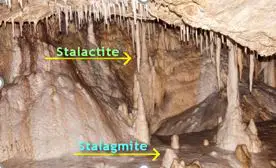
Which of the following is the most important agent of chemical weathering to form this cave?
A. water - It can carry acid and dissolve rock
B. erosion - Moves the rocks from one place to another
C. wind - It displaces rocks
D. exfoliation - New cracks give chemical reactions the chance to operate
E. the sun-gives its light
A. stream bank erosion
B. gully erosion
C. rill erosion
D. sheet erosion
E. erosion
What layer of the earth is made of liquid magma?
A. innner core
B. mantle
C. crust
D. outer core
E. moon
Which of the following is the correct order of the Earth's layers moving inward to the center.
A. Crust
Mantle
Inner Core
Outer Core
B. Mantle
Outer Core
Inner Core
Crust
C. Inner Core
Outer Core
Crust
Mantle
D. Outer Core
Inner Core
Mantle
Crust
E. mante
crust
outer core
inner core

A. oceanic crust
B. Moho discontinuity
C. asthenosphere
D. outer core
E. crust
A. plates divide and magma rises up
B. oceanic crust subducts below continental crust
C. we dig a hole in the ocean
D. when plates slide past each other
E. mid oceanic ridge
A. Pangea
B. Plate Tectonics
C. Natural Selection
D. Gravity
E. sea floor spreading
The movement of sediments to a new location
A. Weathering
B. Erosion
C. Deposition
D. Oxidation
E. oxygen
This type of weathering breaks down rock WITHOUT changing chemical composition
A. Chemical Weathering
B. Physical Weathering
C. Erosion
D. Deposition
E. earthquake
A. Weathering
B. Erosion
C. Deposition
D. Transportation
E. earthquake

A. deposition
B. leaching
C. abrasion
D. erosion
E. weathering

A. abrasion
B. carbon dioxide
C. oxygen
D. acid rain
E. gletser
A. carbon dioxide and acid rain
B. abrasion and acids from plant roots
C. animal actions and oxygen
D. rock type and climate
E. gletser
A. meander
B. drumlin
C. sand dune
D. sand bar
E. cliff

A. chemical weathering
B. physical or mechanical weathering
C. erosion
D. deposit
E. mechanical weathering

A. during photosynthesis
B. when roots grow into cracks of rocks and expand the rock
C. when the plant moves water from the roots to the leaves
D. erosion
E. sedimentation

Erosion _____
A. is the movement of material across Earth’s surface by wind and water
B. is physical and chemical breakdown of rock at the earth’s surface.
C. is the physical removal of rock by an agent such as wind or water
D. is the coming to rest of transported material. It is process in which rocks, sediments, and soils are added to landforms.
E. erosion
Which is the best choice to demonstrate WATER weathering?


Which diagram exhibits the most ideal arrangement for exogenic processes?
A. erosion –sediments – weathering – transport- deposition
B. sediments – erosion – weathering – transport
C. sediments – transport – erosion – weathering
D. weathering – erosion –transport-deposition
E. Deposition - erosion - erosion - transport
Which of the following is an example of oxidation?
A. rusting of iron
B. halite dissolves in water
C. feldspar decomposes to form clay
D. stalactites and stalagmites formation
E. flood
Which of the following is NOT an agent of erosion?
A. glacier
B. rocks
C. water
D. wind
E.water
Which is TRUE about the continental crust?
A. It is thinner than oceanic crust
B. It is denser than oceanic crust
C. It is thicker but less dense than the oceanic crust
D. It is thinner and more dense than the oceanic crust
E. oceanic crust is thicker than continental crust
The theory of plate tectonics helps explain?
A. The symbiotic relationship between tubeworms and bacteria
B. The extinction of the dinosaurs
C. The movement of continents and the occurrence of volcanoes and earthquake
D. 1000 meters
E. Weathering
What is PANGEA?
A. A single gigantic continent that existed 250 million years ago
B. The name of panda living at the San Diego Zoo
C. A deep-ocean trench
D. A microorganism that grows at hydrothermal vents
E. Type of plate
What is the name given to boundaries where plates move apart?
A. convergent
B. divergent
C. transform
D. subduction
E. plate
Which part of the earth is found above the mantle?
A. outer Core
B. inner Core
C. crust
D. mantle
E. magma
What do you call the broken segments that make up the lithosphere?
A. Crust
B. Mantle
C. Core
D. Plates
E. inner core
What is the asthenosphere made up of?
A. water
B. magma
C. nickel
D. SIAL
E. SIMA
Which is NOT a lithospheric plate?
A. Indian plate
B. Arctic plate
C. African plate
D. Philippine plate
E. middle east
What minor plate is found below the Eurasian plate?
A. Indian plate
B. Cocos plate
C. African plate
D. Nazca plate
E. arctic plate
Which of the following is NOT an effect of the tectonic plate?
A. Earthquake
B. Mountain building
C. Formation of valley
D. The temperature of the mantle
E. seism
A. Sand being pulled away from a beach by waves.
B. Roots of a tree breaking apart a rock
C. water in a river smoothing down rocks.
D. fruit rot
E. stalatit and stalagtit in cave
A. deposition breaks rocks down, weathering carries sediment away
B. weathering breaks rock down and erosion moves it
C. Endogenic Processes
D. all answers are correct
E. all answers are wrong

This statue was probably destroyed by _____.
A. wind
B. humans
C. acid Rain
D. animals
E. sand

True or false: chemical weathering causes rocks to change into new types of rocks.

Which chemical creates rust?
A. Oxygen
B. carbon Dioxide
C. nitrogen
D. neon
E. thermal
A. Mechanical weathering
B. Wind weathering
C. Chemical weathering
D. Erosion weathering
E. Sedimentation

Base your answer to the following question on the diagram below, which represents the landscape features associated with a meandering river. Letters W, X, Y, and Z represent locations on the floodplain. During transport by this river, a sediment particle will most likely become
A. more rounded
B. more dense
C. heavier
D. larger
E small

The block diagram represents a landscape that was produced by a meandering stream. One landscape feature is labeled X. Letters A, B, C, and D represent locations on the stream banks. Erosion is most likely greatest at locations
A. A and B
B. B and C
C. C and D
D. D and A
E. D AND C

The layer of magma is showed by . . .
A. A
B. B
C. C
D. D
E. E

The solid hottest of the Earth which contains of radioactive is showed by . . .
A. A
B. B
C. C
D. D

