
 Worksheets
HC: Fall Semester Review Part 2 (2023)
Total questions: 224
Worksheet time: 4hrs 44mins
Which of these determines the identity of an atom?
proton
neutron
valence electron
protons and neutrons

Gaining or losing neutrons in an atom changes its (a) .
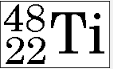
Gaining or losing protons in an atom changes its (a) .

In the given notation, what does 289 represent?
mass number
atomic number
number of neutrons
number of electrons
number of protons
How many neutrons does this isotope of titanium have?
48
22
26
70
Gaining or losing electrons in an atom changes its (a)
The name of this isotope of titanium is
titanium-48
titanium-22
titanium-26

Iodine-129 has _ protons
(a)

Iodine-129 has _ neutrons
(a)
If X is the symbol for an element, select the two symbols represent isotopes of the same element.

7735X

7937X

8136X

8135X
In the given notation, what does 115 represent for the atom? (Select all that apply.)
mass number
atomic number
number of neutrons
number of protons
The mass number of an atom is calculated by adding the (a) with the protons.

The name of the isotope for the given element is chromium- (a) .
There are (a) protons in the given element.
There are (a) electrons in the given element.
There are (a) neutrons in the given element.
Label each part of the symbol notation.
mass number
atomic number
element symbol
What is the charge of the ion for phosphorus that has 18 electrons?
3-
3+
1-
1+
What is the charge of the ion for calcium that has 18 electrons?
2+
2-
1-
1+
The charge of an ion is determined by subtracting the number of (a) minus the number of (b) .


What element does this Bohr diagram represent?
Helium
Oxygen
Sodium
Phosphorous


What is the term that describes the amount of energy required to remove an electron from an atom?
ionization energy
electronegativity
atomic radius
octet rule


What element is best represented by the given Bohr diagram?
Boron
Carbon
Nitrogen
Lithium


Which period is bromine located?
3
17
4
16

Choose the chemical property.
brown color
solid state of matter
reacts with hydrogen
melting point 342K
Which state of matter has particles packed together in fixed positions?
solid
liquid
gas
plasma
Which state of matter has particles spread far apart that can be most easily compressed?
solid
liquid
gas

Who developed the model of the atom showing that electrons reside in energy shells?
Ruthorford
Bohr
Thomson
Dalton
As you move down group, what happens to atomic radii?
stays the same size
size increases, decreases, then increases again
increases in size
decreases in size
What is the term that describes an elements ability to attract electrons when bonded?
ionization energy
electronegativity
octet rule
ionic radius
Which of the following causes a line emission spectrum to be seen?


Which trend is represented in the provided image?
increasing electronegativity
increasing ionization energy
increasing atomic radius
increasing ionic radius

What is the unknown?
aluminum
lithium
lithium and aluminum
aluminum and magnesium
What is the highest energy level for elements in period 5?
2
3
4
5
What is the trend for increasing electronegativity?
Period: left to right
Group: top to bottom
Period: right to left
Group: top to bottom
Period: left to right
Group: bottom to top
Period: right to left
Group: bottom to top
An atom or group of atoms that has a positive or negative charge.
atom
molecule
ion
quark
A positively charged ion. Becomes smaller than the neutral atom.
cation
anion
A negatively charged ion. Becomes larger than the neutral atom.
cation
anion
A horizontal row of elements in the periodic table
family
column
group
period
A vertical column in the periodic table, also known as a family of elements
rows
periods
groups
trends
What are the main group elements?
groups 3-12, 18
groups 1, 2, 13-18
periods 1-2
periods 3-6
Reorder the following in the proper order for color to be seen.
Electron in it ground state
Photon hits electron.
Transferred energy sends electron to a higher energy level.
Electron is in an excited state.
Electron returns toward ground state, emitting absorbed energy.
States that atoms lose, gain or share electrons in order to acquire a full set of eight valence electrons
rule of 8
octet rule
noble gas rule
magic 8
groups 3-12 on the periodic table
metalloids
alkali metals
alkaline earth metals
transition metals
Which of the following represents the element with the smallest radius?
Rb+
Rb
Kr
Se2−

Most of the elements on the periodic table are classified as (a) .
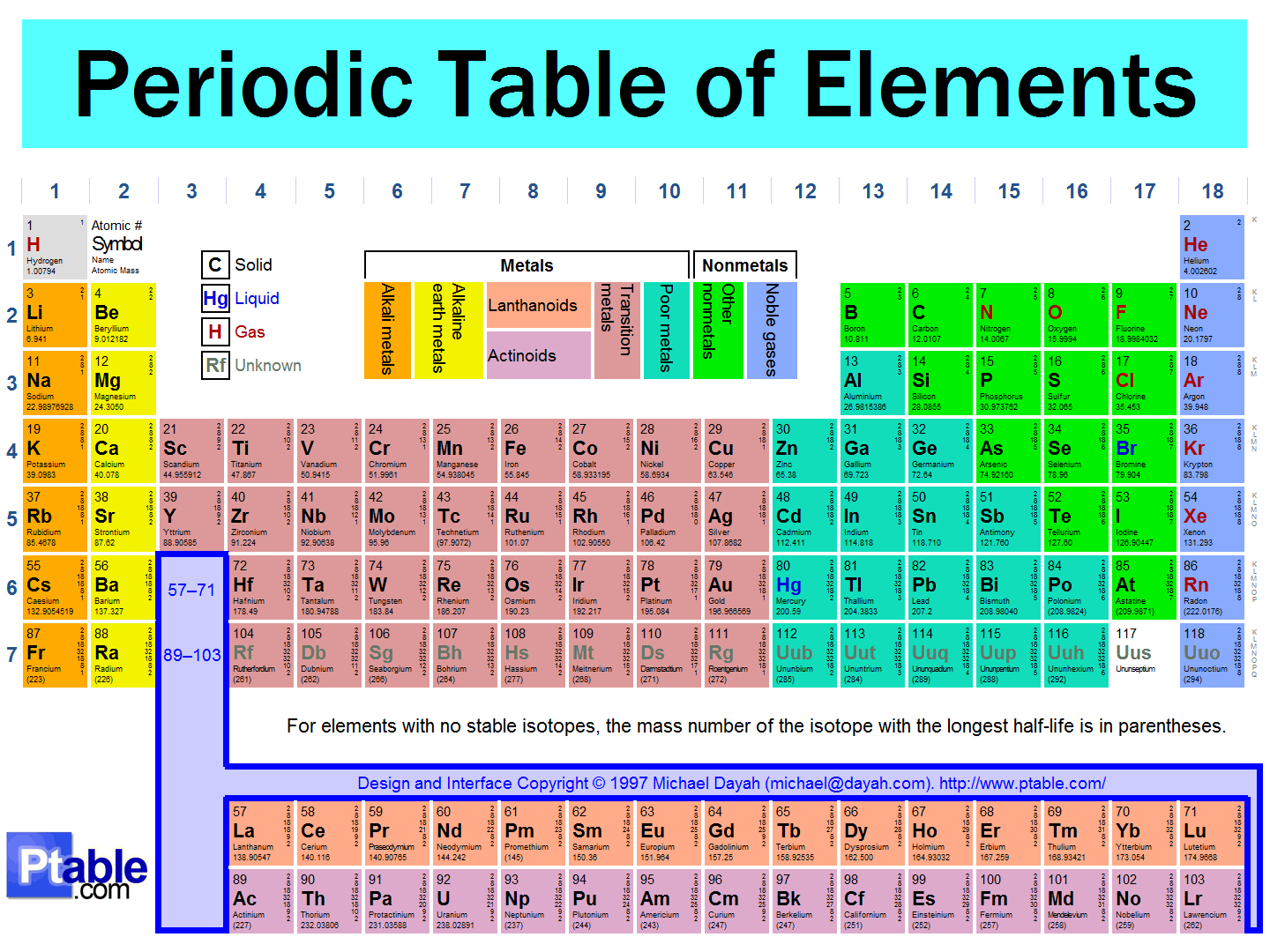
Metals are found on the (a) side of the periodic table.
nonmetals
right
metals
What is the organizational system or chart for elements?
Atomic weight
Families
Periodic table
Atomic number
What do you call the horizontal row of elements in a periodic table of elements?
Group
Family
Period
Column
How many groups and periods does a Periodic Table have?
There are 17 groups and 7 periods.
There are 18 groups and 7 periods.
There are 7 groups and 18 periods.
There are 18 groups and 6 periods
Which of the following are the three major groups of elements in the periodic table?
Metals, non-metals, metalloids
Metals, conductors, metalloids
Metals, conductors, insulators
Non-metals, conductors, insulators
What are Group 1 elements known as?
Alkali metals
Transition elements
Alkaline earth metals
Inner transition elements
The following elements belong to the same group EXCEPT?
Argon
Calcium
Helium
Krypton

What does the C represent?
atomic mass
atomic number
element name
chemical symbol

What does the 6 represent?
atomic mass
atomic number
element name
chemical symbol

What does 12.011 represent?
atomic mass
atomic number
element name
chemical symbol
The modern Periodic Table of Elements is arranged by (a) .
atomic mass
valence electrons
number of isotopes
Which family of the periodic table is Neon a part?
alkali metals
alkaline earth metals
halogens
noble gases
Which is a halogen?
Helium
Chlorine
Oxygen
Neptune
I am a nonmetal
I am in period 2
I am in group 16
Ba
Si
O
S
I am a metal
I am in group 2
I am in period 6
I am…
Mo
Re
S
Ba

Who invented the Periodic Table?
Mendeleev
Bohr
Lewis
Democritus
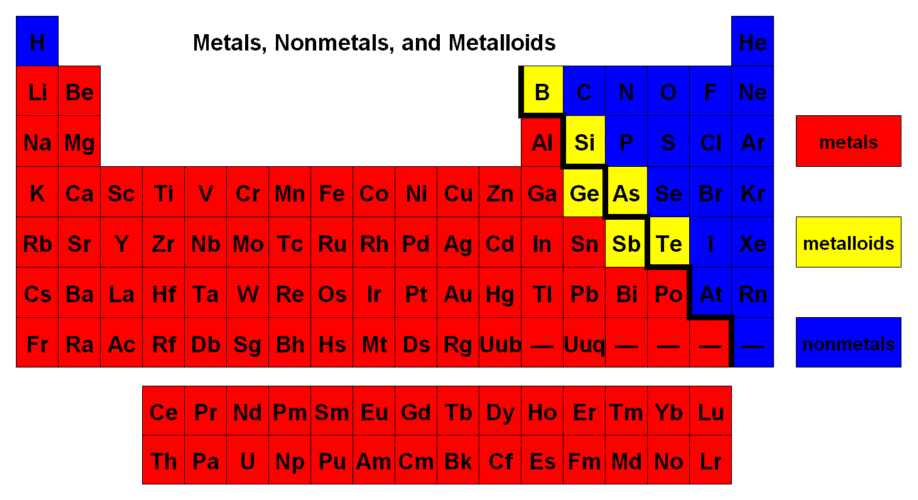
Label each of the areas on the periodic table with the types of elements found in the periodic table.
Metals
Metalloids
Nonmetals
Which of the following elements are liquids at room temperature?
Which of the following elements are gases at room temperature?
Which of the following elements are solids at room temperature?
Which of the following elements diatomic?
Which family are the halogens?
Which family are the transitions metals?
Which family are the alkali metals?
Which family are the noble gases?
Which family are made up of gases, liquids and solids?
Which family are made up only metals?
Which has the greater electronegativity:
Cl or Al?
Which has the greater electronegativity:
N or C?
Which has the greater electronegativity:
H or F?
Which of the following will have a larger atomic radius than Zinc?
As you move down the periodic table the atomic radius gets bigger. This is because ____________.
As you move across the periodic table the atomic radius tends to get smaller because, ______________.
The element with the lowest electronegativity in Period 3 is -
Na
Cl
Ar
Mg
Atomic radius generally increases as we move __________.
Electronegativity __________ from left to right within a period and __________ from top to bottom within a group.
Which of the following will have similar properties to 1s2 2s2 2p6 3s2 3p2?
carbon
calcium
chlorine
cesium
What is the electron configuration for potassium?
1s2 2s2 2p6 3s2 3p6 4s1
1s2 2s2 2p6 3s2 3p6 4s2
1s2 2s1 2p6 3s2 3p5 4s1
1s2 2s2 2p6 3s1
What electron configuration matches an oxygen atom?
1s22s22p63s2, 3p64s23d104p5
1s22s22p4
1s22s22p6
1s22s22p63s23p64s23d1
Identify the Electron Configuration for Aluminum (Al)
1s2 2s2 2p6 3s2 3p1
1s2 2s2 2p6 3s2 3p3
1s2 2s2 2p6 3s2 4p1
What is the position of an element in the periodic table if its electron configuration is 1s2 2s2 2p6 3s2 3p5?
Group 1
Group 2
Group 15
Group 17
What is the noble gas notation electron for Sulfur?
[Ne] 3p4
[He] 3s2 3p4
[Ne] 3s2 3p4
[Na] 3s2 3p4
What is the noble gas notation for V?
[Ar] 4s2 4d2
[Kr] 4s2 3d3
[Ar] 4s2 4d3
[Ar] 4s2 3d3
What is the noble gas configuration for silicon?
[Ne] 3s2 3p1
[Ar] 4s1
[Kr] 5s1
[Ne] 3s2 3p2

Match the parts of the electron configuration to what it represents.
1
period
s
block
2
element
Finish the electron configuration for chlorine:
1s2 2s2 (a) 3s2 3p6
Match the group to the configuration that it ends with.
s1
alkali metals
s2
alkaline earth metals
p5
halogens
p6
noble gases
This element's electron configuration got mixed up! What element is this?
x6 x2 x10 x6 x6 x2 x2 x2 x9 x2
(a)
What is the missing piece?
1s2 2s2 ___ 3s1
2p6
2p4
3p6
3s2
What are the missing pieces?
1s2 2s2 2p6 ___ 3p6 4s2 ___ 4p2
3s2 , 4d10
2p4 , 3d10
3p6 , 3d10
3s2 , 3d10
Match the element to it's noble gas notation:
krypton
[Kr]
silicon
[Ne] 3s2 3p2
strontium
[Kr] 5s2
copper
[Ar] 4s2 3d9
Place the terms in the correct order to for an electron configuration.
1s2
2s2
2p6
3s2
3p6
Reorder these from shortest electron configuration to the longest:
hydrogen
boron
argon
calcium
xenon
What is orbital notation?
A method of visualizing the movement of planets in the solar system.
A technique for mapping the trajectory of a satellite in space.
A system for representing the arrangement of atoms in a molecule.
A way of representing the electron configuration of an atom using arrows and numbers.
What is an orbital filling diagram?
A diagram showing the movement of planets in the solar system.
A diagram illustrating the structure of an atom.
A diagram representing the arrangement of protons and neutrons in the nucleus of an atom.
A visual representation of the arrangement of electrons in the orbitals of an atom or ion.
How are electrons represented in an orbital filling diagram?
Numbers
Arrows pointing left or right
Colors
Arrows pointing up or down
What is the maximum number of electrons that can occupy an s orbital?
2
6
4
8
What is the maximum number of electrons that can occupy the p orbitals?
6
8
4
2
What is the maximum number of electrons that can occupy the d orbitals?
2
10
6
4
What is the maximum number of electrons that can occupy the f orbitals?
10
14
6
2
How many orbitals are there in the p sublevel?
5
1
3
7
How many orbitals are there in the d sublevel?
5
2
8
10
How many orbitals are there in the f sublevel?
7
5
3
9
How are orbitals represented in an electron orbital diagram?
Numbers
Arrows pointing left or right
Letters
Arrows pointing up or down
How are energy levels represented in an electron orbital diagram?
Numbers
Arrows pointing left or right
Letters
Arrows pointing up or down
Which subatomic particles have a positive charge?
Select each of the options that describes the nucleus.
positively charged
very dense
contains the majority of mass
contains the majority of the space
orbits the atom
(a) discovered the electron within the atom.
The Gold Foil Experiment was used by (a) when he discovered the existence of the nucleus.
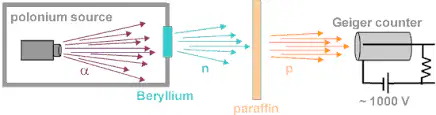
The neutron was discovered by (a) .
Which these subatomic particles have a mass roughly equal to 1 amu?
protons
electrons
neutrons
nucleus


Which of the following are subatomic particles?
neutrons
electrons
protons


James Chadwick
Ernest Rutherford
What subatomic particle has a neutral charge?
Reorder the following in proper chronological order.

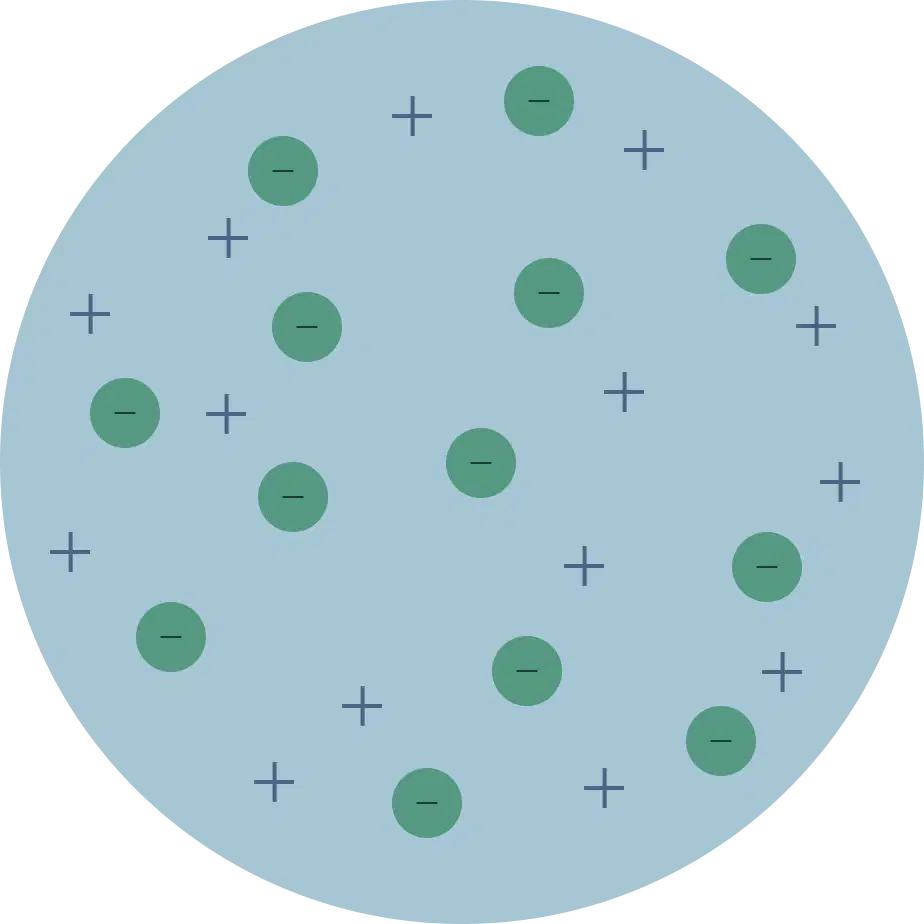
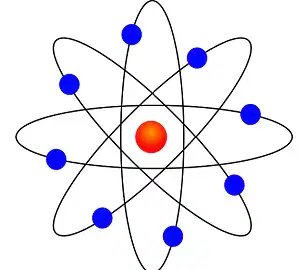
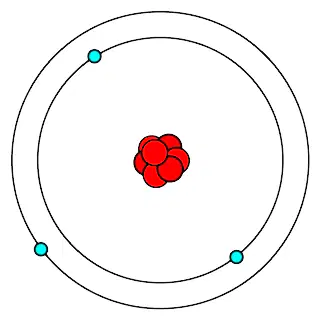
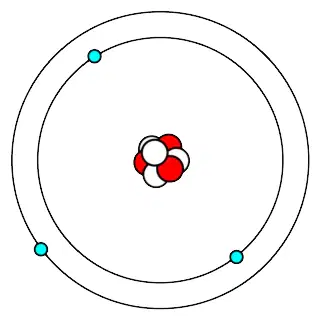
Organize these options into the right categories.
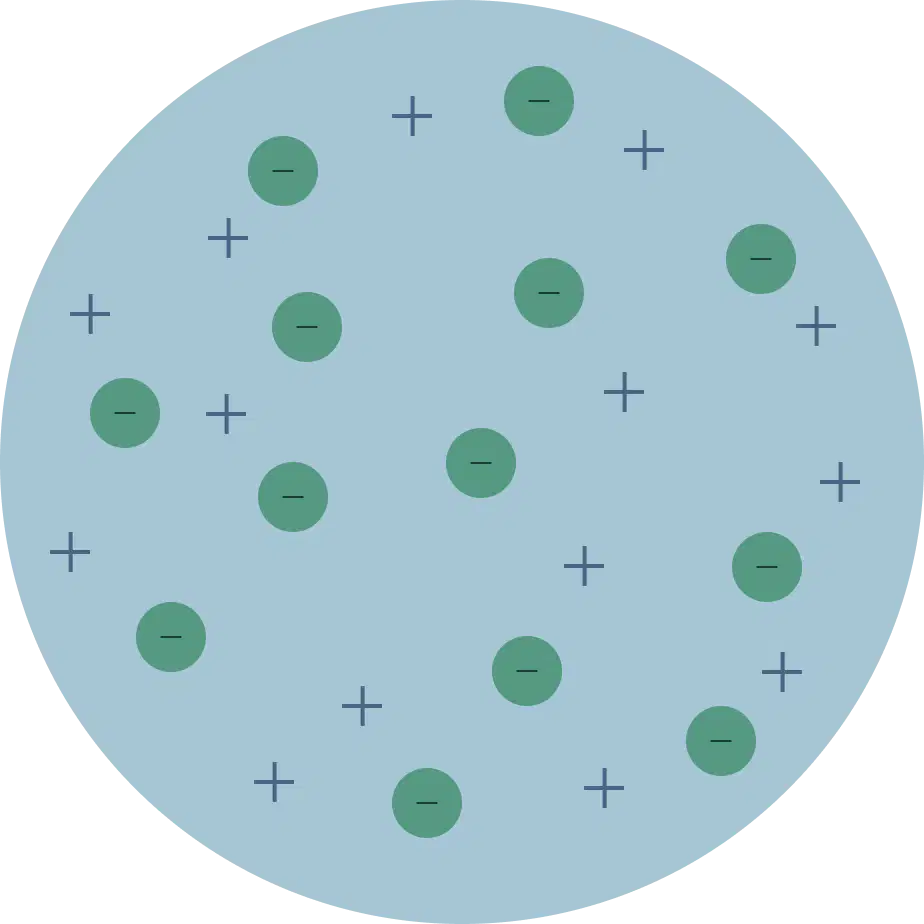
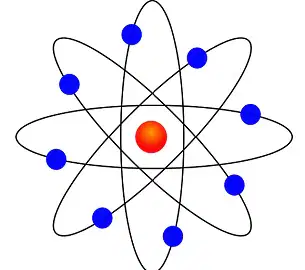
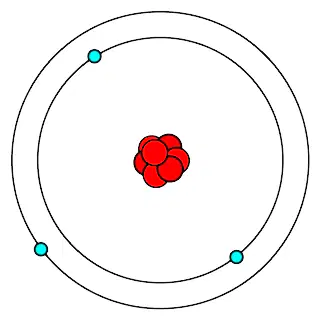

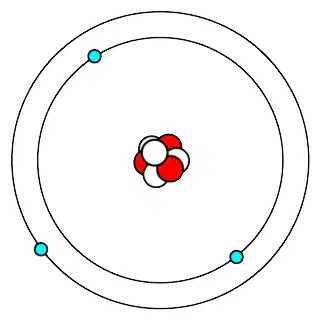
neutron
atomic theory
nucleus
electron
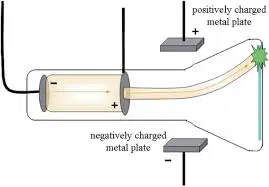
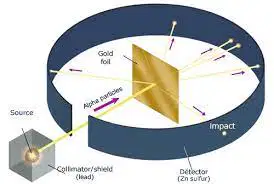
How many quantum numbers are needed to describe the energy state (the "address") of an electron in an atom?
An electron for which n=4 has more (a) than an electron for which n=2.
Which of the following is used for calculating the average atomic mass of an element?
Σ% abuundance x atomic mass
E=hν
c = νλ
volumemass
Organize these options into the right categories.
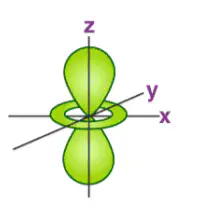
can hold 2 electrons
has 3 orientations
has 5 orientations
can hold 14 electrons
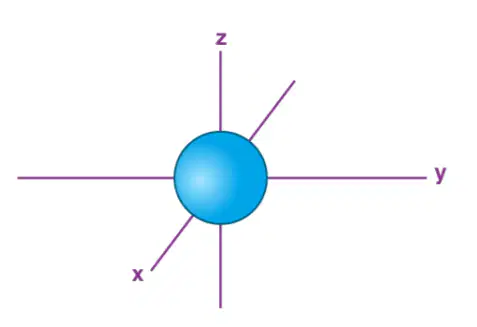
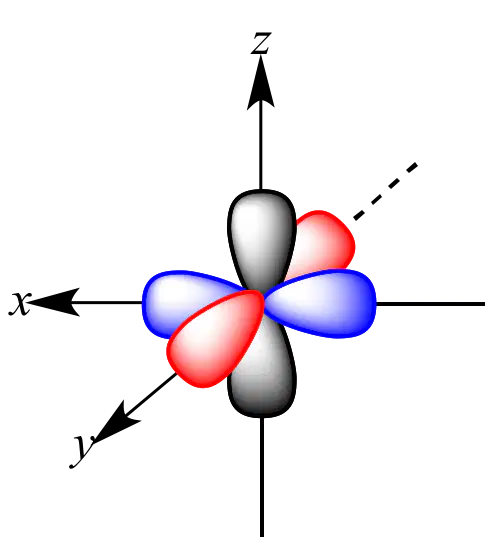

first occurs in the 3rd energy level
first occurs in the 4th energy level
occurs in every energy level
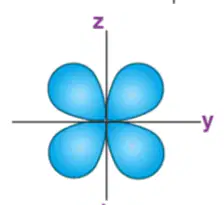
The second primary quantum number contains a total of (a) orbitals.
The distance traveled between two successive peaks of a waves is the (a)
A line spectrum is produced when an electron moves from one energy level
(a)
Which of the given orbitals can never exist according to the quantum description of an atom?
According to the Bohr model of the atom, the single electron of a hydrogen atom circles the nucleus (a)
What is the difference between the 1s and the 2s energy orbital?
The shape of the orbital.
The size of the orbital.
The number of electrons it can hold.
The number of orientations.
Which of the following values does NOT represent a valid electron?
n=2, l= 1, ml=1, ms=+1/2
n=4, l= 2, ml=-1, ms=-1/2
n=2, l= 0, ml=0, ms=-1/2
n=4, l= 2, ml=-3, ms=+1/2
Which form of radiation has the highest frequency?
radio waves
ultraviolet
x-ray
gamma
The equation the relates the wavelength and the frequency is (a) , in which the constant is (b) and has a value of (c) .

The orbital notation in the image represents the electrons for the element (a) .

The quantum address for the 23rd electron in the orbital notation in the image is (a) .
Indicate the respective coefficients needed to balance the chemical equation.
N2O5(s) + NO(g) → NO2(g)
(a)
Indicate the respective coefficients needed to balance the chemical equation.
Si2H3(s) + O2(g) → SiO2(s) + H2O(l)
(a)
Indicate the respective coefficients needed to balance the chemical equation.
SiCl4(s) + H2O(l) → H4SiO4(s) + HCl(l)
(a)
Indicate the respective coefficients needed to balance the chemical equation.
NaOH(aq) + Cl2(aq) → NaCl(aq) + NaClO(aq) + H2O(l)
(a)
Indicate the respective coefficients needed to balance the chemical equation.
NO2(g) + H2O(l) → HNO3(aq) + NO(g)
(a)
Indicate the respective coefficients needed to balance the chemical equation.
K2CrO4(aq) + Fe(NO3)3(aq) → Fe2(CrO4)3↓ + KNO3(aq)
(a)
Indicate the respective coefficients needed to balance the chemical equation.
Mg(s) + Cr2(SO4)3(aq) → MgSO4(aq) + Cr(s)
(a)
Indicate the respective coefficients needed to balance the chemical equation.
NaCl(aq) + H2O(l) → NaOH(aq) + H2(g) + Cl2(g)
(a)
Indicate the respective coefficients needed to balance the chemical equation.
C2H6(g) + O2(g) → H2O(l) + CO2(g)
(a)
Indicate the respective coefficients needed to balance the chemical equation.
Cl2(g) + CH4(g) → CCl4(l) + HCl(s)
(a)
Indicate the respective coefficients needed to balance the chemical equation.
Zn(s) + HCl(aq ) → ZnCl2(aq) + H2(g)
(a)
Indicate the respective coefficients needed to balance the chemical equation.
Rb(s) + H2O(l) → RbOH(aq) + H2(g)
(a)
Indicate the respective coefficients needed to balance the chemical equation.
Ba(s) + O2(g) → BaO(s)
(a)
Indicate the respective coefficients needed to balance the chemical equation.
SiCl4(s) + H2O(l) → SiO2(s) + HCl(aq)
(a)
Indicate the respective coefficients needed to balance the chemical equation.
Sb(s) + I2(s) → SbI3(s)
(a)
Indicate the respective coefficients needed to balance the chemical equation.
NO(g) + O2(g) → NO2(g)
(a)
Indicate the respective coefficients needed to balance the chemical equation.
H2(g) + N2(g) → NH3(l)
(a)
Indicate the respective coefficients needed to balance the chemical equation.
C(s) + H2O(l) → CO(g) + H2(g)
(a)
Indicate the respective coefficients needed to balance the chemical equation.
Na(s) + Cl2(g) → NaCl(s)
(a)
Indicate the respective coefficients needed to balance the chemical equation.
Mg(s) + H2O(l) → Mg(OH)2(aq) + H2(g)
(a)
WHat is the type of bond in which the valence electrons are free to move throughout the substance?
ionic
molecular covalent
metallic
network covalent
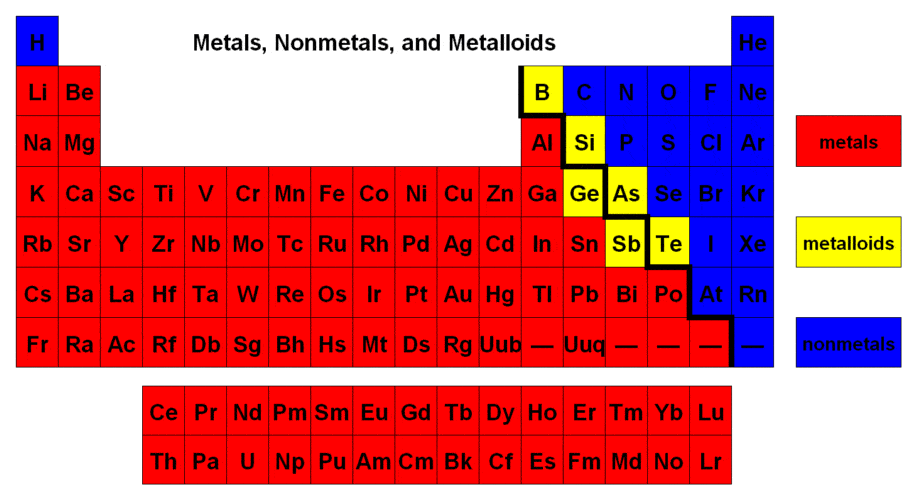
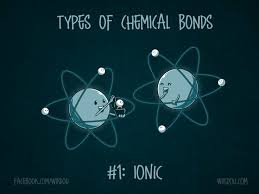
An ionic bond forms when (a) .
Covalent
Metallic
Covalent
Metallic
Metallic
An electron that is found in the outermost shell of an atom.
An electron found in the innermost shell of an atom.
An electron found in the middle shell.
All electrons within an atom.
A (a) is formed between atoms when electrons are shared.
What type of substance is a brittle solid that conducts electricity when dissolved in water?
network covalent
metallic
molecular covalent
ionic
What type of substance is a bendable hard solid that conducts electricity but does not dissolve in water?
network covalent
ionic
metallic
molecular covalent
What is the correct Lewis Dot Structure for ammonia NH3


Which of the following is NOT a property of ionic compound?
Solid at room
temperature
Insoluble in water
Molten ionic
compounds
conduct
electricity
High melting &
boiling point
In the correct Lewis structure for methane, CH4, how many unshared electron pairs surround the carbon?
In carbon dioxide, CO2, how many UNSHARED pairs of electrons does each oxygen have?
3. Which is a correct Lewis structure for hydrogen cyanide, HCN?


How many electrons can be used in the Lewis Structure for : NO3-
How many electrons are represented by each line in a shared bond??


Which of these is the correct Lewis structure for SiBr4?
A
B
C
D

