
 Worksheets
Quarter 2 Big Science Review
Total questions: 44
Worksheet time: 24mins
If an organism (any living thing, including a plant or an animal) cannot handle a change in their habitat, what will happen to them over time?
They will grow fur.
They will overpopulate.
They will become extinct.
They will hibernate.
The passenger pigeon is extinct. What can you conclude about it?
The passenger pigeon is too well hidden to be found today.
All passenger pigeons are gone forever.
There are only a few passenger pigeons left in the world.
The passenger pigeon can handle its environment.

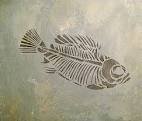
If scientists found this fossil, what could they infer?
what fish are like today
that this fish lacked oxygen
that water once covered the area where this fossil was found
All of the following are reasons that organisms can become extinct EXCEPT ________.
destruction of habitat
severe climate change
disease
too much food
What can scientists infer when they find a dinosaur skull with mostly sharp teeth?
They can infer that the dinosaur was most likely an omnivore.
They can infer the dinosaur was most likely a carnivore.
They can infer the dinosaur was most likely an herbivore.
What do animals in some places do as weather gets cold?
They start to shed their fur and feathers.
They start to prepare for winter.
They start to attack other animals and humans.
They start moving to even colder places.
What does it mean to 'adapt'?
to grow new body parts
to inherit traits from your ancestors
to change to meet the needs of your environment
to eat new food
Which answer is NOT an example of an adaptation?
feeding on bark and twigs that are available during winter
having thicker fur to keep warm
having whiter fur in order to survive in a snowy environment
growing longer legs so you can run faster
Roses could never survive at the South Pole because ...?
it is too mild
it is too cold
it is too warm
it is too wet
Which animal’s foot is best adapted for catching and holding prey?


An ___ is a community of interacting organisms and their environment.
adaptation
ecosystem
invasive species
organism
Animals work together in groups to help them _____.
survive
grow
reproduce
all of these
The main source of food for a coyote population in one area is mice. Which is MOST likely to happen to these coyotes if a new predator begins eating the mice?
There will be fewer coyotes.
The coyotes will produce more young.
More coyotes will arrive from other locations.
Each coyote will spend less time hunting food.
A species is ___ when it is at risk of extinction.
thriving
threatened
endangered
extinct
Organisms that are ___ are no longer found alive anywhere on planet Earth.
thriving
threatened
endangered
extinct
A ___ is an animal that eats meat and has sharp teeth.
carnivore
herbivore
omnivore
none of these


If the deer population in an area declines because of hunting humans, the wolves would __________.
start to attack the human hunters
find an area where there were more deer
become endangered and then extinct
choose another food to eat
How do plants obtain their food?
They make their own food.
They feed on plants.
They feed on animals.
None of the above.
If an organism cannot adapt to its environment it will most likely ___________.
survive
live
reproduce
die
The location in which an organism lives is known as a ___________.
adaptation
habitat
energy
organism
Any living thing is called ________________.
energy
an animal
an organism
a plant
Which is NOT an example of an adaptation?
reptiles camouflaging to math their environment
birds migrating when it gets too cold
giraffes having more spots because it makes them look cool
flowers having more petals because it attracts pollinators
HOW does camouflage provide an animal with an advantage to surviving?
When an organism's coloring or shape helps them blend in, they tend to survive better.
To change to meet the needs of your environment.
What is variation?
differences in traits
when organisms are better at adapting
an animal that is hunted by a predator
traits that animals have

Which organisms would be unable to escape and therefore perish from a fire?
the deer
the birds
the tree
the raccoon

After this prairie was flooded, all the animals left and the grasses died. Which organism will most likely return first?
jackrabbit
hawk
coyote
grasses

What would happen to this food chain if there was no grass?
The grasshoppers would eat the mice, and the snakes would move away.
The mice would have more grasshoppers to eat.
The snake population would increase.
The grasshopper population would decrease.

The removal of which organism would cause all other populations to decrease?
small ocean plants
small ocean animals
tuna
shark

What might happen to the rest of the food chain if there was an increase in the grasshopper population?
The mouse population will decrease.
The snake population will decrease.
The hawk population will decrease.
The grass population will decrease.

What might happen to the rest of the food chain if there was a decrease in the snake population?
The grasshopper population will increase.
The mouse population will decrease.
The hawk population will decrease.
The grass population will decrease.
------------------- forces animals to look for new places. They may die without water.


An ecosystem is made up of ____________.
living things
non-living things
living and non-living things

Natural disasters can also change ecosystems. What can organisms do if a disaster happens?
Fight, Survive, Struggle
Move, Adapt, Die
Stay, Sleep, Survive

