
 Worksheets
Summative Test - BALLET STRAND Quarter 1
Total questions: 35
Worksheet time: 18mins
Name
Class
Date
1.
1. The era where specific vocabulary began developing for Ballet (the French vocabulary)
a)
b. 17th Century
b)
a. 16th Century
c)
c. 18th Century
d)
d. 19th Century
e)
e. 20th Century
2.
2. During this period, ballet was participatory and woman wore formal gowns that covered their legs and ankles
a)
a. 16th Century
b)
b. 17th Century
c)
c. 18th Century
d)
d. 19th Century
e)
e. 20th Century
3.
3. Pointe work began in this period..
a)
d. 19th Century
b)
a. 16th Century
c)
b. 17th Century
d)
c. 18th Century
e)
e. 20th Century
4.
4. In this period, no more insane story and illogical plots
a)
c. 18th Century
b)
a. 16th Century
c)
b. 17th Century
d)
d. 19th Century
e)
e. 20th Century
5.
5. Dancers should wear light fabric that will show their lines and allow mobility
a)
c. 18th Century
b)
a. 16th Century
c)
b. 17th Century
d)
d. 19th Century
e)
e. 20th Century
6.
6. Composed famous ballets such as The Nutcracker and Swan Lake
a)
a. Pierre Beauchamp
b)
b. George Balanchine
c)
c. Pytor Ilyich Tchaikovsky
7.
7. He is the father of American Ballet.
a)
a. Pierre Beauchamp
b)
b. George Balanchine
c)
c. Pytor Ilyich Tchaikovsky
8.
8. The person who created the five fundamental positions of arms and feet in ballet.
a)
a. Pierre Beauchamp
b)
b. George Balanchine
c)
c. Pytor Ilyich Tchaikovsky
9.
9. The Artistic Director of New York City Ballet for over 35 years.
a)
a. Pierre Beauchamp
b)
b. George Balanchine
c)
c. Pytor Ilyich Tchaikovsky
10.
10. He is the personal teacher of King Louis XIV
a)
a. Pierre Beauchamp
b)
b. George Balanchine
c)
c. Pytor Ilyich Tchaikovsky
11.
11. What to wear for the legs?
a)
b. Tights
b)
a.Skirt
c)
c. Leotards
d)
d. Socks
e)
e. T-shirt/Tank tops
12.
12. What to wear for the feet?
a)
d. Socks
b)
f. Ballet Shoes
c)
a.Skirt
d)
b. Tights
e)
c. Leotards
13.
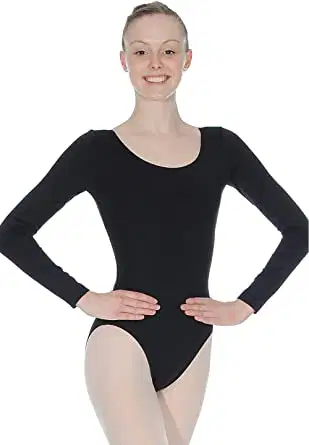
13. What do you call this?
a)
c. Leotards
b)
a.Skirt
c)
b. Tights
d)
d. Socks
e)
e. T-shirt/Tank tops
14.
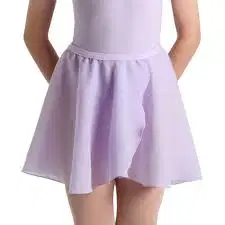
14. What do you call this?
a)
a.Skirt
b)
b. Tights
c)
c. Leotards
d)
d. Socks
e)
e. T-shirt/Tank tops
15.

15. What do you call this?
a)
f. Ballet Shoes
b)
a.Skirt
c)
b. Tights
d)
c. Leotards
e)
d. Socks
16.
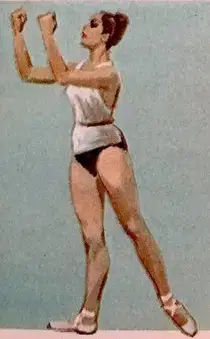
16. What’s the meaning of this gesture?
a)
f. Anger
b)
a. Hide
c)
b. Fear
d)
c. Love
e)
d. Tears
17.
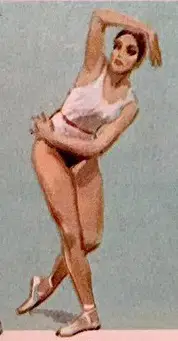
17. What’s the meaning of this gesture?
a)
a. Hide
b)
b. Fear
c)
c. Love
d)
d. Tears
e)
e. Sleep
18.
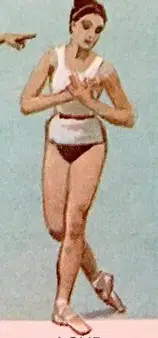
18. What’s the meaning of this gesture?
a)
c. Love
b)
a. Hide
c)
b. Fear
d)
d. Tears
e)
e. Sleep
19.
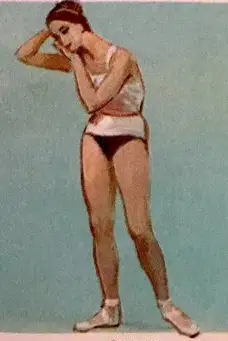
19. What’s the meaning of this gesture?
a)
e. Sleep
b)
a. Hide
c)
b. Fear
d)
c. Love
e)
d. Tears
20.
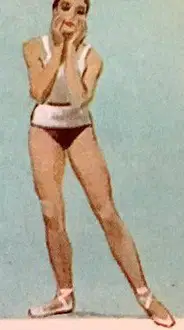
20. What’s the meaning of this gesture?
a)
d. Tears
b)
a. Hide
c)
b. Fear
d)
c. Love
e)
e. Sleep
21.
21. Romantic story of a beautiful young peasant girl who falls for the flirtations of the deceitful and disguised nobleman Albrecht. When the ruse is revealed, the fragile Giselle dies of heartbreak, and Albrecht must face the otherworldly consequences of his careless seduction.
a)
a. The Nutcracker
b)
b. Swan Lake
c)
c. La Sylphide
d)
d. Giselle
22.
22. What dance has this story line.. “It is Christmas Eve. Family and friends have gathered in the parlor to decorate the beautiful Christmas tree in preparation for the party. Once the tree is finished, the children are sent for. They stand in awe of the tree sparkling with candles and decorations.”
a)
a. The Nutcracker
b)
b. Swan Lake
c)
c. La Sylphide
d)
d. Giselle
23.
23. What dance has this story line.. “In the hall of a Scottish farmhouse, James Ruben, a young Scotsman, sleeps in a chair by the fireside. A sylph gazes lovingly upon him and dances about his chair. She kisses him and then vanishes when he suddenly wakes.”
a)
a. The Nutcracker
b)
b. Swan Lake
c)
c. La Sylphide
d)
d. Giselle
24.
24. It is a ballet composed by Pyotr Ilyich Tchaikovsky in 1875–1876.
a)
a. The Nutcracker
b)
b. Swan Lake
c)
c. La Sylphide
d)
d. Giselle
25.
25. It was first performed by the Ballet du Théâtre de l'Académie Royale de Musique at the Salle Le Peletier in Paris, France on 28 June 1841, with Italian ballerina Carlotta Grisi.
a)
a. The Nutcracker
b)
b. Swan Lake
c)
c. La Sylphide
d)
d. Giselle
26.
26. It means “in the air”.
a)
a.En l'aire
b)
b.A terre
c)
c.Derriere
d)
d.Devant
e)
e.A la seconde
27.
27. It means “side”.
a)
a.En l'aire
b)
b.A terre
c)
c.Derriere
d)
d.Devant
e)
e.A la seconde
28.
28. It means “inward”.
a)
A. En croix
b)
B. En de dans
c)
C. En de hors
29.
29. It means “in the shape of the cross”.
a)
A. En croix
b)
B. En de dans
c)
C. En de hors
30.
30. It means “facing the audience”.
a)
A. De cote
b)
B. Croise
c)
C. Ecarte
d)
D. Efface
e)
E. En face
31.
31. It is a bending of knees in ballet. It is used as an exercise to loosen muscles and develop balance.
a)
D. Plie
b)
A. Releve
c)
B. Tendu
d)
C. Glisse
e)
E. Preparation
32.
32. It is a movement in which the working leg is gliding outward from an initial foot position to extending off the ground. .
a)
C. Glisse
b)
A. Releve
c)
B. Tendu
d)
D. Plie
e)
E. Preparation
33.
33. It is a term in classical ballet that means to prepare.
a)
E. Preparation
b)
A. Releve
c)
B. Tendu
d)
C. Glisse
e)
D. Plie
34.
34. It is a classical ballet term which means to raise.
a)
A. Releve
b)
B. Tendu
c)
C. Glisse
d)
D. Plie
e)
E. Preparation
35.
35. It is a movement of the leg which means to stretch. Brushing from any initial foot position until the tip of toe remains touching the floor.
a)
B. Tendu
b)
A. Releve
c)
C. Glisse
d)
D. Plie
e)
E. Preparation
100 %

