
 Worksheets
3 Branches Quiz
Total questions: 15
Worksheet time: 8mins
Name
Class
Date
1.
Which branch holds the power of impeachment?
a)
Supreme Court
b)
Executive
c)
Judicial
d)
Legislative
2.

This headline illustrates a power of which branch of government?
a)
Legislative
b)
Judicial
c)
President
d)
Supreme Court
3.
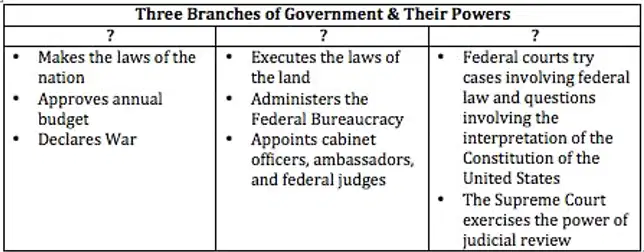
What is the correct label for each column in the chart?
a)
Judicial, Legislative, Executive
b)
Executive, Legislative, Judicial
c)
Legislative, Executive, Judicial
d)
Judicial, Executive, Legislative
4.
The President of the United States is the Chief Executive. Which answer best explains the President's role as Chief Executive?
a)
Responsible for seeing that laws are enforced or carried out
b)
Responsible for choosing members of the lawmaking branch
c)
Responsible for interpreting the nation's laws
d)
Responsible for making the nation's laws
5.
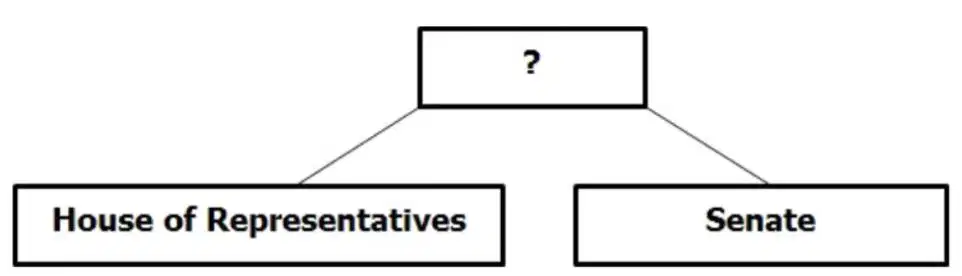
What best completes the diagram above?
a)
Executive branch
b)
Congress
c)
General Assembly
d)
Constitutional republic
6.
Which basic principle of the Constitution of the United States prevents any one branch from gaining too much power?
a)
Rule of law
b)
Representative government
c)
Checks and balances
d)
Popular sovereignty
7.
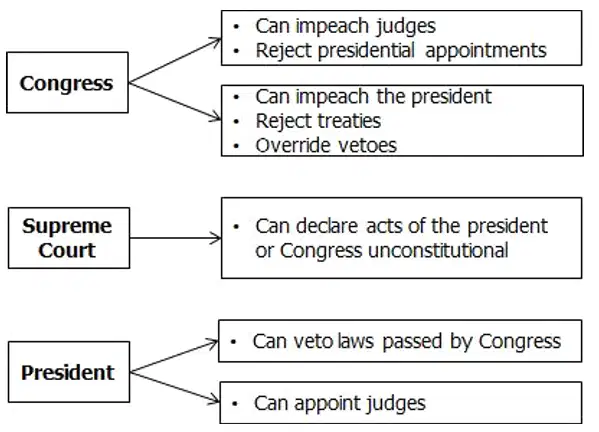
According to the illustration, what is a power the Congress does NOT have over the President?
a)
Appoint judges
b)
Refuse treaties
c)
Refuse appointments
d)
Override vetoes
8.
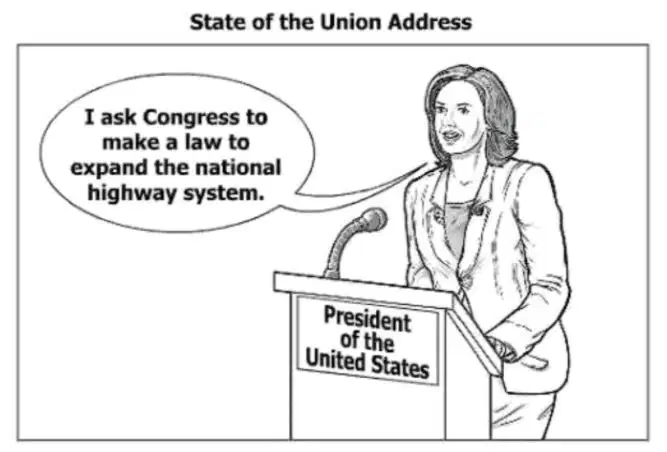
Which executive power is being demonstrated in this drawing?
a)
Power to influence and propose laws
b)
Ability to veto laws
c)
Power to approve cabinet members
d)
Ability to change judicial decisions
9.
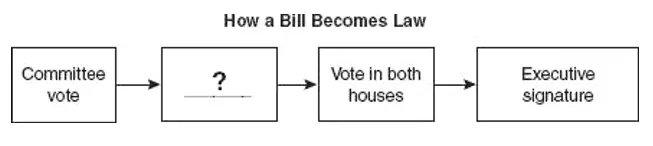
Which of the following completes the diagram?
a)
Judicial opinion
b)
Debate on the floor
c)
Referendum on the legislative process
d)
Veto the legislation
10.
What is the first step of the lawmaking process?
a)
Bill is sent to committee
b)
Bill is signed or vetoes
c)
Bill is debated
d)
Bill is introduced in Congress
11.
Select all of the following statements that are true of the executive branch.
a)
serve 4 year terms
b)
creates laws
c)
must be a natural born citizen
d)
declares laws unconstitutional
e)
appoints federal judges
12.
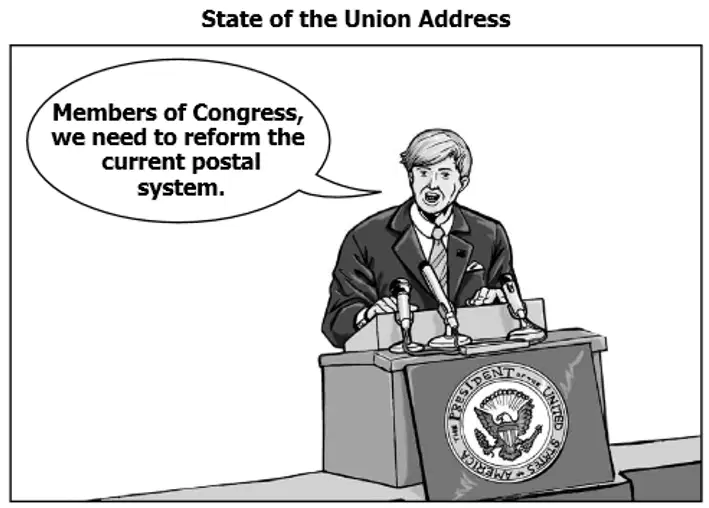
In this situation, the President is acting as which of the following roles -
a)
chief citizen
b)
chief diplomat
c)
chief legislator
d)
chief executive
13.
What power does the President exercise when ordering soldiers into battle?
a)
chief diplomat
b)
chief of party
c)
chief of state
d)
commander-in-chief
14.
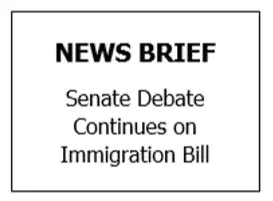
Based on the news brief, what would most likely be the next step in the lawmaking process?
a)
Senate votes on the bill
b)
Bill goes to the President
c)
Bill goes to Senate committee
d)
House of Representatives debates the bill
15.
Which of the following is NOT a job of the Judicial branch?
a)
declare a law unconstitutional
b)
approve the annual budget
c)
interpreting laws
d)
deciding the outcome of court cases
100 %

