
 Worksheets
Semester Exam 10th grade
Total questions: 50
Worksheet time: 17mins
Nationalism is best defined as
the achievement of world peace and global understanding
the desire to take over other societies by force
a method of solving basic economic problems of the society
the loyalty of a people to their values, traditions, and a geographic region
The first great revolution which gave the clear idea of nationalism with its core words: ‘Liberty, Equality and Fraternity’ was:
The Russian Revolution
The French Revolution
The American Revolution
India's First war of Independence
Nationalism not only united new countries but it also began to DIVIDE empires. Which of the two following empires began to divide or break apart because of Nationalism?
The Ottoman Empire
The Russian Empire
The British Empire
The Austrian-Hungarian Empire
Where did the Industrial Revolution begin?
United States
England
France
Germany
Who played an important role in the unification of Germany?
Kaiser William I
Otto Von Bismarck
Duke Metternich
Cavour
What were significant factors that contributed to the start of the Industrial Revolution in Great Britain?
The presence of a powerful labor movement that advocated for favorable working conditions and high salaries for factory employees.
National government ownership of the industries.
The ease with which cities could absorb the influx of people moving from rural to urban areas.
The availability of ample coal and iron ore reserves, along with a well-developed transportation network.
What is a common characteristic of nationalism?
Shared language
Shared culture
Common history
All of the above
Urbanization is when
people move from the city to the farm
the creation of farming towns
people move from the farm to the city
the improvement of living conditions
Transportation in the 1800s was revolutionized by the development of the
caravel
steam engine
astrolabe
airplane
What is one of the main reasons why it is challenging to attribute Industrial Revolution inventions to a single individual?
Historical records are often incomplete and unreliable
Many of these inventions were the result of serendipity and went unrecognized for their value
These inventions were often the product of collaborative efforts and continuous improvements
Some of these inventions were developed in regions with different intellectual property laws

What was the reason for the arrival of American warships in Edo Bay Tokyo on July 8, 1853?
to demand the opening of Japanese ports to foreign trade
to establish diplomatic relations with Japan
to explore the natural resources of Japan
to support the Japanese government in a time of crisis
Which industry saw significant advancements due to the introduction of the spinning jenny, power loom, and steam engine?
Textile Industry
Coal Industry
Steel Industry
Transportation Industry
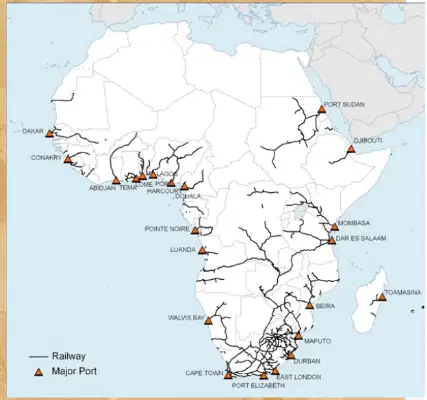
During the 19th century, Europeans improved roads, built bridges, and put down railroad tracks in their colonies primarily to -
obtain raw materials for their industries
provide high paying jobs for their colonists
impress the colonists with their technological superiority
help missionaries to spread the Christian religion
In which wars were the Chinese defeated by Britain in 1839 and 1856?
Sino-Japanese War
Russo-Japanese War
Boxer Rebellion
Opium Wars
Taiping Rebellion
What did Karl Marx predict would be the primary source of conflict in post-industrial revolution society?
Conflict between political and religious institutions over access to citizens' wealth
A backlash against modernity resulting in a reversion of feudal customs
more politicians serving the common good
Conflict between the owners of the means of production and the working class.
The Meiji Restoration in Japan was prompted in part by
a fear that Japan would be colonized by western nations
the failure of Japanese expansion
the Shogun’s conversion to Christianity
a desire to stay isolated
Imperialism refers to -
A political and / or economic control of one area or country by another
The moral responsibility of Europeans to "civilize" "primitive" people
Rule by military force, supported by the landed elites
Movements to establish greater democracy
The Scramble for Africa was the 30-year period where
Africa was conquered by Europeans
Africa gained its independence
Africans successfully improved their economies
Africa ran out of eggs

Which term refers to the political, economic, and cultural control of one country by another country or region?
Partition
Imperialism
Muslim League
Sphere of Influence
What was one impact of industrialization on Japan during the Meiji Restoration?
Japan became more isolated from world affairs.
Demand for natural resources increased.
Japan became a colonial possession of China.
Traditional practices of Bushido were reintroduced.
What did Europeans believe they needed to bring to the rest of the world according to the concept of the "White Man's Burden"? (Select 2)
Civilization
Christianity
Technology
Wealth

What were the main Chinese goods that the British traded their silver for before the Opium War?
Silk, tea, and porcelain
Porcelain, cotton, gold
Diamonds, silk, opium
Silk, tea, and gunpowder
About how much of Africa was controlled by European nations?
60%
70%
80%
90%
What was the document that granted increased rights to all French citizens?
Declaration of the Rights of Man and the Citizen
Declaration of Independence
Tennis Court Oath
Constitution
What are the three reasons for imperialism?
economical, political and cultural.
economical, political and cultural.
zooilogical, regional and demographical.
agricultural, economical and cultural.

Overthrow of the government by the Military

What was the term used to describe the belief that stronger nations had the right to dominate weaker ones?
Treaty of Berlin
Social Darwinism
Imperialism
Colonialism

What was the primary reason for the Middle East being a target for control by great empires?
Abundance of valuable resources
Lack of desert regions
Strategic location for trade
Historical lack of value
Due to its diverse population, the Ottomans were known for
Forcing its subjects to convert to Islam
Creating harsh laws against Christians and Jews
Allowing many non-muslims into the government
Allowing religious practice for all, at a price
Which religion did the Ottoman Empire promote within their territories?
Islam
Christianity
Shintoism
Buddhism
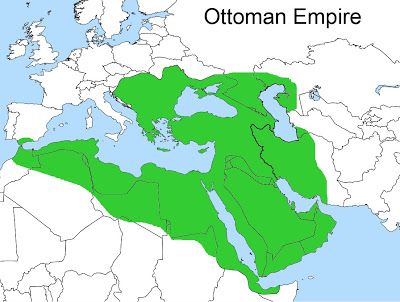
Which continents did the Ottoman Empire have some control over? Click all that apply.
Europe
Asia
Africa
North America
South America

What was a major factor contributing to the widespread nature of the revolutions of 1830 and 1848?
Lack of support for absolute monarchs
Decrease in trade and economic unity in Europe
Resistance to Enlightenment ideas and nationalism
Spread of nationalism and Enlightenment ideas across Europe
What is the term for when workers refuse to work until their demands are met?
Lockout
Knights of Labor
Labor
Strike
What was a key feature of the factory system that required all parts to be produced to identical specifications?
Centralized workspace
Unskilled labor
Standardized parts
Division of labor
What type of worker did the factory system allow business owners to hire at a low wage?
Highly trained
Unskilled
Educated
Experienced

Islam spread quickly in the centuries after the Prophet Muhammad, which extended from
India to Spain
Egypt to the Philippines
Russia to Saudi Arabia
India to Italy

What is Dar-al-Islam ?
Conquered people who adopt both Arab and Muslim culture
A term used to describe all states controlled by an Islamic government
A term used to describe the Mongol conquests of Islamic lands
People in West Africa who went on the caravan with Mansa Musa
The lack of cohesion during the Middle Ages in Europe was due to the fall of
Athens
Rome
Carthage
Constantinople
What was the only true unify institution in Europe during the Middle Ages
Nationalism
Feudalism
The Catholic Church
A few strong rulers
What was the primary characteristic of a medieval feudal society?
the majority of the population lived in rural areas, consisting of farming communities
people started to demand more individual rights and freedoms
the majority of the population lived in urban areas due to opportunities in the cities
an improved economic system was established based on the introduction of paper money and credit

