
NEW
Font size
 Worksheets
Biology Fall Exam Review
Total questions: 25
Worksheet time: 13mins
Carbohydrates are more easily metabolized than lipids. However, on a gram-for-gram basis lipids cells with more — A. nitrogen B. proteins C. structure D. energy
nitrogen
proteins
structure
energy
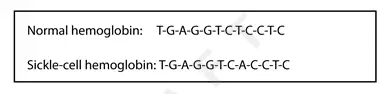
Sickle-shaped red blood cells result from a mutation in the gene that codes for hemoglobin. This mutation results in sickle-cell anemia. A partial sequence of bases from a normal hemoglobin gene and a sequence that results in sickle-cell anemia are shown below. What type of mutation is depicted in this sequence?
Insertion
Substitution
Deletion
Frameshift
In certain species of plants, purple flowers (P) are dominant to white flowers (p). If two heterozygous plants are crossed, what will be the phenotype of the offspring?
75 % white flowers, 25% purple flowers
50% white flowers, 50% purple flowers
0% white flowers, 100% purple flowers
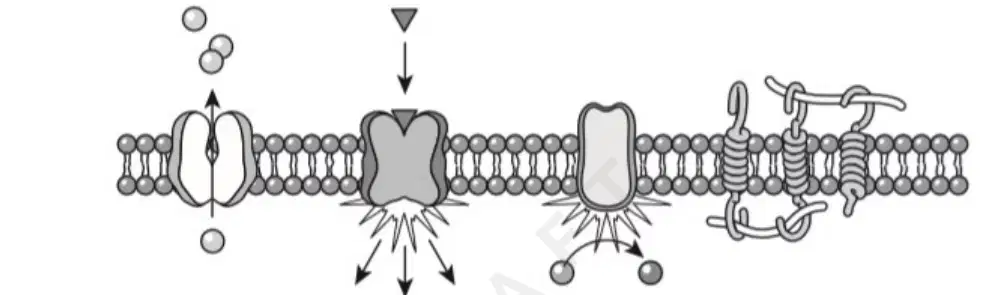
Transmembrane proteins span the width of cell membranes. Four types of transmembrane proteins are shown in a section of cell membrane.
Although these proteins have different functions, they all-
synthesize molecules that signal other cells
help the cell interact with its external environment
stop chemical reactions within the cell
remove large waste particles from the cytoplasm of the cell
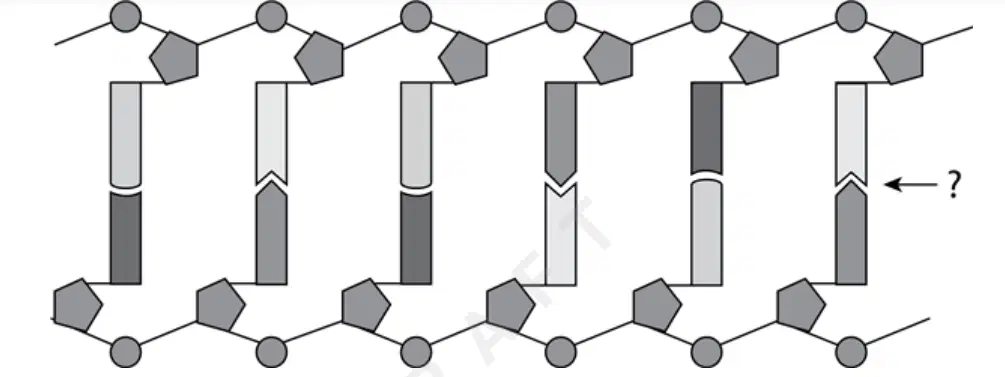
A model of a DNA molecule is shown.
The arrow indicates -
the hydrogen bond between the complementary nucleotides
the bond between adjacent phosphate and deoxyribose molecules
the junction of introns and exons in the sense strand of DNA
the junction of a codon and a DNA triplet
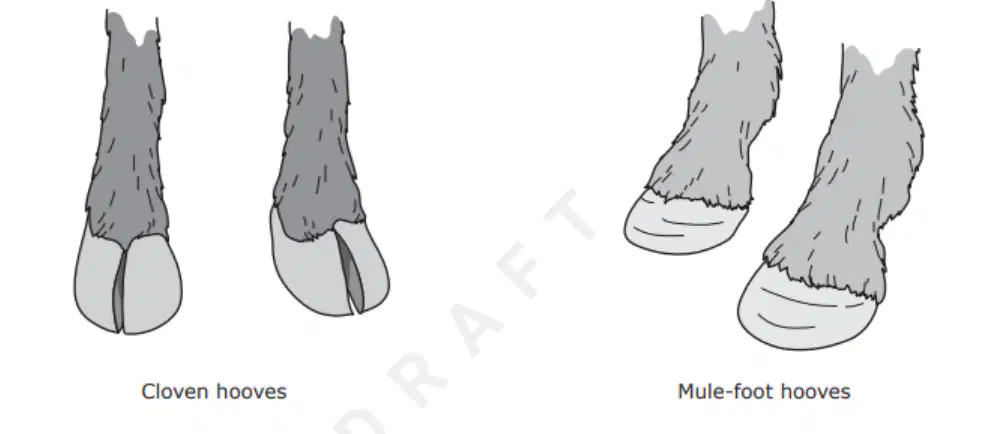
In cattle the allele for cloven hooves (H) is dominant over the allele for mule-foot hooves (h). The phenotype for each trait is shown in the picture.
What is the probability of cloven hooves in the offspring of parents that are heterozygous for the trait?
25%
50%
75%
100%
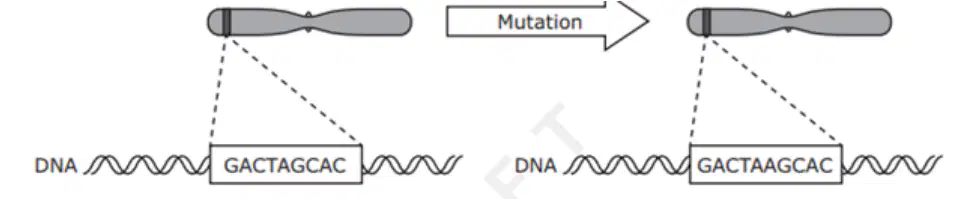
Different types of mutations can occur in DNA. The diagram represents a type of mutation.
Which statement describes the mutation in the diagram?
A silent mutation results in the insertion of a different amino acid.
A substitution occurs with the adenine base.
A deletion of a cytosine base occurs.
A base is inserted into one strand of the DNA.
Which of these is the direct result of an error in the transcription of a DNA nucleotide?
The nuclear membrane is ruptured.
Amino acids do not bond to tRNA.
A codon sequence is incorrect
Transportation of mRNA does not occur
Four different nucleotides are used as building blocks of DNA. Which of the following can be used to distinguish one nucleotide from another?
The shape of the deoxyribose sugar
The nitrogenous base
The length of the phosphate group
The type of fatty acid
A mutation that occurs in the gametes of an organism will most likely be transferred to which of the following?
The offspring of the organism
The siblings of the organism
The other organisms living nearby
The mating partner of the organism
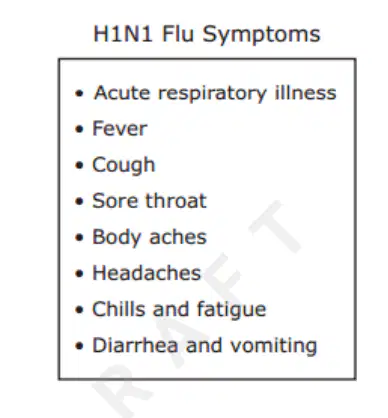
H1N1 flu is a highly contagious viral infection caused by the influenza A (H1N1) virus. The symptoms of H1N1 flu are listed in the box below. An antiviral agent administered within 48 hours of the appearance of symptoms can reduce the severity of the illness.
Why is it important to administer antiviral agent to an infected person within 48 hours of the appearance of symptoms?
The H1N1 virus is dormant in cells
The H1N1 virus replicates quickly.
The H1N1 virus does not mutate.
The H1N1 virus is transmitted through a vector host, such as a mosquito.
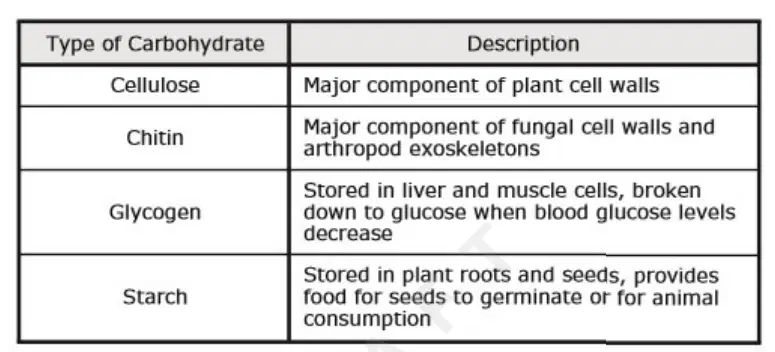
A table of four types of carbohydrates is shown.
Which list correctly matches the functions to the types of carbohydrates?
Energy: glycogen and starch
Structure: cellulose and chitin
Energy: cellulose and chitin
Structure: glycogen and starch
Energy: chitin and glycogen
Structure: cellulose and starch
Energy: cellulose and starch
Structure: chitin and glycogen
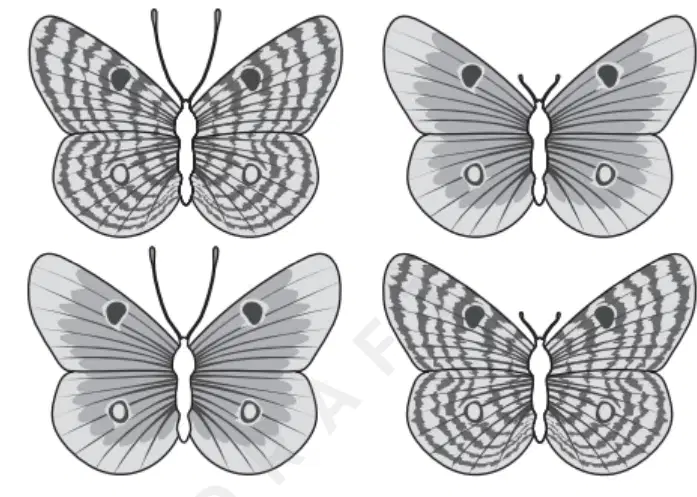
The four butterflies in the illustrations represent the offspring in the generation. Which statement is best supported by the phenotypes of these offspring? ?
The F1 generation is composed only of males.
Two of the offspring in the F1 generation will not be able to reproduce
the F1 generation is the result of a dihybrid cross
Two of the offspring in the F1 generation will experience a spontaneous mutation.
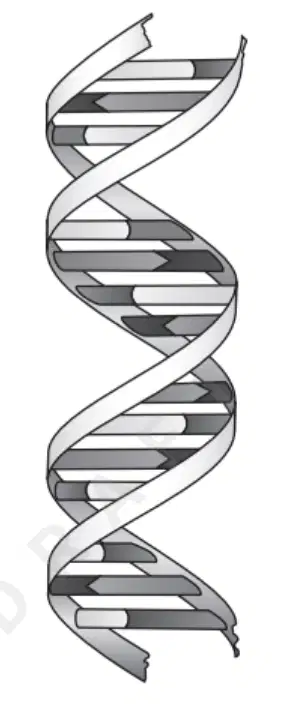
A segment of DNA is represented in the illustration.
How is information for a specific protein carried on the DNA molecule?
As a sequence of nucleotides.
In the double-helix shape of the condensed chromosome
In the ratio of adenines to thymines
As a pattern of phosphates and sugars
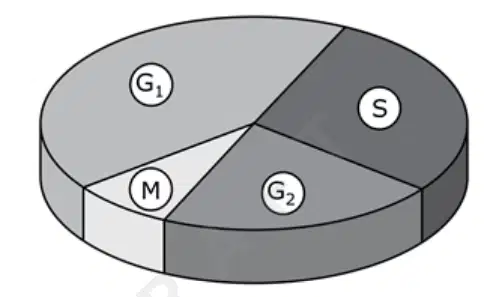
Checkpoints occur between the stages of the cell cycle. If a cell does not meet certain criteria at the end of a stage, it will not move to the next stage.
Which of these occurs just before the cell enters the G2 stage of the cell cycle?
The nuclear membrane disintegrates
DNA replicates
Centrioles form
The nucleolus divides
A mouse is homozygous for black fur (BB). The other parent is heterozygous. Black fun ir dominant (B), and brown fur is recessive (b). What percentage of the offspring will be brown?
0%
25%
50%
75%
How does DNA in cells determine an organism’s complex traits?
DNA separates into long single strands that make up each part of an organism.
DNA produces the energy an organism needs in order to grow.
DNA contains codes for proteins, which are necessary for the growth and functioning of an organism
DNA folds into the nucleus of each of the cells of an organism.
The cellular process known as the sodium-potassium pump was discovered in the 1950s by Jens Christian Skou, a Danish scientist. This process is a form of active transport that moves three sodium ions to the outside of a cell for every two potassium ions that it moves into the cell. Which of these best explains why energy is needed for active transport?
Ions are negatively charged
Ions are attached to large proteins
Ions are trapped inside the plasma membrane
Ions are moved against the concentration gradient
The sequence of nitrogenous bases in DNA varies widely. The sequence of the bases in DNA is most important for which of the following?
Providing the instructions for the traits of an organism
Preventing mutations from occurring during DNA replication
Allowing the DNA to have the shape necessary for replication
Helping form the sugar-phosphate backbone of DNA molecules
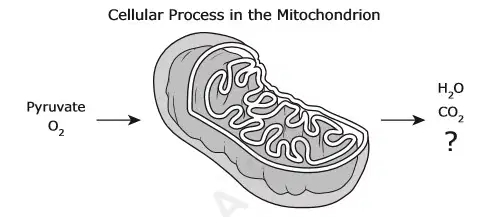
The diagram shows molecules that a mitochondrion uses and produces during a cellular process.
Which other molecule is a product of this process?
DNA
ATP
RNA
C6H12O12 (glucose)
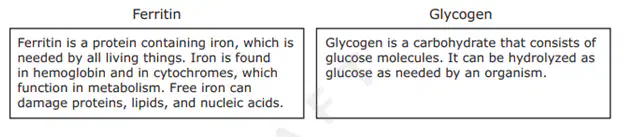
Proteins and carbohydrates have many functions in the body of an organism. Specific proteins and carbohydrates perform specific tasks. Information about a protein and a carbohydrate is given below.
How are ferritin and glycogen similar in their primary functions for an organism?
Both store energy used by the organism.
Both store materials needed by the organism.
Both support the structure of the organism.
Both store information for the organism
Part A
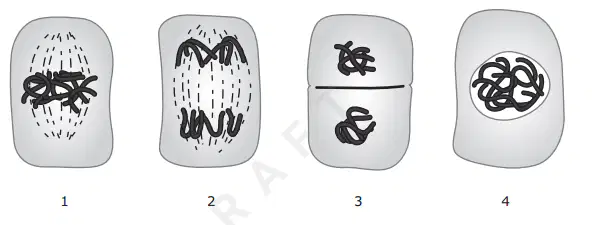
The diagram shows cells in different phases of mitosis. A student is trying to identify the phases of mitosis in the chart below.
Correctly label the phases of mitosis
1 - Metaphase
2- Anaphase
3 - telophase
4- prophase
1 - Telophase
2- Anaphase
3 - Metaphase
4- prophase
1 - Prophase
2- Anaphase
3 - telophase
4- Metaphase
1 - Metaphase
2- Anaphase
3 - telophase
4- prophase
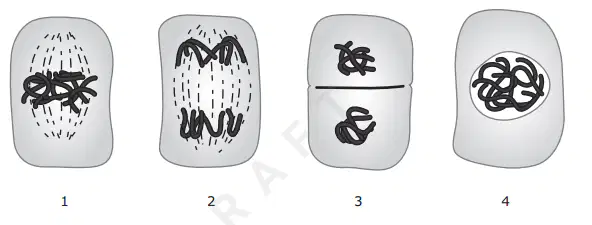
Which answer best supports #2 on the picture?
#2 is anaphase because the spindle fibers are separating the chromosomes
#2 is metaphase because the spindle fibers are forming and aligning in the middle of the dividing cell
#2 is prophase because the DNA is visible
#2 is telophase because you see 2 nuclei formed
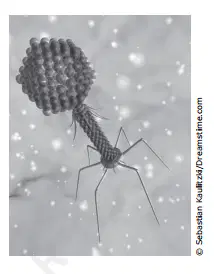
The picture shows a 3-D model of a virus called a bacteriophage. Bacteriophages can infect bacteria such as E. coli .
In what way are the bacteriophage and E. coli alike?
They contain antibodies.
They reproduce by mitosis.
They have identical genomes.
They lack membrane-bound organelles.
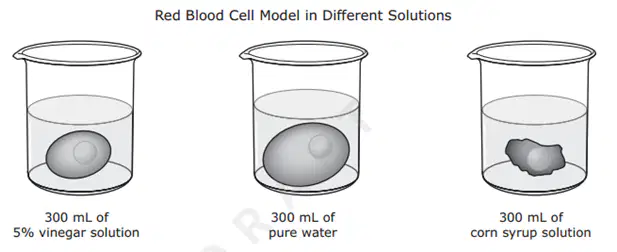
Some students used vinegar to dissolve away the shells of three eggs and used these eggs as models of human red blood cells. The students observed the changes in the eggs when they were placed in different solutions.
Which statement best describes the role of the cell membrane in this model?
The cell membrane is an impermeable barrier that prevents water from entering the cell.
The cell membrane allows water to enter and leave the cell.
The cell membrane allows solutes to enter the cell, which causes the cell to shrink.
The cell membrane removes solutes from the environment.

