
 Worksheets
Tectonic Plates GAME
Total questions: 45
Worksheet time: 3570secs
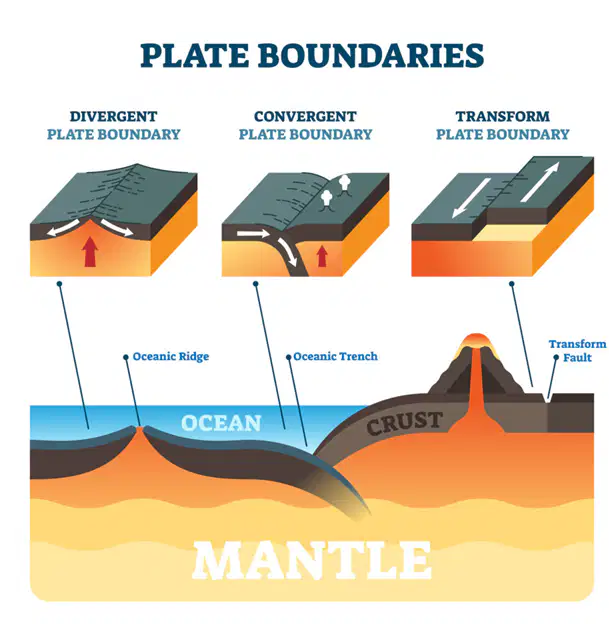
What are the three main types of tectonic plate boundaries?
Solid, Liquid, Gas
Divergent, Convergent, Transform
North, South, East
Hot, Cold, Warm
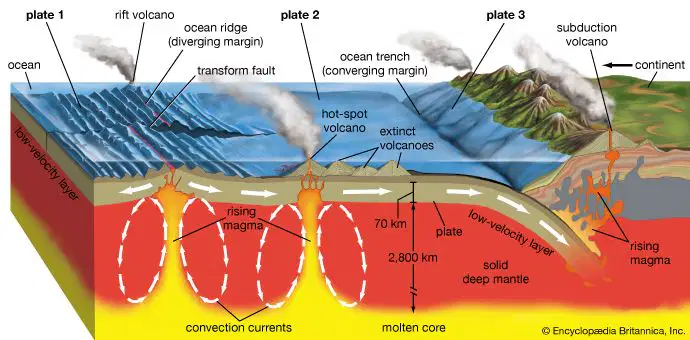
How does tectonic plate movement affect the Earth's surface?
It causes earthquakes, volcanic activity, and the formation of mountains and ocean trenches.
It has no impact on the Earth's surface
It causes the formation of deserts and plains
It leads to the melting of polar ice caps
How are earthquakes related to tectonic plates?
Earthquakes are caused by the movement of clouds in the atmosphere
Earthquakes are related to tectonic plates because they occur when the plates release built-up energy.
Earthquakes have no relation to tectonic plates
Earthquakes are a result of volcanic eruptions
Which type of tectonic plate boundary is associated with the formation of mountain ranges?
Convergent boundary
Subduction boundary
Transform boundary
Divergent boundary
What are the environmental effects of tectonic plate movement?
Air pollution, water contamination, and deforestation
Droughts, wildfires, and landslides
Hurricanes, tornadoes, and floods
Earthquakes, volcanic eruptions, and tsunamis
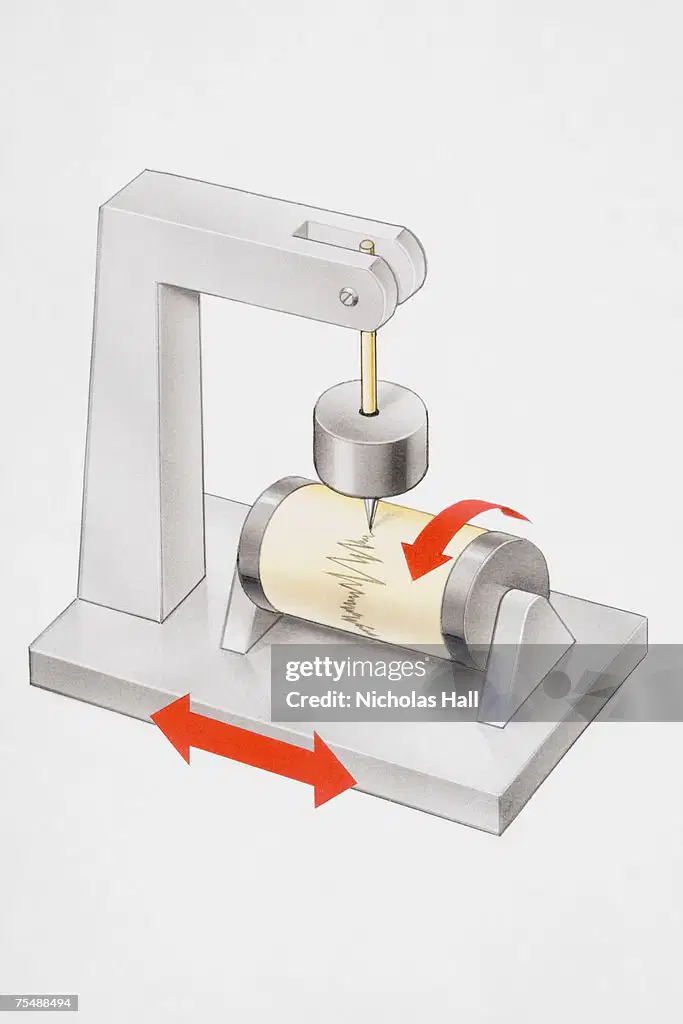
How do scientists study the movement of tectonic plates?
By studying the movement of clouds
By analyzing the behavior of ocean currents
By observing the migration of birds
Using various methods such as GPS, seismolographs, and satellite imagery.
What are the earth´s layers?
crust-mantle-outer core-inner core
crust- mantle- happy core- in core

Outer Core is
Made up of liquid metal and rock
Made of solid metal and rock
Inner Core is made up of.....
Solid Rock made up of iron and nickel
melted iron and nickel

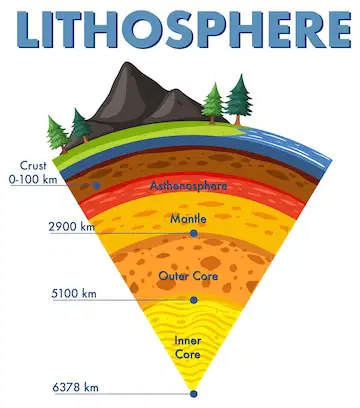
Which is the correct order of the Earths layers?
inner core, outer core, mantle, crust
crust, inner core, outer core, mantle
crust, mantle, inner core, outercore
crust, mantle, outer core, inner core

What type of fault is the San Andreas in California?
Convergent
Transform
Optimus Prime
Divergent
How do convergent plates move?
They pull away from each other.
They slide by each other.
They move to connect to each other.
It depends, sometimes they move close to each other, sometimes they move far apart.
The magnitude of an earthquake is measured by an instrument called
a digital scale
a seismogram
a seismograph
kilogram
What do we call the continuously moving parts of Earth's crust?
Plates
Crust
Earthquakes
Volcanoes
What happens when tectonic plate shift suddenly?
Thunderstorm
Volcano
Earthquake
Landslide
The strongest earthquake will be a category _____.
1
5
10
20
Why can't we feel all of Earth's earthquakes?
They happen deep inside Earth.
They aren't happening.
They happen so fast.
They are very gentle.
What do we call the place where two tectonic plates meet?
Plate
Fault
Focus
Epicenter
Most earthquakes happen along _________________.

Many earthquakes happen along the...
Ring of Fire
What is another name for magma that has reached Earth's surface?
Vent
Dust
Ash
Lava
Where is the Ring of Fire located?
Indian Ocean
Arctic Ocean
Pacific Ocean
Atlantic Ocean


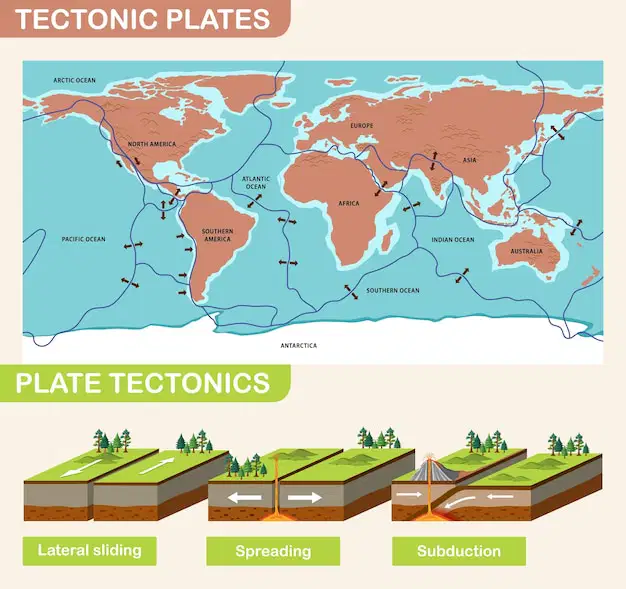
How does tectonic plate movement affect the Earth's surface?
It causes earthquakes, volcanic activity, and the formation of mountains and ocean trenches.
It has no impact on the Earth's surface
It causes the formation of deserts and plains
It leads to the melting of polar ice caps
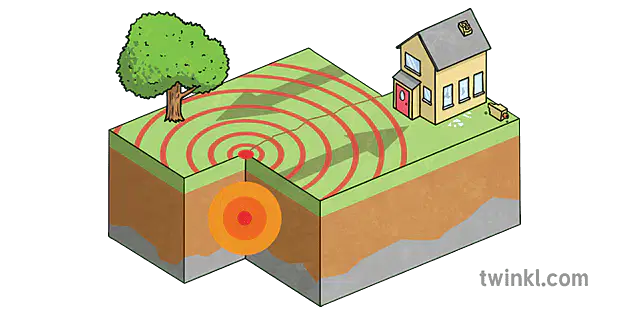
The spot deep in the earth where rocks break and cause an earthquake is called...
fault
core
focus
epicenter
What scale is used to measure Earthquakes?
Richter Scale
Saffir-Simpson Scale
Fujita Scale
Seismoscale
Why does the volcanic eruption happen ?
When the pressure on magma chamber inside earth increase and push magma to the surface.
When it formes by eruption lava and ash.
when rock underground suddenly breaks along a fault.


