
 Worksheets
Semester 1 Final Review
Total questions: 20
Worksheet time: 10mins
Which of the following is an accepted THEORY of how the Paleo-Indians came to North America?
They island-hopped across the Pacific Ocean.
Nomadic hunters from Siberia walked across the land bridge known as Beringia
Coastal Migration from Asia.
All of the answers are possible theories.
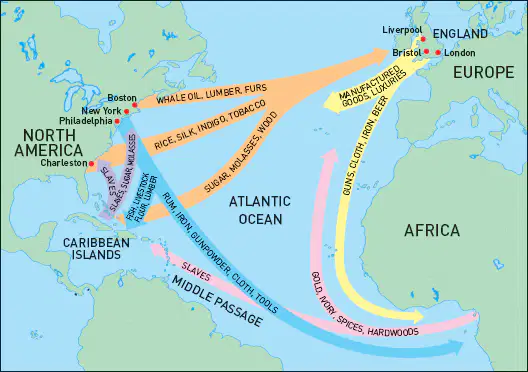
What's the best title for this map?
Spanish Colonies in the New World
The United States in 1750
Colonial Trade Routes
British Domination of the Americas
You’ve arrived in the New World. People before you have discovered gold so your government is getting rich from those who came here and keeps an eye on affairs. You are ruled by a monarchy that is very strictly religious. Many priests travel along with you to convert the natives. If they don’t convert to Christianity, they will face a punishment. You decide that you want to help these priests convert these natives to Christianity to save their souls.
God
Glory
Gold
You arrive in the New World. Although your country’s explorer got to the New World late, you heard there is money to be made in this vast wilderness. Furs and fish can provide money to survive and a freedom to wander. You trade with and learn from the Native population. You may even marry a native girl. In fact, you dress and live as the natives do often living with a group before wandering on. You spend your days hunting and fishing to provide for your family.
God
Glory
Gold
You and your family are the richest in the kingdom of Portugal. You and your siblings have grown up in extravagant palaces and have never had to work a day in your life. Unlike you brothers and sisters, you have always had an adventurous spirit and want to go down in history as one of the greatest explorers. In order to do this you decide that you are going to chart a path across the Atlantic Ocean in search of new lands to claim in the name of Portugal.
God
Glory
Gold
I challenge the warmest advocate [supporter] for reconciliation, to shew [show], a single advantage that this continent can reap [gain], by being connected with Great Britain. I repeat the challenge, not a single advantage is derived [acquired}. Our corn will fetch its price in any market in Europe, and our imported goods must be paid for, buy them where we will...
The speaker is most likely to oppose…
Thomas Paine, Common Sense, 1776
British rule
mercantilism
capitalism
Colonial democracy
All of the following were reasons why European nations were interested in exploration EXCEPT:
to Spread Christianity
to cure Indian diseases in the New World
to claim new lands they discovered
to expand overseas trade & wealth
Which of the following is NOT a reason individual people traveled from England to the Americas?
to have more religious freedom
to have more political freedom (self-government)
to have a fresh start in life
to protect Mother England from invading countries
The part of the enslaved peoples journey aboard the ship between African the American colonies was known as:
Salutary Neglect
Mercantilism
the Middle Passage
Triangle Trade
Who were responsible for the Boston Tea Party and other protest in the colonies?
Native Americans
Sons of Liberty
British Soldiers
Illuminati
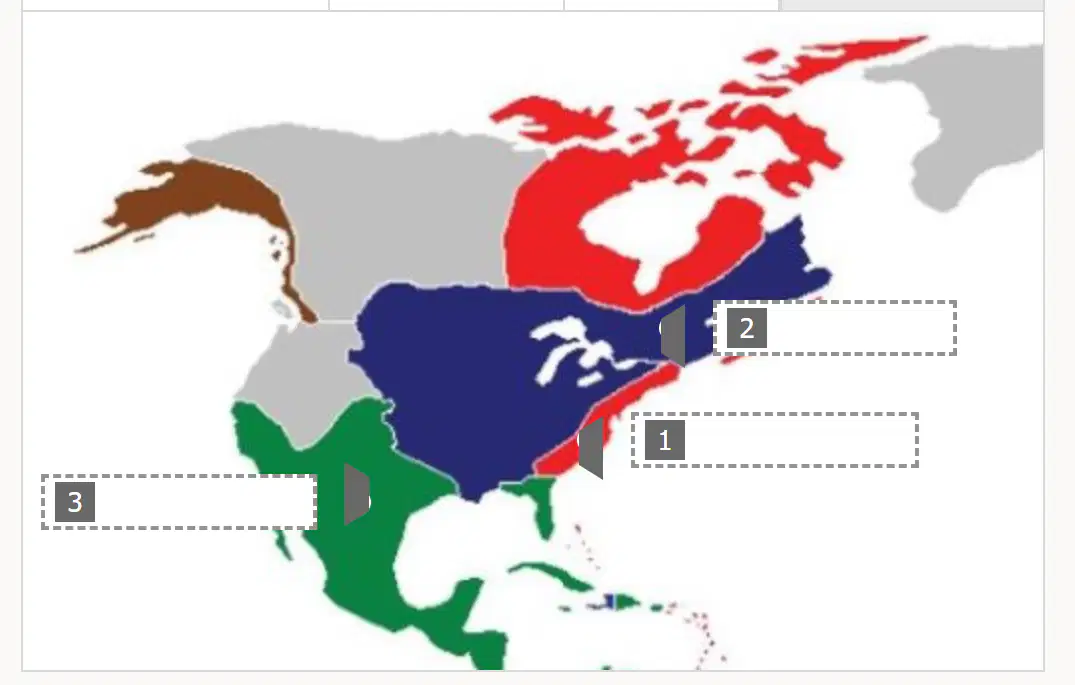
Match the number to the countries that claimed the land.
1. France
2. England
3. Spain
1. England
2. France
3. Spain
1. Spain
2. France
3. England
The leading cause that divided England and the colonies was the..
disagreement over the Treaty of Paris.
England's conflict with France.
required attendance to the Church of England.
question of Britain's right to tax the colonies.
Britain tighten control over the colonies and increased taxes because the colonists
needed to pay their share of the French and Indian War debt.
paid no taxes to anyone.
were moving out of the country.
were sharing land with the French.
"No taxation without representation" means:
Colonists should not be taxed if they had no one representing them in Parliament.
Representatives cannot tax me.
Local governments should not be able to tax the colonists.
Colonists wanted to pay taxes to England and Spain to help those countries.
The following events are in the order they took place.
1. British companies lost money
2. parliament repealed the Act
3. The colonists boycotted British goods
4. Britain passed the Stamp Act
2
4
1
3
4
3
1
2
1
2
3
4
3
1
2
4
Which of the following 2 statements were a result of the French and Indian War? Select all that apply
Britain's debt dramatically increased
Native Americans regained access to their ancestral lands.
The British and colonies strengthened their relationship with each other.
France lost most of its land in North America
The Spanish established control in the Northern part of the American colonies.
The purpose of the Declaration of Independence was to?
try one last time to make peace.
explain to the world why the colonies were separating.
formally put an end to the war.
convince people not to move back to England.
According to the Declaration of Independence, the government gets its power from?
Writs of Assistance
The people being governed
The Bible
The Parliament

What was the purpose of this image?
To act as propaganda to persuade people that the British were in the wrong.
To encourage colonists to stop protesting
To act as propaganda to persuade people to support the British troops.
To encourage colonists to support the Declaration of Independence.
Who served as the governor of the Colonies during the Revolutionary War?
Continental Congress
House of Burgesses
Parliament
Sons of Liberty

