
 Worksheets
Ancient Rome review gr 9
Total questions: 168
Worksheet time: 2hrs 6mins


In the beginning, the early Romans shared the Italian peninsula with the:
Spanish and Portugese
Greeks and Etruscans
Germans and Asians
Africans and English
Fill in the missing part (?) in the order of how Rome grew: Rome began as a monarchy- then grew into a (?) - and finally became an empire.
village
community
city
republic
Romans believed in many Gods. This practice of polytheism was similar to the:
Spanish and Portugese
English and Anglos
Greeks and Etruscans
Germans and Asians
Romans conquered many territories and people, but they allowed those conquered people to:
Practice their own customs and beliefs
become political leaders
move away to other lands
own property and slaves
Rome wanted to expand and control other territories. This practice of conquering other territories is called:
monarchy
capitalism
imperialism
republic
The Roman republic became an empire under the rule of:
Julius Caesar
Augustus
Hadrian
Constantine
The emperor Diocletian divided the Roman empire into 2 parts- The East and The West. But when The Western Roman empire collapsed, the eastern territory was re-named:
The Byzantine Empire
Constantinople
New Rome
Saudi Arabia
The Roman empire collapsed mostly because of:
money issues in the empire
People moving away
politicians losing elections
Germanic invasions from the North
Christianity grew in the Roman empire from:
The teachings of Jesus Christ
The military campaigns of Julius Caesar
The destruction of the Roman empire
The Jewish religious practices in Rome
Romans made it illegal to practice of Christianity in the beginning within its territories. They often times executed violators of this law by using this form of punishment:
crucifixion
drowning
hanging
thrown to hungry lions
In the Roman Senate Senators served for life....
True
False
The senate, although less powerful during the Roman Empire, still existed...
True
False
Which one of the following is a factor to the end of Roman Republic?
Political offices were held by a small group of wealthy elite, that were against helping the poor.
Emperor Nero killed his enemies including those in the republic
Farmers started a slave revolt under Sparticus..
Roman lost all three Punic Wars and the Republic fell due to this.
Which of the following is a contributing factor to the fall of the Roman Republic?
Soldiers fought in many civil wars crippling Roman economy
Soldiers swore oaths of loyalty to their generals, and not to the Roman state.
Soldiers became senators under new laws and corrupted the republic.
Soldiers implemented new taxes that only affected the poor.
Which of the following is a contributing factor to the fall of the Roman Republic?
Many farmers lost their land and were forced to move to the city for jobs overwhelming the economy.
Farmers revolted and refused to do any labor.
Farmers had a new tax law passed that ended agricultural trade in Rome.
Many farmers received double pay during the "Pax Romana" that hurt the Roman economy beyond repair.
The Pax Romana was.....
An era of Roman history dominated by corrupt rulers.
A period of peace that last over 200 years in Rome.
Mr. McKenna's favorite album by LCD Soundsystem
The name of the most famous Colosseum battle.
The name of Rome's ruling elite class....
Parthage
Plebians
Patricians
Pax Romana
Rome's working poor were called...
Patricians
Plebians
Pax Romans
People of the State
There was little economic difference between the Plebians and the Patricians...
True
False.
Julius Caesar invited _____ of his friends to the Senate weakening it.
300
600
90
900
Both the first and second Triumvirate were both very successful.
True.
False.
This Emperor divided Rome into 4 different parts
Diocletian
Constantine
Julius Caeser
Pompey
This emperor, (featured in the movie Gladiator) was the last of the 5 great emperors.
Julius Caesar
Nero
Marcus Aurelius
Theodosius
This emperor made Christianity the official religion of Rome
Marcus Aurelius
Theodosius
Nero
Caligula
This Emperor was a TOTAL JERK and killed all in his way, "played the fiddle while Rome burned."
Nero
Caligula
Diocletian
Antony
This person was part of the second Triumvirate and became Rome's first emperor
Nero
Julius Augustus
Octavian Augustus
Emperor Pilaf
Traditional Roman Religion was monotheistic...
True
False
Roman Religion did not care about other religions as long as they did not pose a threat.
True.
False.
Roman empire declined due to....(SELECT ALL THAT APPLY)
Economic upheaval
Social upheaval
Political instability
Barbarian invasions
Rome began as what
An Empire
A small city on the Italian peninsula
A civilization
The Romans shared land with who until 509 B.C.
Etruscans
Italians
Greeks
People choose their leaders in what type of government
Tyrant
Monarchy
Republic
Empire
Were Romans polytheistic or monotheistic?
Polytheistic
Monotheistic
Which of the following has the Roman Social class in the correct order?
Plebeians⟶Slaves⟶Patricians
Patricians⟶Slaves⟶Plebeians
Patricians⟶Plebeians⟶Slaves
What language did the Romans use to write poetry, philosophy , and to record history?
English
Roman
Spanish
Latin
Romans built massive __________, ____________ and ____________. Check all that apply
Pyramids
Temples
Stadiums
Palaces
The Romans were the first to build ________ _________ and ___________ ___________.
Bath houses
Bridges
Public Fountains
Statues
Who had absolute power over their household and ruled with strict discipline?
Women
Men
Who were the most popular entertainers?
Empires
Actors
Gladiators
Rome was founded along what river?
Nile
Tigris
Tiber
Indus
Who was the famous leader of Rome that crossed the Rubicon River and then was stabbed by the Senate member?
Julius Caesar
Octavian
Pompey the Great
Mark Antony
What do we call the periods of peace that began during the reign of Augustus?
Pax Europaea
Pax Latinism
Pax Romana
What are the three reasons that Rome declined?
Politics
Invasions
Plague
COVID-19
The first Christian Emperor was _________________________?
Constantine
Theodosius
Justinian
Peter
The teachings of Christianity are the parables taught by ____________________?
Peter
Paul
Jesus
Matthew
After the empire was divided into two, where was eastern capital moved too?
Constantinople
Athens
Gaul
India
Which of the following were Roman architecture wonders?
The Colosseum
Caesar's Bridge
The Pantheon
The Acropolis
The Temple of Poseidon
Who was Rome’s first emperor?
Julius Caesar
Nero
Hadrian
Octavian
Who are the 3 main peoples the Roman’s conquered?
Greeks
Franks
Egyptians
Carthaginians
Vandals
The Empire stretched from the ____________________ to the __________________ Gulf.
Pacfic
Indian
Atlantic
Aegean
Persian
What construction material did the Romans invent?
Steel
Mortor
Gravel
Concrete
The Romans invented __________________________ concrete and the secret ingredient was _____________________ ash from Mt. Vesuvius outside of Pompeii.
Salt
Volcanic
Underwater
Animals blood
Gravel
What was the largest Roman construction project that was ever undertaken? _________________________________
The Colosseum
The Circus Maximus
The Roman Forum
The Aqueducts
What type of religion were the Romans before the rise of Christianity?
Monotheistic
Polytheistic
The Roman Republic was formed after the people of Rome overthrew who?
Greece
Etruscan King
The Persian Empire
Alexander the Great
Rome controlled trade and culture throughout the Mediterranean after what war?
Punic War
Persian War
Peloponnesian War
Patrician War
Who was able to influence laws in Rome by vetoing laws passed by the senate?
Patricians
Tribunes
President
King
The average person in the Roman Republic was an artisan, merchant, or farmer. What social class were they are part of?
Punics
Slaves
Plebeians
Patricians
This person was the nephew of Julius Caesar, started Pax Romana, and was the first Roman Emperor.
Darious
Mark Anthony
Alexander the Great
Augustus
The Golden Age in Greece is similar to what in Rome
Pax Romana
Prosperous Time
Gupta Empire
Han Dynasty
What was Rome considered because it elected Representatives to create laws.
direct democracy
republic
monarchy
dynasty
Which social class was a minority of the population, but held the majority of power in Rome?
Carhaginians
Slaves
Patricians
Plebeians
Who participated in government by electing Tribunes to represent them?
persians
slaves
patricians
plebeians
What codified Roman laws so that all citizens were treated equally?
Twelve Tables
Ten Commandments
Hammurabi's Code
Twelve Desks
What is the correct order for the following leaders?
Augustus Caesar, Julius Caesar, Constantine
Julius Caesar, Augustus Caesar, Constantine
Constantine, Julius Caesar, Augustus Caesar
Constantine, Augustus Caesar, Julius Caesar
What term is the definition for block or forbid
Hannibal
Pax Romana
veto
Legion
What was another term for the Roman Army?
Legion
Diocletian
Pax Romana
Hannibal
What is the term for the Gold Age of Rome?
Gupta Empire
New Kingdom
Pax Romana
Han Dynasty
This person was a general that invaded Rome with elephants.
Tribune
Legion
Diocletian
Hannibal
Who divided Ancient Rome because it was to large for one ruler?
Diocletian
Hannibal
Pax Romana
Legion
Which feature of the Roman Empire allowed for Christianity to easily spread throughout the empire?
safe travel and relative peace
improved sanitataion
open market space
dominating the Mediterranean Sea
What was the attitude of Roman Republic when it come to the people they conquered?
Forced people to practice the religion of Rome
pay taxes, provide soldiers, swear loyalty
Forbade the practice of any religion
Persecuted people who were monotheistic
Which emperor converted to Christianity, allowed Romans to convert to Christianity, and moved the Roman Capital east?
Diocletian
Augustus Caesar
Constantine
Julius Caesar
What was used to carry fresh water in Ancient Rome?
Groma
Legion
Baths
Aqueducts
What was an ECONOMIC cause for the decline of Rome?
new resources to create new roads
the Roman Legions were to spread out
high inflation that ruined business
corrupt leaders with no clear line of succession
Which of the following was a POLITICAL cause of the decline of Rome?
no clear succession of power with corrupt leaders
There were too many slave revolts
free bread and entertainment for the majority
Rome was experiences high inflation
Which of these geographic factors did NOT help ancient Rome unite?
The Alps and Apennines to the North
The development of many city-states
Having easy access to the Mediterranean Sea for trade
Being located on a broad plain
What does the word veto mean?
I forbid.
I submit.
I condemn.
Who cares.

This is an example of a check to power that the consuls have with each other
A term limit of only one year
The ability to serve every 10 years
The Tribal Assembly voting in the Consuls
The ability to veto or forbid a law
Rome went through 3 styles of government. Which of these was NOT one of them?
Monarchy
Oligarchy
Republic
Empire

The highest land owning social class in Rome, the men were allowed to vote and could serve in political positions
Macedonians
Helots
Plebeians
Patricians

Bridge-like stone structures that carry water from the hills into Roman cities
Roads with bridges and tunnels
Aqueducts
Ziggurats
Irrigation
What is the difference between a plebeian and a patrician?
Plebeians are rich and patricians are poor.
Plebeians are slaves and a patrician was rich.
Patricians are rich and plebeians are poor.
There weren't any differences between the two.
A republic is...
Government by the people through their elected representatives
Government by the whole population or all eligible citizens
Government ruled by a king
Government ruled by a small group of people
Where did the Romans get the idea for the many Gods they believed in?
Roman Gods were an original Roman idea
The Carthaginians
The Etruscans
The Greeks

Lower class of Romans, majority of the people, couldn't run for office most of the Republic
Plebeians
Patricians
Slaves
Helots

This peninsula is where the Roman Empire began allowing the Romans to benefit from trade and is its present day country:
Greece
India
England
Italy
Who was the head of the household in a Roman family?
The oldest son
The Mother
The Father
The Grandfather
Who did Rome fight in the Punic Wars and what effect did it have on ancient Rome?
Greece; It allowed them to dominate trade in the Mediterranean
Carthage; It allowed them to dominate trade in the Mediterranean
Carthage; Carthage won the wars and dominated ancient Rome
It was an internal war between the Patricians and the Plebeians. Plebeians won the right to have more government participation
Where did the Etruscans live?
to the south of Rome.
near carthage.
to the north of Rome.
Asia Minor
On what continent was the Roman Empire located?
Asia
Africa
Europe
South America
Which of these was NOT a consequence of Rome's growth in power and prestige?
Greed
Corruption
starvation
Over-reliance on slave labor
T or F: Women in Rome could vote and had the same rights as men.
True
False
From whom did the Romans borrow many of their ideas about literacy, religion, and architecture?
The Etruscans
The Persians
The Greeks
The Indians
Where did most of the slaves in Rome come from?
From the areas conquered by Rome
Rome
Greece
The Persian Empire
One contribution of ancient Roman culture was the development of
the concept of zero
the process of making silk
a republican form of government
the printing press
A person belonging to the upper/wealthy class in Ancient Rome
Consuls
Plebeian
Patrician
Slave
A person belonging to the middle class in Ancient Rome
Plebeian
Patrician
Slave
Consul
One of the two powerful officials elected each year to command the army and direct the government.
Senate
Assembly
Consuls
Bicameral
The portion of the Bicameral legislature that was made up of Patricians.
Senate
Assembly
Consuls
House
The portion of the Bicameral legislature that was made up of Plebeians
Senate
Assembly
Consuls
House
I was staled 23 times on the floor of the Senate
Pompey
Octavian
Augustus Caesar
Julius Caesar
I was the Nephew of Julius and have a month named after me
Julius Caesar
Augustus Caesar
Marc Antony
Octavian
This river flows through Rome.
Po
Tiber
Nile
Indus
a state in which supreme power is held by the people and their elected representatives
Direct Democracy
Monarchy
Aristocracy
Republic
A legislature made up of 2 house
Bicameral
Unicameral
Tricameral
White House
This was placed in the forum for all people to see
Edict of Milan
Hammurabis Code
12 Tables of Law
Statue of Liberty
The 12 tables were placed here
Forum
Assembly
Senate
Mosaics
Believing in many Gods
Monotheistic
Polytheistic
Believing in 1 God
Monotheistic
Polytheistic
The state south of Italy that Rome waged war on 3 times
Greece
Sicily
Germany
Carthage
A period of 200 years of peace in Rome.
Aqueduct
Edict of Milan
Pax Romana
Chicken Pax
Technology used by the Romans to transport water
Aqueduct
Irrigation
Mosaics
Forum
Artwork made using pieces of stained glass.
Painting
Abstract
Free Hand
Mosaics
The law set forth by Emperor Constantine ending persecution of Christians in the Roman Empire
Edict of Nantes
Edict of Milan
Pax Romana
12 Tables of Law
This Roman Emperor is best known for legalizing Christianity in Rome
Julius Caesar
Augustus Caesar
Constantine
Octavian

Which series of wars is best described by this list?
Peloponnesian War
Punic Wars
Trojan War
Persian War
A representative who fought to protect plebeian's' rights.
patrician
province
consul
tribune
A government where citizens elect their leaders.
monarchy
republic
oligarchy
pantheon
The laws of Rome were known as...
The Senate's Rules
Draco's Laws
The Ten Commandments
The Twelve Tables
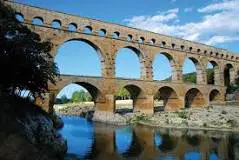
How did the form of technology seen in the picture impact ancient Rome?
It provided a place for Romans to worship all of the pagan gods of Roman mythology
It provided a place for citizens to trade and meet with people for official business
It provided a central location for spectators to observe the gladiators fight to their death
It provided clean water to public paths and other water systems in the empire
________are 2 officials elected by the senators who serve for 1-year terms.
Consuls
Senators
Tribunes
Dictators
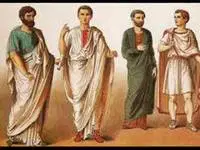
Wealthy landowners who had most of the power in Rome.
Plebeians
Patricians
Daimyo
Bolsheviks
Which official doctrine signed by Emperor Constantine ended the persecution of Christians and legalized Christianity?
The Twelve Tables of Law
Pax Romana
The Edict of Milan
The Ten Commandments
Who were Romulus and Remus?
Friends who conquered the Etruscans and founded Rome
Twin brothers who led to the founding of Rome
Germanic Generals who conquered the Late Roman Empire
Ancient Greek Colonizers who founded the City of Syracuse
The forum was:
Similar to the Roman bath
A settlement of an upper part of an ancient Greek city, especially a citadel
The heart of Roman political life
An architectural achievement in ancient Rome that carried water to the cities
What happened on the Ides of March? (March 15 44BC)
Jesus was born
Rome was founded
Julius Caesar was stabbed to death
The Roman Empire split into 2 parts
Roman general, statesman, Member of the First Triumvirate and politician who named himself dictator of the Roman Empire
Julius Caesar
Octavian
Caesar Augustus
Cicero
Augustus known for being:
The first Roman Emperor
The child of Romulus and Remus
The first Roman Consul
The first Tribune
Emperor of Rome who stopped the persecution of Christians and in 324 made Christianity the official religion of the Roman Empire
Octavian
Augustus
Julius Caesar
Constantine
Religion founded in the Roman Empire based on the teachings of Jesus:
Islam
Judaism
Christianity
Hinduism
As Christianity began to spread, the Emperor______________began to persecute Christians.
Nero
Constantine
Hadrian
Nerva
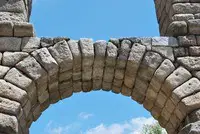
What is this structure called?
Roof
Arch
Dome
Column
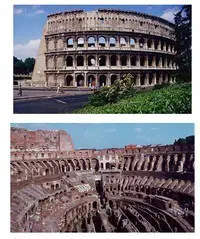
What is the name of the structure seen here?
The Parthenon
The Arena
The Colossos
The Colosseum
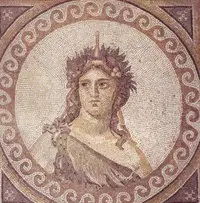
Name the technique shown here using small pieces of glass tesserae.
Fresco
Mosaic
Mondrian
Tempura
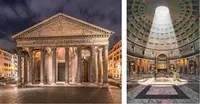
What is the name of this structure built to honor all the Roman gods?
Pantheon
Parthenon
Portcullis
Panetone
Legendary founders of Rome -
Romulus and Remus
Tiberius and Gaius
Remus and Lupin
Sirius and Romulus
Brothers who pushed for reform against the upper-class Senate's land-grabbing-
Zod and Brantium
Yuron and Mance
Romulus and Remus
Tiberius and Gaius
LARGE body of upper-class politicians that advise consuls and have considerable influence-
Aediles
Censors
Senators
Plebeians
Smaller, more select group of people chosen from the People's Assembly to represent the "common folk"
Tribune of the Plebs
Senate
Council of Nicaea
Augustans
What prompted early Rome's change from a kingship to a republic?
fear from invaders
tendencies towards a weaker national gov't
an experience with a terrible and cruel king
preference towards a more maritime-based economy

Observation: Italy is located around the middle of the Mediterranean Sea.
Inference:
They will automatically conquer every foe they encounter
They are well suited to explore all parts of the Mediterranean
They will undoubtedly change governments within a few centuries time.

Large amphitheater built to house gladiators, combats, and an array of other events.
Taj Mahal
Eiffel Tower
Colosseum
Parthenon
Rome faced __________ during the Punic Wars and their most famous general was _____________.
Carthage; Belisarius
Spain; Hernandez
Macedonia; Alexander the Great
Carthage; Hannibal
The first triumvirate of Rome consisted of 3 military leaders: Julius Caesar, Crassus, and _____________.
Cleopatra
Pompey
Gaius
Alexander the Great
Title associated with the pax Romana that saw a period of tolerating and diplomatic emperors
four peaceful ruler
five good emperors
three thoughtful tyrants
Octavian (Augustus) becomes the sole emperor of the Roman Empire after defeating whom?
Antony and Cleopatra
Crassus and Brutus
Bellatrix and Narcissa
Remus and Lupinius
People living in the country often looked at the cities of Rome as what?
An impenetrable fort
A place of opportunity and attraction
A religious center too holy for the likes of commoners
A place where gladiators went to fight and die
Which of these was not true of those dilapidated insulae?
they were for the uber wealthy and the poor alike
the roads leading to them were often narrow and broken
those units at the bottom were usually a little nicer than those at the top
the vast majority of Roman citizens lived in them
The concept of the patriarch being in total control of the house and making all decisions
paterfamilias
pax Romana
plebeian
council of Salaris
The idea that there is a balance, or relationship, between the state and it's people is referred to as -
people's council
social-contract theory
ladder justice theory
Subjects --> under the rule of their government
Citizens --> ________________________
live quiet, obedient lives
mandatory conscription and ask no questions
enjoy rights and responsibilities
Who seemed to more freely grant citizenship to groups like women, children, etc?
Rome
Athens
Exactly the same
Not enough info tell
Claudius' Roman critique of Athens' democracy was that -
Athens perfected giving voice and agency
they allowed their conquered peoples to move too freely
they were too stingy with their democracy
This emperor accepted Christianity and ushered it into the empire -
Tiberius
Gaius
Constantine
Romulus
Generally speaking, the Romans were quite tolerant of other religions.
True
False
We haven't covered this
Which statement below is true?
Judaism comes from Christianity
Christianity comes from Judaism
Christianity and Judaism were founded at the same time
It is said that Rome developed a "soft underbelly" as it's fall became closer...what does that phrase mean?
they stopped tolerating other people's religions
they became more aggressive towards outside invaders
they stopped doing the things that once made them a feared empire
they stopped guarding their walls

