
 Worksheets
FALL Final Exam Review: English 1 2024
Total questions: 81
Worksheet time: 1hrs 25mins
A (a) is a comparison between two unlike things using the words (b) or (c) .
The definition of alliteration is:
Repetitive sounds produced by consonants within a sentence or phrase.
The repetition of vowel sounds, usually found in poetry and music.
The repetition of the same letter or sounds at the beginning of closely connected words.
What is an indirect comparison that typically uses like or as?
Example: She is as happy as a cat riding a unicorn through space.
Simile
Metaphor
Personification
Hyperbole
What gives human traits to something that is not human?
Example: My alarm clock yells at me every morning to get out of bed!
Personification
Allusion
Metaphor
Idiom
What are words that resemble the sound they represent?
Example: The baseball whizzed past my ear straight into the catcher’s mitt for strike 3.
Onomatopoeia
Alliteration
Metaphor
Allusion
What is the repetition of the beginning consonant sound within a group of words?
Example: Kathy can’t cook chocolate chip cookies continuously, can she?
Alliteration
Onomatopoeia
Personification
Imagery
What is the use of language that engages the 5 senses: Hearing, Sight, Taste, Smell, and Touch?
Example: The scruffy black cat’s back arches and hair stands straight up when it encounters the chocolate brown snarling dog whose teeth look like little knives covered in butter.
Imagery
Simile
Personification
Allusion
What is an extreme exaggeration?
Example: Finally, on the millionth time he asked her out a date, she said yes!
Hyperbole
Personification
Idiom
Metaphor
What is a brief and indirect reference to a person, place, thing, or idea of historical, cultural, literary, or political significance?
Example: Let’s not go there; it will unlock Pandora’s box.
Allusion
Hyperbole
Simile
Personification
What is a symbol?
a sign
something representing something else
an object
characters in a story
What is symbolism?
When the author uses an object or reference to add deeper meaning to a story
A reference to another literary work
The tone of the story
The events of the story
The theme of the story is the
main character
message about life that the author expresses.
sequence of events.
short summary of what the story is about.
Which of the following could be the theme of a story?
a fear of heights
"I'll get you, my pretty, and your little dog, too."
A brave young girl pretends to be a man and takes her father's place in the army.
Fear is more dangerous than any beast.
What is verbal irony?
what is said is different than what is meant
the audience knows something a character doesn't know.
what happens is the opposite of what is expected
Dramatic irony is when
what is said is different than what is meant
the audience knows something the character doesn't
what happens is the opposite of what is expected
Situational irony is when
what is said is the opposite of what is meant
the audience knows something the character doesn't
what happens is the opposite of what is expected

Looking at her son's messy room, Mom says, "Wow, you could win an award for cleanliness!"
dramatic
situational
verbal

What type of irony is this ?
verbal
situational
dramatic
In Toy Story, human characters are not aware that the toys speak and move, but the audience is.
verbal
dramatic
situational
If the author shows you what the character is like through their thoughts, speech, and actions, it is
These characters are uncomplicated.
Round
Flat
Neither
Both
Which type of character does the reader not know a lot about?
Flat
Round
Static
Dynamic
This type of character has layers
round
flat
static
dynamic
A well developed, complex character is
round
flat
static
dynamic
What is a foil character?
The central character.
The character that opposes the central character.
A character who contrasts with another character, usually the protagonist, to highlight qualities of the other character

Foil or NOT foils
Not foils
Foils

Foils or NOT Foils?
Foils
Not Foils
Which term means "the writer's attitude?
mood
tone
point of view
feeling
Mood is...
the feeling a text gives to readers.
the attitude of the writer
the point of view
the genre of a text
The tone is determined by the...
descriptions in the text
length of a written text
words and dialogue
descriptions, words and dialogue
The mood in this passage is...
"My enemy was making his way down the hall, bursting open door after door. I needed to break through this window in two tries to make it out in time."
cheerful
scary
sad
pessimistic
The words that determine the tone in this passage are...
"although I had tried hard and had followed the steps of the scientific method, my experiment didn't work. I dragged myself into class and slouched in my seat, not raising my hand
experiment, science
method, class
dragged, slouched
raising hand
Which words and phrases best show the sentimental tone in the passage below?
I got out of the old car and took a few halting steps up the driveway. A cloud of warmth drifted out of the window and embraced me like a comforting hug. I knew that smell: fresh bread that Papa had just taken from the oven. I heard the familiar pitch of his whistle as he slowly stirred tomato soup on the stovetop. I ran to open the screen door because, now, I knew where I was. I was home.
"warmth," "comforting hug" and "home"
"car," "tomato soup" and "door"
"old," "halting" and "out the window"
"driveway," "screen door" and "slowly stirred"
Which of the following is not a kind of negative tone?
angry
cynical
harsh
excited
What is mood?
where and when a story takes place
the author's reason for writing a story
the author's attitude toward the story
how the story makes you feel

A hint or clue about something that will happen later in the plot of a story
When an author interrupts the plot of the story and incorporates something from the past-
Alliteration is:
Stressed syllables with same sound or sound group repeating at the beginning of two or more words
Stressed syllables with same sound or sound group repeating in the middle of two or more words
Stressed syllables with same sound or sound group repeating at the end of two or more words
Which one is alliteration?
She bought a pot.
She sells seashells by the sea shore.
The crowd went wild!
The cold is like ice.

The time and place of a story
Plot
Setting
Theme
Rising Action

A struggle within the character's own mind
Internal Conflict
External Conflict
Rising Action
Character

The character struggles against an outside force
Internal Conflict
External Conflict
Theme
Character
This is a type of internal conflict
Man vs. Man
Man vs. Nature
Man vs. Society
Man vs. Himself
Man versus nature is an example of
External conflict
Internal conflict
Plot
Theme
What is the author's purpose in writing an informative article?
To persuade readers to buy a product
To provide readers with accurate and useful information on a particular topic.
To entertain readers with fictional stories
To confuse readers with irrelevant information
What is the author's purpose in writing a fictional story?
The author's purpose in writing a fictional story is to educate and inform the readers.
The author's purpose in writing a fictional story is to entertain, inspire, or provoke emotions in the readers.
The author's purpose in writing a fictional story is to confuse the readers.
The author's purpose in writing a fictional story is to bore the readers.
What is the author's purpose in writing a news report?
To persuade
To educate
To inform
To entertain
What is the author's purpose in writing a poem?
The author's purpose in writing a poem is to provide historical facts.
The author's purpose in writing a poem is to express emotions, tell a story, or convey a message.
The author's purpose in writing a poem is to confuse the reader.
The author's purpose in writing a poem is to make money.
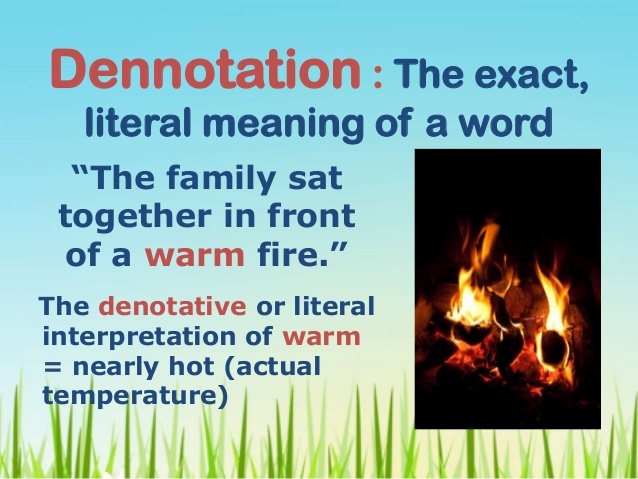
What is the difference between denotations and connotations?
Denotations are the simple dictionary definition of a word, while connotations carry feelings of a word
Denotations are feelings, connotations aren't
Connotations are words that end in vowels, denotations are words that describe verbs.
Denotations and connotations are the same exact thing.
What genre is an informational text?
fiction
non-fictiom
science fiction
primary source
Select any examples of an author’s purpose.
persuade/convince
inform
entertain
express their feelings/ideas/experiences
Describe
If someone wrote an article about how to meditate and why you should try it, what would we say is the author’s two-part purpose?
describe & entertain
explain & express
describe & express
explain & persuade
Another name for the Controlling Idea or a text is…
topic sentence
main idea
hook
evidence
Informational Texts have a very organized structure.
True
False
What does the "S" in STEAL stand for?
sight
sound
speech
search
What does the "T" in STEAL stand for?
thoughts
touch
tone
time
What does the "E" in STEAL stand for?
emotions of others
effect on others
emotions of character
energy of others
What does the "A" in STEAL stand for?
attitude
area
answers
actions
What does the "L" in STEAL stand for?
likes
looks
learns
listens


What would a mountain most likely symbolize?
a challenge
surrender
innocence
love
True or False: A flashback is something that happens in a story or movie when a character remembers something that happened to him/her in the PAST.
True
False
True or False: Stories have flashbacks to provide the reader with important background information.
True
False
"Peter I don't think we should jump out of a plane like this."
"Allison relax I'm the King and you're my general. What could go wrong?"
In literature, an implied or indirect reference to a person, event, or thing or to a part of another text
Allusion
Symbolism
In Greek mythology, a mythical bird called the phoenix lives for hundreds of years before bursting into flames at its death. However, it soon rises from its own ashes and is reborn.
What is the meaning of the mythological allusion in the sentence below?
Fans debated whether their team would rise from the ashes.

George Orwell's novel 1984 focuses on a totalitarian society in which the citizens are frequently reminded that their leader, Big Brother, is always watching.
What is the meaning of the literary allusion in the sentence below?
The headline read: "Smart Phones Becoming Big Brother."

In the fable "The Boy Who Cried Wolf," a shepherd boy repeatedly tricks people in his village by falsely claiming that a wolf is coming to eat his flock. When a wolf actually comes and the boy cries for help, nobody believes him or comes to his aid.
What is the meaning of the literary allusion in the sentence below?
Lucy warned her youngest son not to cry wolf while wrestling with his older brother.

