wayground logo

Free Printable Worksheets

Font size

S
M
L
XL
Worksheets

space

Total questions: 118

Worksheet time: 1hrs 17mins

Name
Class
Date
1.
Which of the following planets most likely has the highest temperature?
a)
Earth
b)
Mars
c)
Mercury
d)
Neptune
2.
Which of the following explains the revolution of a planet?
a)
The Earth revolves around the sun once per day.
b)
The Earth revolves around the sun once per year.
c)
The moon revolves around the sun once per day.
d)
The Earth rotates on it's axis once per day.
3.
What celestial body is at the center of our solar system?
a)
Earth
b)
Moon
c)
Milky Way
d)
Sun
4.
What is the milky way?
a)
One of many galaxies in the universe.
b)
A constellation.
c)
The only galaxy in the universe.
d)
A planet in our galaxy.
5.
What is the correct order from largest to smallest?
a)
galaxy, universe, planet, sun
b)
planet, sun, galaxy, universe
c)
universe, galaxy, sun, planet
d)
sun, galaxy, universe, planet
6.
What are two differences between planets?
a)
Outer planets take longer to revolve and are larger.
b)
Outer planets take longer to revolve and are smaller.
c)
Inner planets take longer to revolve and are smaller.
d)
Inner planets take longer to revolve and are larger.
7.
What is an example of one Earth day?
a)
The Earth moves away from the sun.
b)
The Earth rotates once on its axis.
c)
The Earth revolves once on its axis.
d)
The Earth moves closer to the sun.
8.
How long does it take from one full moon to the next full moon?
a)
About one day.
b)
About one year
c)
About one season
d)
About one month.
9.
Small diameter and a shorter orbit around the sun are characteristics of which of the following?
a)
inner planets
b)
outer planets
c)
stars
d)
asteroids
10.
Stars are made mostly of which of the following?
a)
very hot metal
b)
hot gases of hydrogen and helium
c)
hot molten lava
d)
dust and ice
11.
The sun is a star.  Why does it look brighter than other stars?
a)
It's larger than other stars.
b)
It's hotter than other stars.
c)
It's closer than other stars.
d)
It's smaller than other stars.
12.
Where is the asteroid belt located?
a)
Beyond the outer planets.
b)
Between outer and inner planets.
c)
Between Mercury and Venus.
d)
Near a black hole.
13.
Which statement is true?
a)
The outer planets rotate as they orbit the sun. The inner planets do not rotate.
b)
The inner planets travel further around the sun than the outer planets.
c)
The outer planets travel a greater distance than inner planets.
d)
The inner planets rotate as they orbit the sun.  The outer planets do not.
14.
The further a planet is from the sun the....
a)
colder
b)
hotter
c)
smaller
d)
larger
15.
Their are trillions of stars in our galaxy.  Why can we only see some of those stars at night?
a)
We only see the stars that are further from us.
b)
The stars we see are bigger.
c)
The stars we see are smaller.
d)
We only see the stars that are closest to us.
16.
How is the Earth different from other planets?
a)
It is warmed by the sun.
b)
It revolves around the sun.
c)
It has a rocky surface.
d)
It has a breathable atmosphere.
17.
What's the difference between asteroids and comets?
a)
comets are made of rock and asteroids are made of dust and ice.
b)
Asteroids are made of rock and comets are made of dust and ice.
c)
Asteroids orbit the sun while comets orbit a planet.
d)
comets are larger than asteroids.
18.
What makes the moon shine at night?
a)
The moon reflects the light from the Earth.
b)
The moon provides its own light.
c)
The moon reflects the light from the sun.
d)
The moon burns like a star.
19.
true or false:  Stars that are the same color are usually about the same size.
a)
True
b)
False
20.
The diameter of a planet and how long it takes to revolve around the sun will give you information when deciding if is 
a)
an outer or inner planet
b)
a dwarf planet
c)
a planet like our Earth
d)
a star
21.
Earth spins on its ________.
a)
revolution
b)
axis
c)
rotation
d)
phase
22.
Earth makes one complete ________ every 24 hours.
a)
turn
b)
revolution
c)
spin
d)
rotation
23.
Earth makes one complete ________ around the Sun every year. 
a)
turn
b)
revolution
c)
rotation
d)
circle
24.

Which answer correctly orders the planets from the sun?

a)

Mercury, Earth, Mars, Jupiter, Venus, Saturn, Uranus, Neptune

b)

Jupiter, Saturn, Uranus, Neptune, Earth, Venus, Mars, Mercury

c)

Mercury, Venus, Earth, Mars, Jupiter, Saturn, Uranus, Neptune

d)

Mercury, Venus, Earth, Mars, Saturn, Jupiter, Uranus, Neptune

25.

Which planet is the only planet know to have life?

a)

Earth

b)

Mars

c)

Venus

d)

Mercury

26.

Which planets are the rocky (inner) planets?

a)

Mercury, Venus, Earth, Mars

b)

Jupiter, Saturn, Uranus, Neptune

c)

Mercury, Venus, Earth, Saturn

d)

Jupiter, Mercury, Venus, Earth

27.

Which planets are the gas giants?

a)

Mercury, Venus, Earth, Mars

b)

Jupiter, Saturn, Uranus, Neptune

c)

Mercury, Venus, Earth, Saturn

d)

Jupiter, Mercury, Venus, Earth

28.

Which planet is tipped on its side?

a)

Neptune

b)

Jupiter

c)

Saturn

d)

Uranus

29.

Which planet has rings made of ice, rock and dust?

a)

Saturn

b)

Mars

c)

Earth

d)

Neptune

30.

Which planet has the great red spot?

a)

Saturn

b)

Jupiter

c)

Earth

d)

Mars

31.

How many planets are in our solar system?

a)

6

b)

7

c)

8

d)

9

32.

Why does the sun look bigger than all the other stars in our Solar System?

a)

It is the closest star to Earth.

b)

It is the biggest star in the Solar System.

c)

It is farthest star from Earth.

d)

It is the hottest star in our Solar System.

33.

Why do most stars look so small in the sky?

a)

They are close to us.

b)

They are far away from us.

c)

They are running out of gas.

d)

They are new stars.

34.

True or False? Stars disappear during the day.

a)

True

b)

False

35.

What color is the hottest star?

a)

Red

b)

Yellow

c)

Blue

d)

White

36.

What color is the coolest star?

a)

Red

b)

Yellow

c)

Blue

d)

White

37.

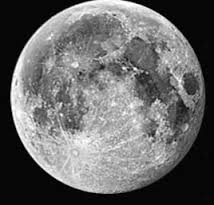
Name the moon phase

a)

First Quarter

b)

Full Moon

c)

New Moon

38.

The different shapes that the moon seems to have.

a)

revolutions

b)

phases

c)

rotations

39.

How long does it take the Moon to make a revolution around the Earth?

a)

12 hours

b)

27 Earth days

c)

One year

d)

Three months

40.

The moon is not visible in the night sky during which phase?

a)

Waning crescent

b)

Waxing gibbous

c)

Full moon

d)

New moon

41.
If an object in space orbits around the sun, is larger than Earth, cold, and has an atmosphere of gas, what is it?
a)
a star
b)
a planet
c)
a comet
d)
an asteroid
42.
What is the Milky Way?
a)
a candy bar
b)
a star
c)
a solar system
d)
a galaxy
43.
What is a planet?
a)
a rock
b)
object that rotates with moons
c)
object that revolves around a star in its own orbit
d)
object that is gas and bright
44.
What planets are the inner planets? 
a)
Earth, Mars, Mercury, Venus
b)
Jupiter, Earth, Mars, Venus
c)
Jupiter, Saturn, Uranus, Neptune
d)
Earth, Mars, Neptune, Pluto
45.
What are the outer planets?
a)
Jupiter, Saturn, Neptune, Pluto
b)
Mars, Jupiter, Saturn, Uranus
c)
Mars, Jupiter, Saturn, Earth
d)
Jupiter, Saturn, Uranus, Neptune
46.
What are the outer planets made of?
a)
rock
b)
rock, with gaseous atmospheres
c)
hydrogen and helium gases
d)
water
47.
What are asteroids made of?
a)
rock
b)
rock and ice
c)
ice
d)
gas
48.
What are comets made of?
a)
ice
b)
rock and ice
c)
rock
d)
water
49.
Describe the differences of inner and outer planets.
a)
Inner planets are small rocky planets, outer planets are large and gaseous
b)
Inner planets are large and gaseous, and outer planets are small hot planets
c)
Inner planets are rocky  and large, outer planets are small and rocky
d)
Inner planets are small gaseous planets, outer planets are large rocky planets.
50.
Gas, dust, billions of stars and planets describes what space entity?
a)
Solar System
b)
Galaxy
c)
Moon
d)
Sun
51.
Why does it seem like the North Star never moves but the other stars do?
a)
Because the stars rotate but not the North Star.
b)
No stars move, it is all how the Earth rotates.
c)
Earth revolves around the sun so each night there are different stars.
d)
The stars are moving around Earth, but not the North Star.
52.
If it is winter in the Northern Hemisphere, what season is it in the Southern Hemisphere?
a)
Winter
b)
Spring
c)
Summer 
d)
Fall
53.
Which is the best explanation for why Northern Hemisphere experiences winter?
a)
The Earth is farther from the Sun.
b)
The Earth is closer to the Sun.
c)
The Northern Hemisphere is tilted toward the Sun.
d)
The Northern Hemisphere gets indirect sunlight and titled away from the Sun.
54.
Which letter best represents Summer in the Northern Hemisphere?
a)
A
b)
B
c)
C
d)
D
55.
How long does it take the Earth to make one REVOLUTION around the Sun?
a)
12 hours
b)
24 hours
c)
365 days
d)
29.5 days
56.
The Earth's _______ is an imaginary line that goes from the North Pole to the South Pole.
a)
vernal equinox
b)
axis
c)
solar eclipse
d)
solar flare
57.
Earth's rotation on its axis is what causes ______________________________.
a)
seasons
b)
moon phases
c)
day and night
d)
weather
58.
Earth's ________ on its axis causes day and night.
a)
rotation
b)
revolution
c)
phase
d)
comet
59.
The phases of the moon are caused by
a)
The Earth's shadow on the moon
b)
The moon is a white dwarf
c)
The amount of sunlight being reflected by the moon towards Earth
d)
The amount of light emitted by the moon towards Earth
60.
As the moon's shape appears to get smaller, we say that the moon is _.
a)
Swelling
b)
Waxing
c)
Waning
d)
Shrinking
61.
What moon phase is at position 5? 
a)
waxing crescent 
b)
waxing gibbous
c)
full moon
d)
waning crescent 
62.

What is it called when the planets travel around the Sun?

a)

Orbit

b)

Spin

c)

Move

d)

Turn

63.

Earth completes one full _______ on its axis every 24 hours.

a)

Rotation

b)

Revolution

c)

Resolution

d)

Reservation

64.

Which is NOT an inner planet?

a)

Mercury

b)

Earth

c)

Venus

d)

Jupiter

65.

How many planets are in the solar system?

a)

8 planets

b)

12 planets

c)

9 planets

d)

2 planets

66.

The sun is a

a)

Satellite

b)

Star

c)

Circle

d)

Planet

67.

How long does it take Earth to complete one revolution around the sun?

a)

24 hours

b)

One week

c)

One year

d)

One month

68.

In which galaxy is our Solar System located in?

a)

Aquarius

b)

The Big Dipper

c)

The Milky Way

d)

Cancer

69.

How did Mars get its nickname "the Red Planet">

a)

From the iron minerals in the Martian soil that oxidize, or rust, causing the soil and atmosphere to look red

b)

There is no oxygen and it looks red without any life, hence the nickname

c)

It looks to be red when we look at it from satellite imaging

d)

There is no real reason for the nickname

70.

What is the correct order of the outer planets?

a)

Neptune, Jupiter, Saturn and Uranus

b)

Jupiter, Saturn, Uranus and Neptune

c)

Neptune, Uranus, Saturn and Jupiter

d)

Uranus, Neptune, Saturn and Jupiter

71.

A sun centered system of planets was developed by _______

a)

Galileo

b)

Copernicus

c)

Ptolemy

d)

Isaac Newton

72.

How are inner planets similar to each other? (Select all that apply)

a)

Small

b)

Rocky surfaces

c)

Dense

d)

Gas surfaces

73.

List the planets in order starting from the sun.

a)

Mercury, Venus, Earth, Mars, Jupiter, Saturn, Neptune, Uranus

b)

Mars, Venus, Earth, Mercury, Jupiter, Saturn, Uranus, Neptune

c)

Mercury, Venus, Earth, Mars, Jupiter, Saturn, Uranus, Neptune

d)

Mercury, Venus, Earth, Mars, Saturn, Jupiter, Uranus, Neptune

74.

The sun provides _______ and ________. (Select all that apply)

a)

Light

b)

Rain

c)

Wind

d)

Thermal energy

75.

I have beautiful rings, I am a gas giant and I am the sixth planet from the sun. Who am I?

a)

Jupiter

b)

Neptune

c)

Uranus

d)

Saturn

76.

What do the planets orbit in our Solar System?

a)

Each other

b)

The Moon

c)

The Earth

d)

The Sun

77.

What is the Sun?

a)

A Star

b)

A Moon

c)

A Planet

d)

A Child

78.

How many planets are in our solar system?

a)

7

b)

9

c)

8

d)

10

79.

What is the movement of the planets around the Sun called?

a)

Rotation

b)

Spin

c)

Orbit

d)

Twirl

80.

What is the farthest planet in our Solar System?

a)

Neptune

b)

Uranus

c)

Pluto

d)

Saturn

81.

How long is Earth's revolution?

a)

one day/ 24 Hours

b)

one year/ 365 Days

c)

one decade

d)

one hour

82.

How long is Earth's rotation?

a)

one day / 24 Hours

b)

one year/ 365 Days

c)

one decade

d)

one hour

83.

Earth's rotation causes what?

a)

one year

b)

day and night

c)

moon phases

d)

seasons

84.
Why do planets orbit the sun (and not float around in space)?
a)
the moons are keeping them in place
b)
They were hit by an asteroid
c)
they were hit by a comet
d)
the sun's gravity keeps them in place
85.

Which is the 3rd planet from the sun?

a)

Mars

b)

Jupiter

c)

Earth

d)

Venus

86.

What orbits Earth?

a)

Mars

b)

Sun

c)

Moon

87.

Which is NOT a gaseous giant?

a)

Neptune

b)

Saturn

c)

Uranus

d)

Mars

88.

What planet is closest to the Sun?

a)

Mercury

b)

Mars

c)

Jupiter

d)

Uranus

89.

The type of energy that makes things warm

a)

Thermal

b)

Light

c)

Sound

d)

Mechanical

90.

Which answer correctly orders the planets from the sun?

a)

Mercury, Earth, Mars, Jupiter, Venus, Saturn, Uranus, Neptune

b)

Jupiter, Saturn, Uranus, Neptune, Earth, Venus, Mars, Mercury

c)

Mercury, Venus, Earth, Mars, Jupiter, Saturn, Uranus, Neptune

d)

Mercury, Venus, Earth, Mars, Saturn, Jupiter, Uranus, Neptune

91.

Which planets are the rocky (inner) planets?

a)

Mercury, Venus, Earth, Mars

b)

Jupiter, Saturn, Uranus, Neptune

c)

Mercury, Venus, Earth, Saturn

d)

Jupiter, Mercury, Venus, Earth

92.

Which planets are the gas giants?

a)

Mercury, Venus, Earth, Mars

b)

Jupiter, Saturn, Uranus, Neptune

c)

Mercury, Venus, Earth, Saturn

d)

Jupiter, Mercury, Venus, Earth

93.
Describe the differences of inner and outer planets.
a)
Inner planets are small rocky planets, outer planets are large and gaseous
b)
Inner planets are large and gaseous, and outer planets are small hot planets
c)
Inner planets are rocky  and large, outer planets are small and rocky
d)
Inner planets are small gaseous planets, outer planets are large rocky planets.
94.

Which of the following is NOT a planet in our solar system?

a)

Neptune

b)

Venus

c)

Apollo

d)

Mars

95.

Which planet in our solar system is the largest?

a)

Uranus

b)

Neptune

c)

Mercury

d)

Jupiter

96.

Which of the following planets is a gas giant?

a)

Saturn

b)

Earth

c)

Mars

d)

Pluto

97.

Which planet in our solar system is nearest to the sun?

a)

Earth

b)

Mercury

c)

Mars

d)

Venus

98.

Earth is...

a)

The furthest planet from the sun.

b)

An inner planet.

c)

A gas giant.

d)

The closest planet to the sun.

99.

The big dipper is an example of a what?

a)

Planet

b)

Asteroid

c)

Constellation

d)

Star

100.

What type of eclipse is being shown in the picture?

a)

Solar eclipse

b)

Lunar eclipse

c)

Planet eclipse

d)

Star eclipse

101.

What type of eclipse is being shown in the picture?

a)

Solar eclipse

b)

Lunar eclipse

c)

Planet eclipse

d)

Star eclipse

102.

How long does it take the earth to ROTATE once?

a)

1 month

b)

1 year

c)

1 day

d)

12 hours

103.

How long does it take the earth to REVOLVE once?

a)

1 month

b)

1 year

c)

1 day

d)

12 hours

104.

What does the word "orbit" mean?

a)

to push something making it move

b)

to move in a straight line

c)

to repeatedly travel around an object

d)

to spin

105.

How does the moon move?

a)

it doesn't move

b)

the Earth orbits the moon

c)

the moon orbits the sun

d)

the moon orbits the Earth

106.

What is the actual shape of the moon?

a)

a sphere

b)

a circle

c)

a half circle

d)

a crescent

107.

What is the sun?

a)

a planet

b)

a star

c)

a moon

d)

a meteor

108.

How long does it take the Earth to orbit the sun?

a)

a day

b)

a week

c)

a month

d)

a year

109.

Why is the moon so bright?

a)

it reflects the sun's light

b)

it makes its own light

c)

it is a ball of burning gas

d)

electricity

110.

How many moons could fit inside the Earth?

a)

4

b)

8

c)

12

d)

one million

111.

How many Earths could fit inside of the Sun?

a)

4

b)

8

c)

12

d)

one million

112.

Which planet is closest to the Sun?

a)

Earth

b)

Mars

c)

Venus

d)

Mercury

113.

Which planet is the smallest planet?

a)

Mars

b)

Earth

c)

Mercury

d)

Venus

114.

Which planet is called "Earth's twin", because it is about the same size?

a)

Mercury

b)

Venus

c)

Earth

d)

Mars

115.

Which planet is known as the "Red Planet"?

a)

Mercury

b)

Venus

c)

Earth

d)

Mars

116.

Which planet is the largest planet?

a)

Earth

b)

Mars

c)

Jupiter

d)

Saturn

117.

How many moons does Pluto have?

a)

1

b)

2

c)

3

d)

4

118.

Which "planet" used to be a planet, but is now considered a "dwarf planet"?

a)

Saturn

b)

Uranus

c)

Neptune

d)

Pluto