
 Worksheets
Waves and Light Exam Review (Mr. G's classes)
Total questions: 38
Worksheet time: 3hrs 10mins
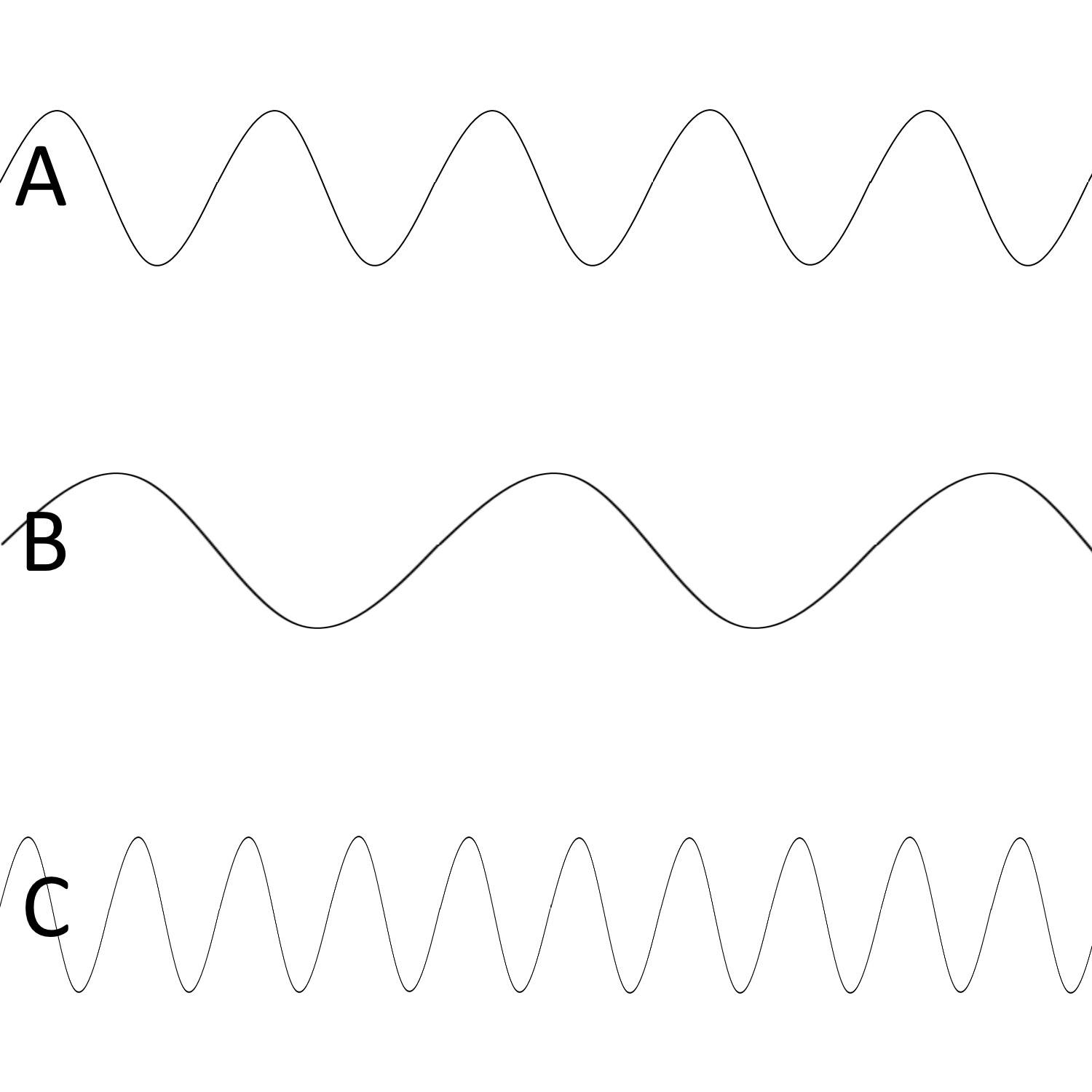

Which wave has the greatest frequency?
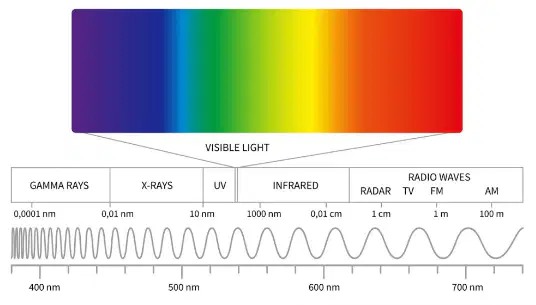
In the picture shown to the left, the numbers shown tell the wavelength of each color of visible light. Based on the picture shown, which color in the visible part of the spectrum has the lowest energy light waves?
Blue
Which of the following is the height or depth of a wave that affects how much energy the wave carries. In a sound wave, it is also synonymous with how loud the sound is.
wavelength
compression
amplitude
trough
This type of wave can travel through matter (gas, liquid, solid) and empty space.
mechanical wave
Electromagnetic (EM) wave
W
What distinguishes each type of wave on the EM spectrum from other types is that each EM type of wave has a unique...
speed
frequency
amplitude
mass
Mechanical waves with an up and down movement are called. (a) waves. The lowest point on this wave is called the (b) and the highest point is called the (c) . When waves overlap to form a larger or smaller wave, this is called (d) . The amount of energy in a wave depends on the wave's frequency and the wave's (e) .

The illustration shows a transverse wave. Which bar measures the wavelength of the wave?
Bar W
Bar X
Bar Y
Bar Z
Visible light is which type of wave?
seismic
mechanical
longitudinal
electromagnetic
How is light different from other kinds of waves?
light travels more slowly
light must travel through matter
light does not need matter to travel
Why can you see your reflection in a window?
light is absorbed by the glass
light is reflected off the glass
light is transmitted through the glass
The number of waves created each second is called a wave's ____________
wavelength
speed
amplitude
frequency
What three things may happen to light that strikes an object? (Select 3 answers)
Some of the light will be reflected
Some of the light can be transmitted (pass through) the new material
The light may be absorbed (pass into the new material, but not leave that material)
The light will change to a new frequency


The height of the wave from its resting point to its highest point, or resting point to its lowest point, is called its ___________.

Based on the picture, choose the best description of how wavelength and frequency are related.
As wavelength increases, frequency increases
As frequency increases, wavelength decreases
As frequency increases, wavelength remains the same
Frequency and wavelength mean the same thing
Choose the answer that describes the combination of all the colors in the visible light spectrum.

The picture to the left shows waves of all visible light colors. What is true of red light waves?
shortest visible wavelength
longest visible wavelength

What do waves CARRY though a medium from one end of the wave to the other?
particles
energy
What occurs when light hits and object and bounces off the surface?
Refraction
Reflection
Color
Gamma Ray

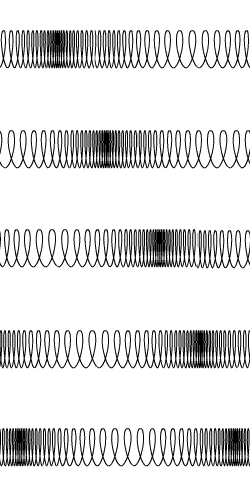
A red apple looks red when we shine white light on it because...
it reflects red light and absorbs other frequencies of light
it reflects all light except red light waves

Picture on the left: Constructive interference
("Super Wave!")
Picture on the right: Destructive interference
(No wave)
Picture on the left: mechanical waves
Picture on the right: electromagnetic waves
Picture on the left: Waves that are passing through
Picture on the right: waves that are bouncing off each other
Picture on the left: sound waves
Picture on the right: light waves
Two waves in water are moving towards each other. What best describes what will happen when their crests overlap?
they will bounce off each other
they will cancel each other out, making the water flat after they hit
they combine and both move in the direction of the more powerful wave
Which of the following would increase energy? (choose two)
This color t-shirt absorbs all wavelengths of light

What type of wave is this?
Longitudinal
Transverse
Reflected
Absorbed
What happens to the energy of waves as wavelength decreases?
Increases
Decreases
Stays the same
Changes depending on the type of medium its traveling through
The leaves of a plant appear to be green because green light waves are ______.
Absorbed
reflected
neither absorbed or reflected
both absorbed and reflected
What type of waves move energy across, but the particles of the medium move up and down?
medium waves
particle waves
transverse waves
longitudinal waves
Charcoal appears black in color to the eye because it _____
emits black - colored light
has a black - colored pigment
absorbs all wavelengths of light that hit it
reflects all wavelengths of light that hit it
Which of the following waves would represent the brightest light?


Assume white light shines on a piece of paper that absorbs the wavelengths of red, orange, yellow, blue, indigo, and violet. What color will the paper appear to human eyes?
black
brown
green
white
_____________________ is why a window feels warm, even if it is cold outside.
diffractiono
interference
reflection
refraction
absorption
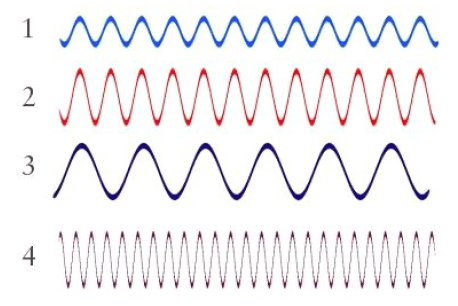
Which wave in the diagram has the greatest energy?
1
2
3
4
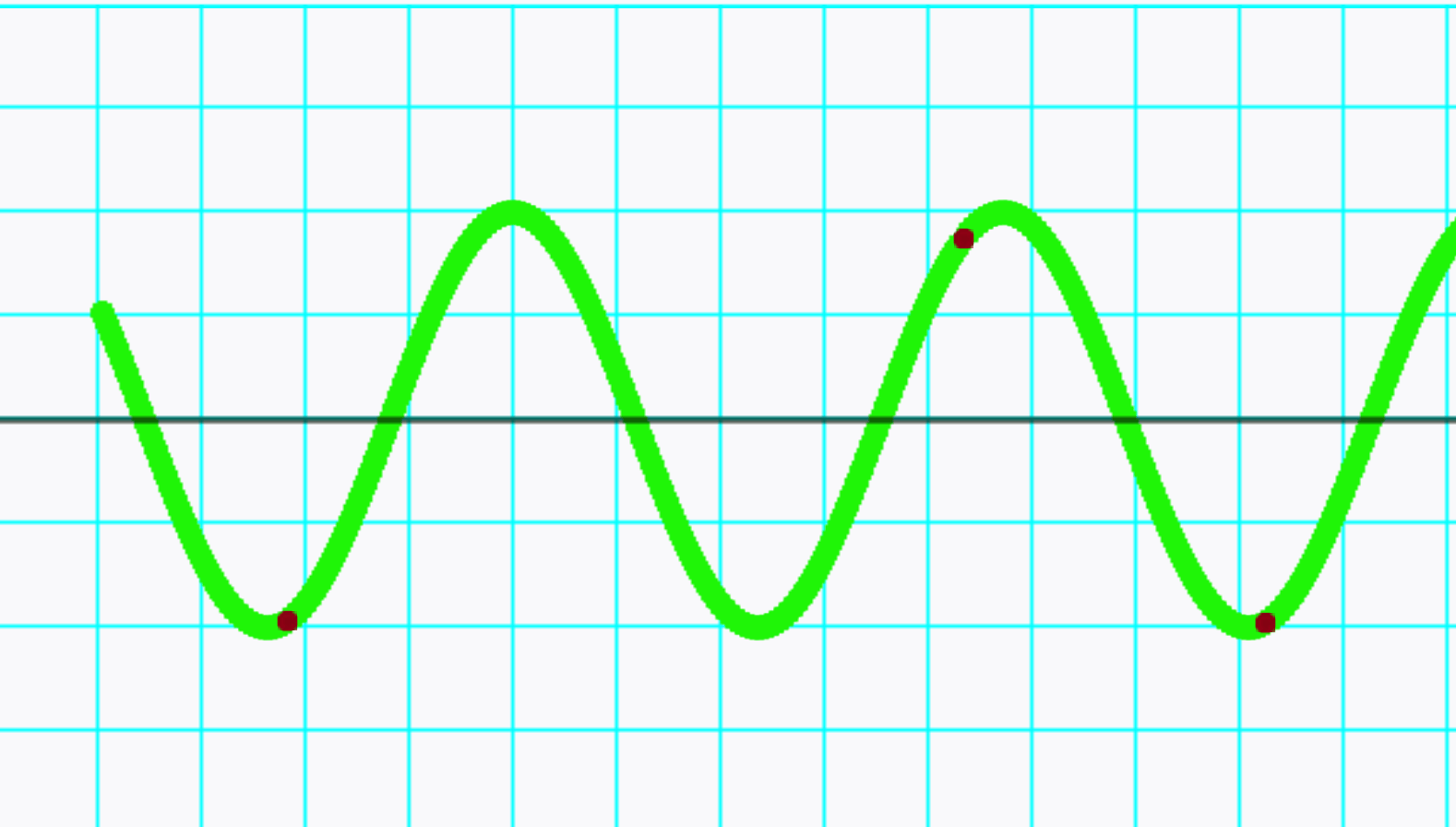
If each square represents one cm, what is the approximate wavelength of this wave? (To the nearest cm)
1 cm
2 cm
4 cm
8 cm


