
Font size
 Worksheets
LS.10a,c
Total questions: 38
Worksheet time: 20mins
(a) are a section of DNA with information that codes for a trait by making a protein.
Different versions of that gene are called (b) .

A single, highly organized and structured piece of DNA that carries the genetic code in the form of genes.
cell
nucleus
chromosome
DNA
Label the red circles on the DNA model we made in class. Remember that each shape can only represent one nitrogen base throughout the model.
Sugar
T (Thymine)
Phosphate
cytosine

What would we need to do to complete making this model of DNA?
Write in the bases (A,T,C,G).
Twist it into a double helix.
Label the sugar and phosphate.
Label the reactions.
_________transfers genetic traits from parents to offspring.
Mendel
Punnett Squares
A somatic cell
DNA
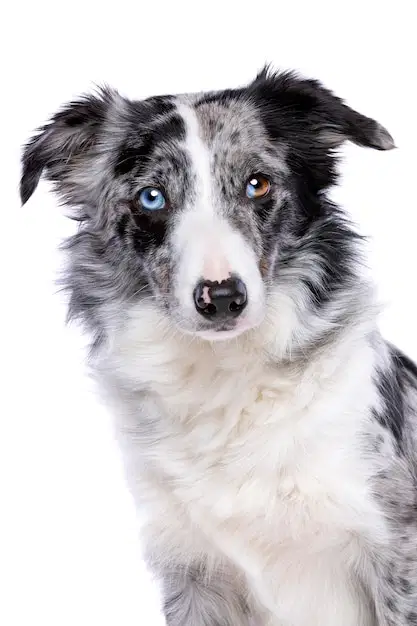
All of the genetic information for this beautiful puppy is coded for in it's _______.
Eyes
Brain
trait.
Remember the worksheet on the Nature of Science that we completed while watching the videos of scientists who contributed to the discovery of the structure of DNA. We learned about many scientists in those videos. Which aspect of the Nature of Science does this best demonstrate?
Science is a social endeavor.
The natural world is understandable.
Science is both logic and innovation.
Scientific ideas are durable but subject to change.
Light Microscope
X-Ray crystalography
Watson and Crick would go on to get the Nobel Prize, thanks in part to...
their work in World War Two.
Rosalind Franklin recommending them.
using Rosalind Franklin's work without giving her credit.
The code produced by the order of A, T, C, and G bases is used to produce
Nuclei
Proteins
x-rays

What is a protein?
The smallest living things; the basic building block of an organism.
The basic building block of a chromosome.
A version of a gene.
A molecule made of amino acids that has a specific job in the body's function, like growth.
Bundled up, organized DNA is called a
gene
trait
chromosome
nucleotide
_________ are made up of genes.
Cells
Chromosomes
Phenotypes
A version or variation of a gene
trait
gene
allele
DNA
Chromosomes are made up of (a) Genes are made up of (b)


DNA is an acronym for _____
Diphosphorus Nucleic Acid
Ribose Nucleic Acid
Deoxyribonucleic Acid
Deoxyribonucleic Acetate
Move the nitrogenous bases to their correct position in the red circles.
A
T
C
G

What are the alleles that go in the highlighted box?
(a)

Look at the punnett square shown. What is the probability that the offspring will show the dominant trait?
100%
75%
50%
25%
0%
Which of the following allele pairs is heterozygous?
RR
ss

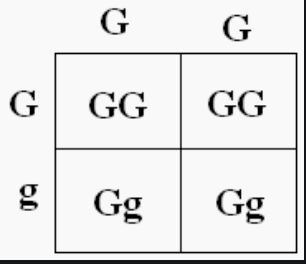
The punnett square is used to tell the color of a frogs skin. "G" means green skin and "g" means brown skin. What is the chance the baby frogs will have brown skin?
0%
25%
50%
100%
The punnett square is used to tell the color of a frogs skin. "G" means green skin and "g" means brown skin. What is the chance the baby frogs will have green skin?
0%
25%
50%
100%
The punnett square is used to tell the color of a frogs skin. "G" means green skin and "g" means brown skin. What is the chance the baby frogs will have the genotype Gg?
0%
25%
50%
100%
Unicorns can have either purple or pink eyes. A unicorn with homozygous purple eyes was crossed with a unicorn with homozygous pink eyes. All the baby unicorns had purple eyes. Which of the following statements are true:
Pink eyes are dominant.
Pink eyes are recessive.
Purple eyes are dominant.
Purple eyes are recessive.


A goldfish that swims up to the top of the bowl when a hand appears
Inherited Trait
Acquired Trait

A dog fetching
inherited
acquired

A girl with freckles on her face
Inherited
Acquired
Which best describes a inherited trait?
a characteristic that is passed on from one's paretns
a characteristic that is influenced by one's surroundings
a characteristic one chooses to express
a characteristic one receives from the food one eats
Which is an example of an inherited characteristic?
scar
weight
eye color
personality
When your genes are expressed physically (how you look) we call that your:
Phenotype
Recessive Trait
Genetics
Genotype
RR is:
Homozygous Dominant
Heterozygous
Homozygous Recessive

Is it possible for traits to be MIXED, not exactly dominant or recessive?
No, never, there are never mixed traits
It's possible that it could happen
I'm not sure
I'm just guessing
A tall pea plant is crossed with another tall pea plant. Most of the offspring are tall, but about 25% are short. How is this possible?
DNA mutation.
The parents were both heterozygous Tt.
One parent was homozygous dominant TT, the other was homozygous recessive tt.

