
 Worksheets
POE 2023 Final Exam
Total questions: 50
Worksheet time: 53mins


During which step of the Design Process do you experiment with the prototype under controlled conditions and collect /record data?
Test the Model
Construct a Model
Identify Failure Points
Reflect and Redesign
Which step of the Design Process involves communicating the results of your tests
Identify the Problems
Plan Solutions
Identify Failure Points
Reflect and Redesign

What does "iterative" mean?
The process happens only once
The process is difficult
The process repeats itself
The process is slow

A prototype is a:
working model
A smaller version of the design
Made out of different materials then the actual design.
a sketch.
True or False
Why is 3D modeling a powerful tool for engineers?
3D models are cool to look at
It allows an idea to be translated into a model that can explain the concept and allow for changes.
3D Modeling replaces drawing and sketching
You do not need a plan to use 3D Modeling
In an isometric sketch, circles appear as
circles.
ellipses.
rhombuses.
squares.
Why to Engineers make so many sketches
They like to impress regular people with their drawing ability
sketching tells a story about a design such as where it might be used
sketching allows engineers to communicate details of their design quickly
engineers use color in their design to show details like texture
A mathematical property of a cross section (measured in inches) that gives important information about how that cross-sectional area is distributed about a centroidal axis:
Centroid Principles
Moment of Inertia
Modulus of Elasticity
Beam Deflection
The ratio of the increment of some specified form of stress to the increment of some specified form of strain. Also known as coefficient of elasticity, elasticity modulus, elastic modulus:
Centroid Principles
Moment of Inertia
Modulus of Elasticity
Beam Deflection
Object’s center of gravity or center of mass.
Centroid Principle
Moment of Inertia
Modulus of Elasticity
Beam Deflection

Beam A and B are the same material and same dimensions. What distinguishes beam A from beam B?
Beam A will have a greater resistance to bending because it has a lower moment of inertia.
Beam A will have a greater resistance to bending because it has a higher moment of inertia.
Beam B will have a greater resistance to bending because it has a lower moment of inertia.
Beam B will have a greater resistance to bending because it has a higher moment of inertia.
Flash-forward: soh cah toa
The three ratios for electronic circuits
a phrase to remember the three trigonometric functions
Relationships of three types of trusses
Names of the three blind mice
What is a cantilever?
A cantilever is a rigid structural element that is supported at only one end, with the other end projecting horizontally into space.
A cantilever is a vertical support beam that is anchored at both ends.
A cantilever is a type of bridge that is supported by cables.
A cantilever is a flexible structural element that can bend and twist easily.
What are the two main types of cantilever beams?
simply supported cantilever beams and fixed cantilever beams
continuous cantilever beams and hinged cantilever beams
reinforced cantilever beams and prestressed cantilever beams
composite cantilever beams and truss cantilever beams
What is the purpose of a cantilever in architecture?
The purpose of a cantilever in architecture is to create overhangs and provide structural support.
The purpose of a cantilever in architecture is to reduce the overall weight of the structure.
The purpose of a cantilever in architecture is to enhance the aesthetic appeal.
The purpose of a cantilever in architecture is to increase the flexibility of the building.
Give an example of a cantilever application in civil engineering.
Tunnels
Roads
Dams
Bridges or balconies
What is the design principle behind cantilever bridges?
Use of a projecting beam or structure supported at both ends
Use of a projecting beam or structure supported at multiple points
Use of a projecting beam or structure supported at only one end
Use of a projecting beam or structure supported at neither end
What is the design principle behind cantilever shelves?
Diagonal beam anchored at one end
Vertical beam anchored at one end
Horizontal beam or bracket anchored at one end
Curved beam anchored at one end
What are the advantages of using cantilevers in construction?
Increased flexibility and shorter spans with additional support
Decreased flexibility and longer spans with additional support
Decreased flexibility and shorter spans without additional support
Increased flexibility and longer spans without additional support
What are the disadvantages of using cantilevers in construction?
Enhanced load-bearing capacity, reduced risk of structural failure, and lower construction costs.
Unlimited load-bearing capacity, decreased risk of structural failure, and lower construction costs.
Unlimited load-bearing capacity, reduced risk of structural failure, and lower construction costs.
Limited load-bearing capacity, increased risk of structural failure, and higher construction costs.
Explain the concept of overhanging cantilevers.
Overhanging cantilevers are structures that are made of flexible materials.
Overhanging cantilevers are structures that are shorter than their support point or beam.
Overhanging cantilevers are structures that are completely detached from their support point or beam.
Overhanging cantilevers are structures that extend beyond their support point or beam, creating an overhang.


In order for the plane to move forward, it must have a greater force than this arrow?
up arrow
down arrow
front arrow
back arrow

The faster a fluid moves, the lower the pressure is in the moving fluid compared to the fluid not moving as fast. This is called
Newton's Laws
Bernoulli's Principle
Wright Brothers Priciple

Using technological and scientific knowledge to solve practical problems is call _______________.
Math
Invention
Innovation
Engineering

A ________________ engineer may create a robot to discover water on a planet.
mechanical
electrical
computer
chemical
A model that can be tested and redesigned is called a...
product
prototype
process
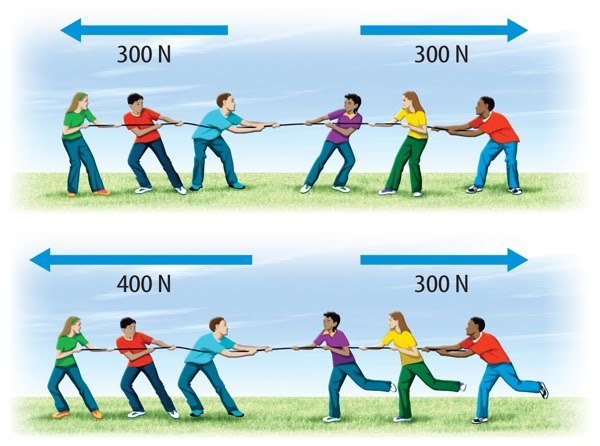

The force of squeezing a material together is...
compression
tension
torsion
bending


