
 Worksheets
Particles Revision Quiz
Total questions: 20
Worksheet time: 13mins
What are the 3 states of matter?
Gas, Liquid, Ice
Solid, Liquid, Steam
Solid, Gas, Water
Solid, Liquid, Gas
Which state of matter has particles that are always touching, arranged in rows and can vibrate about a fixed position?
Gas
Liquid
Solid
What does 'has no fixed volume' mean?
Can change shape but not volume
Can change volume but not shape
Can change both shape and volume
Cannot change shape or volume
Which states of matter have a fixed volume?
Solid and Gas
Liquid and Gas
Solid and Liquid
What is the process of a gas changing into a liquid.
Condensation
Boiling
Evaporation
Freezing
Why can solids and liquids not be compressed (squashed)?
Particles are in constant motion
Particles are arranged randomly
Particles are far apart
Particles are tightly packed together
Why can gases be compressed (squashed)?
Particles are arranged randomly
Particles are far apart
Particles are tightly packed
Particles are in constant motion
Which states of matter will take the shape of the container they are placed in?
Solid and Gas
Liquid and Gas
Solid and Liquid
Why do solids change into liquids if heated enough?
Particles change volume
Particles lose energy and move slower
Particles change shape
Particles gain energy and move faster
Which of the pictures shows a mixture?


Which of the pictures show pure substances?
(HINT: Choose TWO)
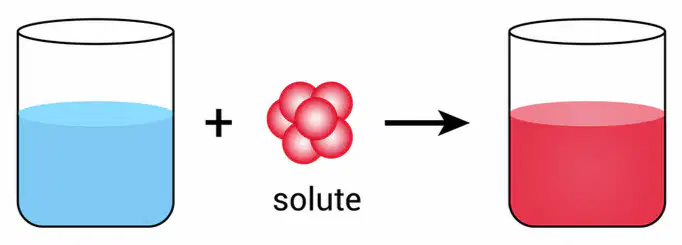
What is a solvent?
Substance that dissolves in a solution
Substance that does not dissolve in a solution
Substance in which another substance is dissolved
Substance that separates from a solution
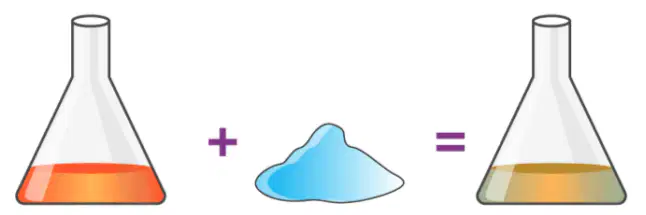
What is the substance dissolved in a solvent called?
(a)
What is the word for a solution in which all available spaces between solvent
particles are filled by solute particles?
(HINT: If you add more solute, it will not dissolve.)
(HINT 2: s _ t _ _ _ t _ d)
(a)
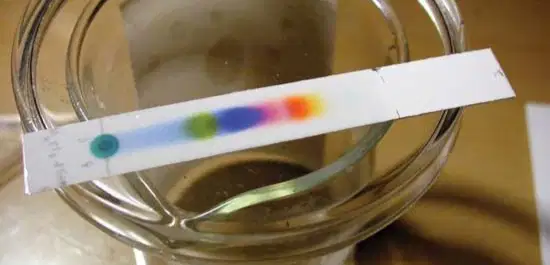
What is chromatography used to separate?
Liquids from gases
Particles from a solution
Solids from liquids
Mixtures of substances
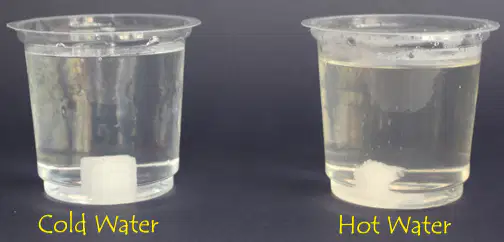
What happens to solubility when the temperature is increased?
Becomes zero
Remains the same
Decreases
Increases
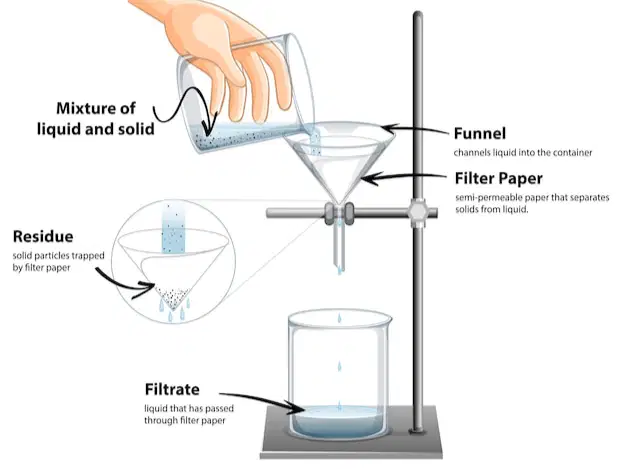
How can an insoluble solid be separated from a liquid?
Distillation
Chromatography
Filtration
Evaporation
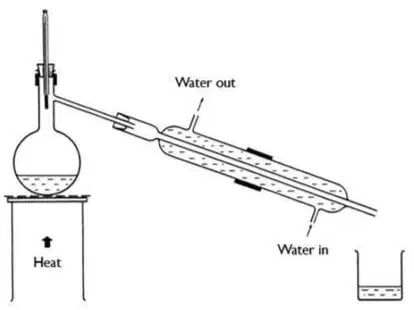
Which technique can be used to separate two liquids?
(HINT) d _ _ _ _ _ _ _ _ _ _ n
(a)
Why is the line drawn in pencil in chromatography?
(HINT) B _ _ _ _ _ e p _ _ _ _ l is i _ _ _ _ _ _ _ e in w _ _ _ r.
(a)
Which of these are examples of separation techniques in mixtures?
(HINT: Choose ALL correct answers)
Chromatography
Crystallisation
Distillation
Filtration

