
 Worksheets
Japanese 10: Final Test Part A (Japanese Geography)
Total questions: 65
Worksheet time: 16hrs 15mins
Japan is an _______, which means it is a group of islands.
(a)
Since most of Japan's land is not fit for farming, the most populated areas have historically been the 大阪(おおさか)、濃尾(のうび)、and 関東(かんとう) plains. This means Japan has always had a _______ (three words).
(a)
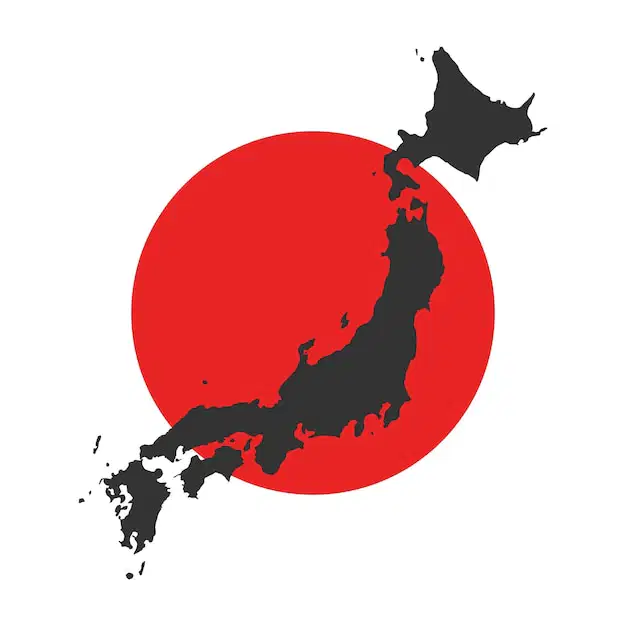
The _______ is the major body of water located to the east of Japan.
(a)
The _______ is the major body of water located to the northwest of Japan and separates it from the Korean Peninsula.
(a)
The _______ is the major body of water located to the southwest of Japan and separates it from China.
(a)
How did Japan's geography influence its development? Select all answers that apply.
The oceans isolated the islands.
The mountainous, rocky terrain made it difficult to farm.
The lush green land made it easy to farm.
The sea provided food.
Which natural disasters is Japan prone to, based on its location in the "Pacific Ring of Fire?" Select all that apply.
typhoons
tsunamis
earthquakes
volcanic eruptions
snowstorms
Both historically, and particularly in modern times, Japan is heavily dependent on _______ to meet its needs since it lacks many natural resources.
(a)
This Japanese prefecture is famous for its seafood, 味噌(みそ)ラーメン, and Snow Festival. It is also the northernmost of Japan's four major islands and is also one of the country's eight regions.
北海道(ほっかいどう)
関西・近畿(かんさい・きんき)
中部(ちゅうぶ)
四国(しこく)
九州(きゅうしゅう)
How many prefectures does Japan have?
44
45
46
47
50
青森県(あおもりけん)is famous for which fruit?
(a)

What is the name of the orange island (# 3)?
北海道(ほっかいどう)
本州(ほんしゅう)
九州(きゅうしゅう)
四国(しこく)
沖縄(おきなわ)
The majority of Japan's population is concentrated in:
北海道(ほっかいどう)
本州(ほんしゅう)
九州(きゅうしゅう)
四国(しこく)
沖縄(おきなわ)

What is the name of the green island (# 4)?
北海道(ほっかいどう)
本州(ほんしゅう)
九州(きゅうしゅう)
四国(しこく)
沖縄(おきなわ)
Three of Japan's four main islands are also considered regions. They are:
北海道(ほっかいどう)、四国(しこく)、and 九州(きゅうしゅう)
本州(ほんしゅう)、四国 (しこく)、 and 九州(きゅうしゅう)
関東(かんとう)、北海道 (ほっかいどう)、and 四国(しこく)
北海道(ほっかいどう)、 本州(ほんしゅう)、 and 四国(しこく)

茨城県(いばらきけん)、栃木県(とちぎけん)、千葉県(ちばけん)、埼玉県(さいたまけん)、群馬県(ぐんまけん)、and 神奈川県(かながわけん)are included as part of this region. 東京(とうきょう) is also located in this region and is counted as its seventh prefecture.
北海道(ほっかいどう)
東北(とうほく)
関東(かんとう)
中部(ちゅうぶ)
関西・近畿(かんさい・きんき)

The _______ region includes six of Japan's northern prefectures: 青森県(あおもりけん)、岩手県(いわてけん)、宮城県(みやぎけん)、福島県(ふくしまけん)、秋田県(あきたけん)、and 山形県(やまがたけん).
北海道(ほっかいどう)
東北(とうほく)
関東(かんとう)
中部(ちゅうぶ)
関西・近畿(かんさい・きんき)
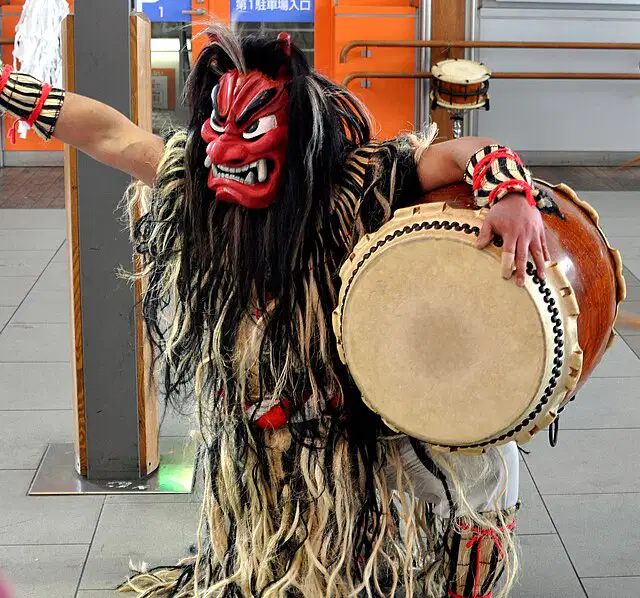
The infamous なまはげ of _______ scare little children and encourage them to behave well, and work hard!
秋田県(あきたけん)
岩手県(いわてけん)
宮城県(みやぎけん)
山形県(やまがたけん)
福島県(ふくしまけん)
Which fruit is 山形県(やまがたけん) famous for?
(a)

Go to _______, if you wish to attempt the わんこ蕎麦(そば)challenge!
岩手県(いわてけん)
宮城県(みやぎけん)
福島県(ふくしまけん)
青森県(あおもりけん)
秋田県(あきたけん)
_______ and _______ sustained the most damage during the 2011 Earthquake and Tsunami.
福島県 and 宮城県(ふくしまけん and みやぎけん)
秋田県 and 岩手県(あきたけん and いわてけん)
福島県 and 青森県(ふくしまけん and あおもりけん)
福島県 and 秋田県(ふくしまけん and あきたけん)

This central region includes 新潟県(にいがたけん)、長野県(ながのけん)、静岡県(しずおかけん)、愛知県(あいちけん)、山梨県(やまなしけん)、富山県(とやま)、岐阜県(ぎふけん)、石川県(いしかわけん)、福井県(ふくい)、and 三重県(みえけん).
北海道(ほっかいどう)
東北(とうほく)
関東(かんとう)
中部(ちゅうぶ)
関西・近畿(かんさい・きんき)
_______ is famous for 越光(こしひかり) rice, seen by many Japanese, and some others, as among the best in the world.
新潟県(にいがたけん)
長野県(ながのけん)
富山県(とやまけん)
石川県(いしかわけん)
岐阜県(ぎふけん)
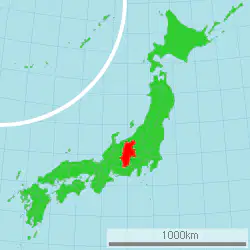
_______ is most famous for its ski slopes and hosted the 1998 Winter Olympics.
長野県(ながのけん)
富山県(とやまけん)
石川県(いしかわけん)
福井県(ふくいけん)
山梨県(やまなしけん)

くろべダム is located in_______.
富山県(とやまけん)
石川県(いしかわけん)
福井県(ふくいけん)
山梨県(やまなしけん)
静岡県(しずおかけん)
_______ and _______ are both known for their beautiful views of 富士山(ふじさん), and a rivalry exists between them concerning whose view of the mountain is better. The two prefectures are famous for grapes and green tea, respectively.
山梨県(やまなしけん) and 静岡県(しずおかけん)
岐阜県(ぎふけん) and 愛知県(あいちけん)
三重県(みえけん) and 富山県(とやまけん)
福井県(ふくいけん) and 石川県(いしかわけん)
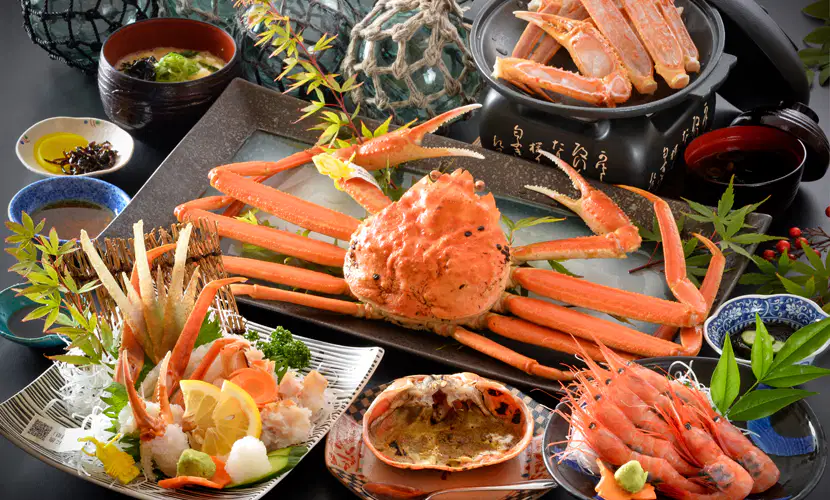
For many, 越前蟹(えちぜんがに)from _______ rivals that of 北海道(ほっかいどう) in terms of quality.
福井県(ふくいけん)
石川県(いしかわけん)
岐阜県(ぎふけん)
愛知県(あいちけん)
三重県(みえけん)
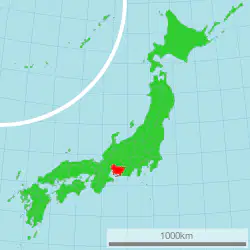
The トヨタ Motor Company and 味噌(みそ) paste are what _______ is known for.
愛知県(あいちけん)
石川県(いしかわけん)
岐阜県(ぎふけん)
三重県(みえけん)
石川県(いしかわけん)
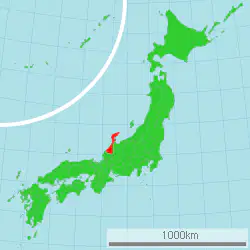
_______ is one of several prefectures in Japan that is known for its 温泉(おんせん - hot spring baths).
石川県(いしかわけん)
岐阜県(ぎふけん)
三重県(みえけん)
静岡県(しずおかけん)
山梨県(やまなしけん)
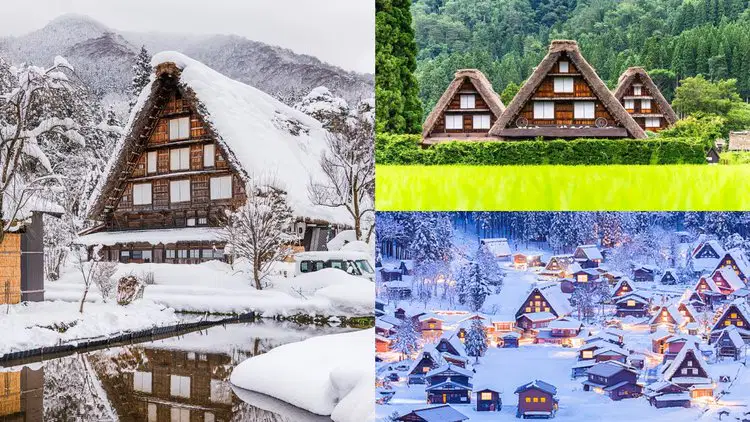
The 飛騨(ひだ)area in _______ is known for its beef, and 高山市(たかやまし)is Japan's highest urban area, in terms of elevation, and one of the country's "hidden gems."
The farming village of 白川郷(しらかわご)is also in the 飛騨 area and is an officially designated UNESCO World Heritage Site. It is known for its traditional farmhouses with 合掌造(がっしょうずくり - "clasped hands style") roofs - so named because of their perceived resemblance to praying hands. The design allows snow to fall to the ground instead of accumulating on the roofs.
岐阜県(ぎふけん)
静岡県(しずおかけん)
三重県(みえけん)
山梨県(やまなしけん)
富山県(とやまけん)

伊勢神宮(いせじんぐ) is one of Japan's most famous 神社(じんじゃ). Unlike others, much of it exhibits an architectural style that is more indigenous to Japan (before contact), rather than displaying ancient Chinese influences. It is completely rebuilt every 20 years and is the official shrine of the Imperial Family of Japan, where Emperors are crowned. 伊勢神宮 is located in _______.
三重県(みえけん)
富山県(とやまけん)
岐阜県(ぎふけん)
山梨県(やまなしけん)
愛知県(あいちけん)

This region is where most of Japan's frequently-visited historical sites are located. It includes 京都(きょうと)、as well as 大阪(おおさか)、三重県(みえけん)、滋賀県(しがけん)、兵庫県(ひょうごけん)、奈良県(ならけん)、and 和歌山県(わかやまけん).
北海道(ほっかいどう)
東北(とうほく)
関東(かんとう)
中部(ちゅうぶ)
関西・近畿(かんさい・きんき)
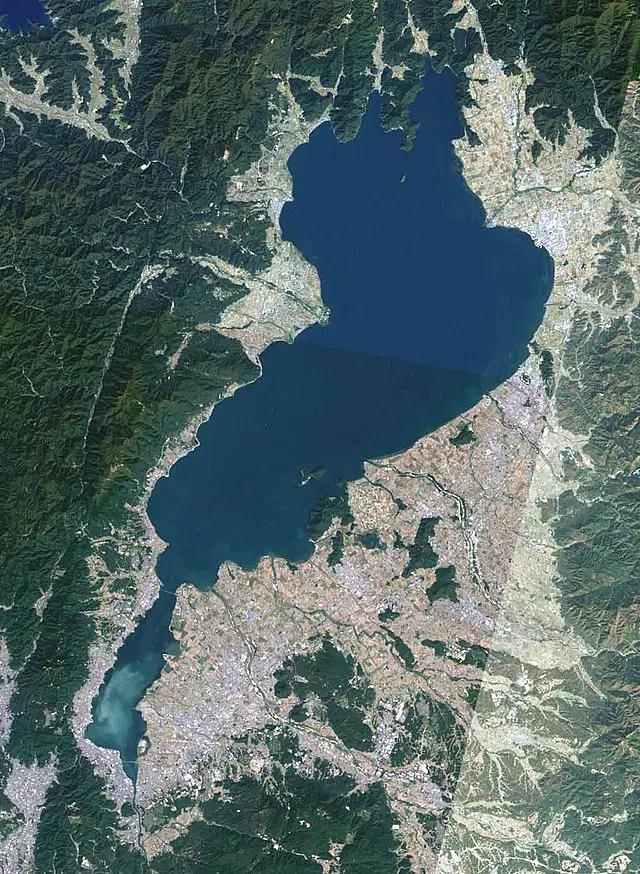
琵琶湖(びわこ) is Japan's largest lake and is so named because its shape resembles the traditional musical instrument. It is located in _______.
滋賀県(しがけん)
京都(きょうと)
大阪(おおさか)
兵庫県(ひょうごけん)
奈良県(ならけん)

_______ (both a city and prefecture) was the capital for the longest time in Japan's history. Most of the country's frequently-visited 寺(てら)and 神社(じんじゃ)are located there; there are upwards of 10,000 of these in the area. This area is also famous for 芸者(げいしゃ) and 舞妓(まいこ).
京都(きょうと)
大阪(おおさか)
兵庫県(ひょうごけん)
奈良県(ならけん)
和歌山県(わかやまけん)
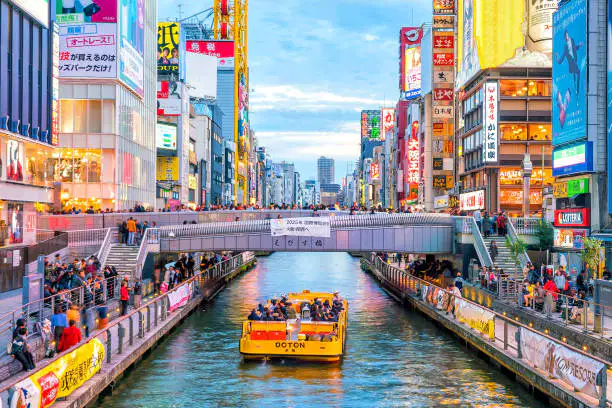
_______ (both a city and a prefecture) is the largest urban area in the 関西・近畿(かんさい・きんき)region and the second-largest in the country. Many of Japan's comedians and musicians originate from this area, which was historically a commercial centre known for its flour-based cuisine.
大阪(おおさか)
兵庫県(ひょうごけん)
奈良県(ならけん)
和歌山県(わかやまけん)
京都(きょうと)
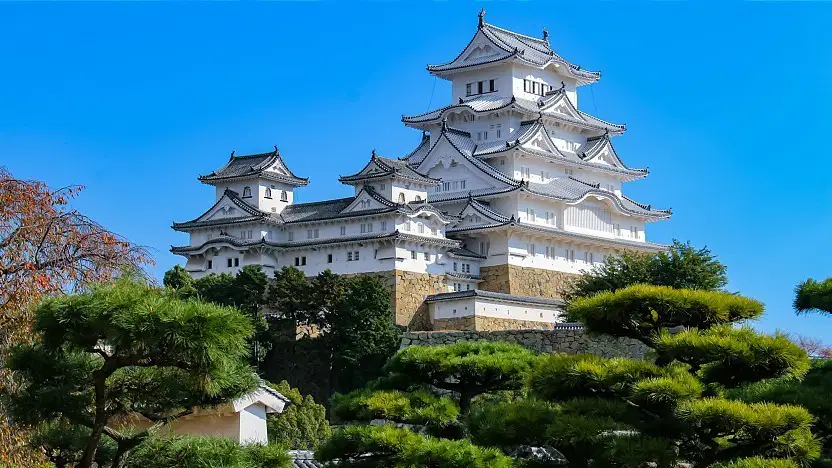
神戸(こうべ) beef is named for the city with which it is associated, in _______. 姫路城(ひめじじょう), one of the few castles in Japan that is an original rather than a post-WII reconstruction, is also here.
兵庫県(ひょうごけん)
奈良県(ならけん)
和歌山県(わかやまけん)
京都(きょうと)
大阪(おおさか)

The world's largest indoor Buddha statue is located in this city and prefecture. It also served as Japan's capital in the past.
奈良県(ならけん)
和歌山県(わかやまけん)
京都(きょうと)
大阪(おおさか)
兵庫県(ひょうごけん)
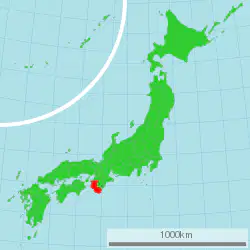
The famous temple complex on 高野山(こうやさん) is located in _______. Travellers can stay here overnight, and participate in the rituals and daily routines practiced by the mountain's Buddhist monks and nuns.
和歌山県(わかやまけん)
京都(きょうと)
大阪(おおさか)
奈良県(ならけん)
三重県(みえけん)

_______ is famous for 納豆(なっとう).
茨城県(いばらきけん)
栃木県(とちぎけん)
群馬県(ぐんまけん)
埼玉県(さいたまけん)
千葉県(ちばけん)
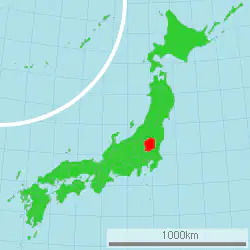
餃子(ぎょうざ) is most commonly associated with _______.
栃木県(とちぎけん)
群馬県(ぐんまけん)
埼玉県(さいたまけん)
千葉県(ちばけん)
神奈川県(かながわけん)
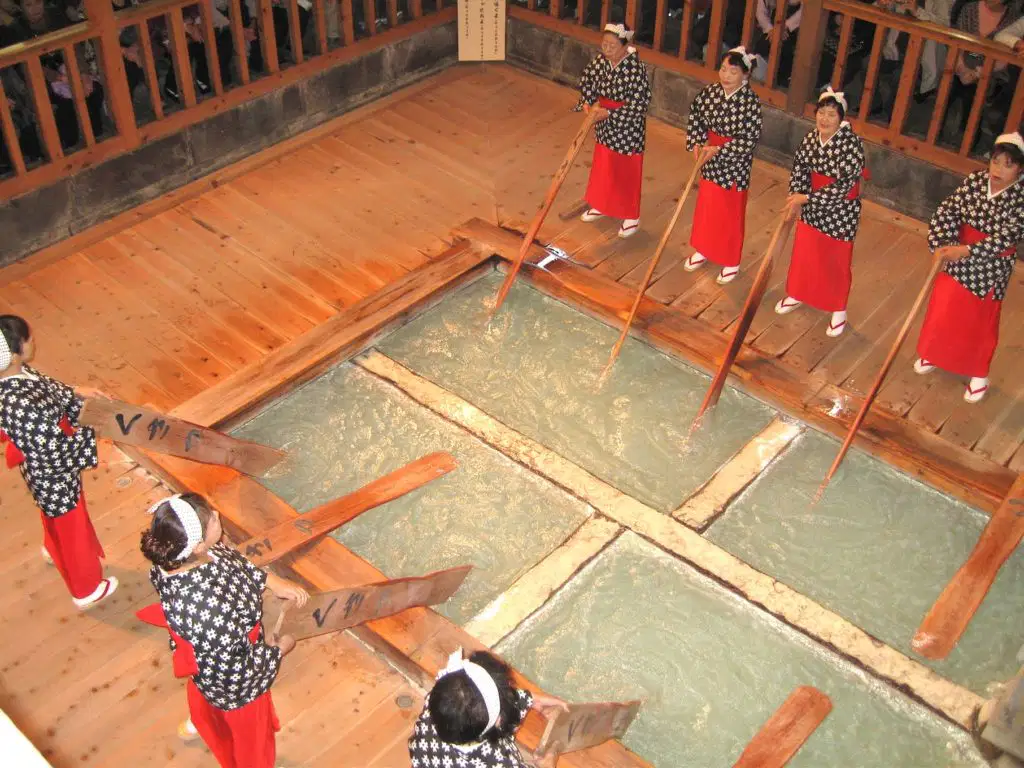
The famous 草津温泉(くさつおんせん) is located in _______.
群馬県(ぐんまけん)
埼玉県(さいたまけん)
千葉県(ちばけん)
神奈川県(かながわけん)
茨城県(いばらきけん)

鎌倉市(かまくらし), in _______, is where this large outdoor statue of Buddha can be found.
神奈川県(かながわけん)
千葉県(ちばけん)
埼玉県(さいたまけん)
茨城県(いばらきけん)
東京(とうきょう)
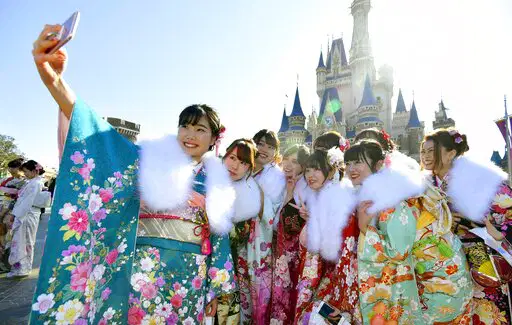
東京ディズニーランド is a bit of a misnomer for this theme park since it is located in _______, not 東京(とうきょう). ベイズリー 先生 once lived and worked in this prefecture.
千葉県(ちばけん)
埼玉県(さいたまけん)
北海道(ほっかいどう)
宮城県(みやぎけん)
栃木県(とちぎけん)

The anime クレヨンしんちゃん is set in _______.
埼玉県(さいたまけん)
東京(とうきょう)
千葉県(ちばけん)
栃木県(とちぎけん)
茨城県(いばらきけん)

The red disc on the Japanese flag represents the sun, which pertains to its location at the eastern edge of _______.
(a)

This region is located in the westernmost part of 本州(ほんしゅう). It includes 鳥取県(とっとりけん)、as well as 広島県(ひろしまけん)、山口県(やまぐちけん)、岡山県(おかやまけん)and 島根県(しまねけん).
北海道(ほっかいどう)
東北(とうほく)
関東(かんとう)
中部(ちゅうぶ)
中国(ちゅうごく)
Japan's only desert is located in _______.
鳥取県(とっとりけん)
広島県(ひろしまけん)
愛知県(あいちけん)
富山県(とやまけん)

One of Japan's most beautiful traditional gardens can be found at 足立美術館(あだちびじゅつかん - あだちArt Museum), in _______.
埼玉県(さいたまけん)
東京(とうきょう)
島根県(しまねけん)
岩手県(いわてけん)
富山県(とやまけん)
The legend of 桃太郎(ももたろう)centres around a boy, born from a peach - 桃太郎 means "Peach Boy" (太郎 = historically a common Jpns. boy's name). In the legend, 桃太郎 grows up to be a famous warrior and the area where all of this is said to have taken place is in _______.
The above legend is so famous in Japan that a statue of 桃太郎 can be found outside this prefectural capital's train station.
栃木県(とちぎけん)
宮崎県(みやざきけん)
和歌山県(わかやまけん)
岡山県(おかやまけん)
静岡県(しずおかけん)

This prefectural capital was one of two major Japanese cities to be hit by an American atomic bomb near the end of World War II. _______ is also famous for 厳島神社(いつくしまじんじゃ), which is a very popular tourist attraction.
東京(とうきょう)
広島県(ひろしまけん)
青森県(あおもりけん)
長崎県(ながさきけん)
京都(きょうと)

_______is the place to go for fresh 鰒(ふぐ).
山口県(やまぐちけん)
島根県(しまねけん)
大阪(おおさか)
静岡県(しずおかけん)
沖縄県(おきなわけん)
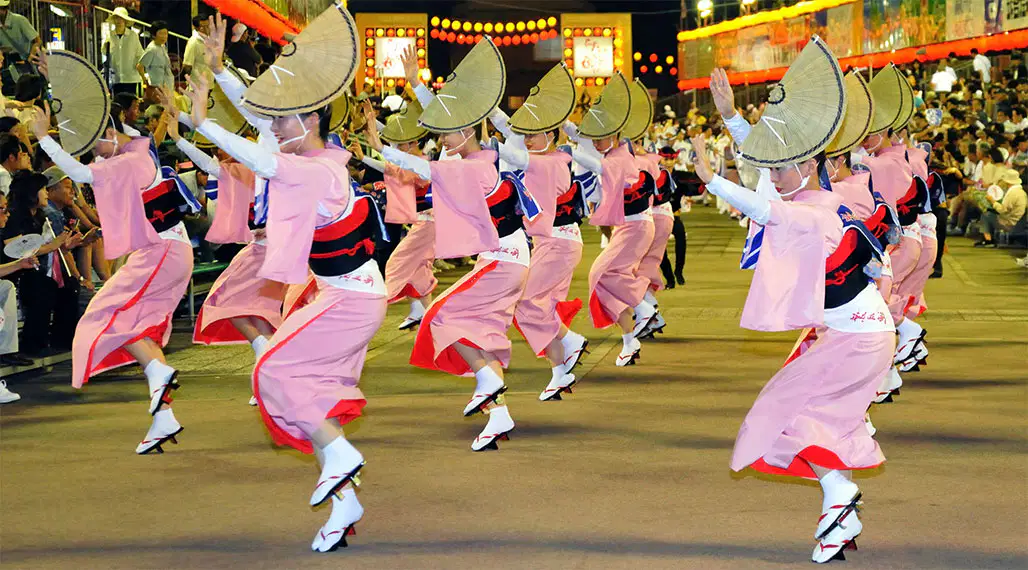
お盆(おぼん)is a multi-day festive miniseason with Buddhist connections, dedicated to remembering and honouring the dead - making it unique, compared to other festivals in Japan. The お盆 season occurs in August, and dances associated with it are commonly known as 盆踊り.
One of the most famous festivals and dances associated with お盆 is the 阿波踊り(あわおどり)in _______. Visitors from around Japan, as well as abroad, flock to this part of the country at this time. NHK usually films and broadcasts the 阿波踊り every year.
徳島県(とくしまけん)
滋賀県(しがけん)
高知県(こうちけん)
愛媛県(エヒメケン)
神奈川県(かながわけん)
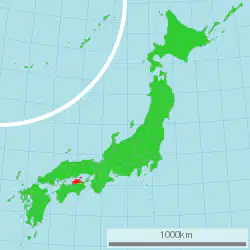
_______ is Japan's smallest prefecture and is famous for its うどん noodles.
三重県(みえけん)
徳島県(とくしまけん)
香川県(かがわけん)
愛媛県(えひめけん)
宮崎県(みやざきけん)
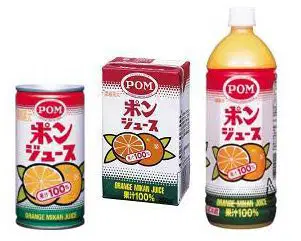
_______ is the home of ポン mandarin orange juice, arguably Japan's most famous and best.
香川県(かがわけん)
愛媛県(えひめけん)
高知県(こうちけん)
長崎県(ながさきけん)
徳島県(とくしまけん)
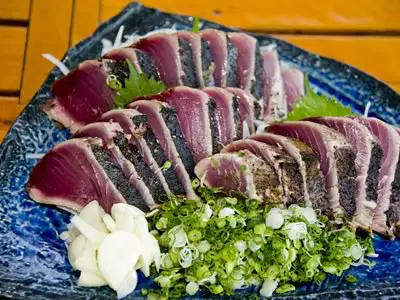
_______ is one of four prefectures located on 四国(しこく)and is known for its 鰹(かつお)- bonito or skipjack tuna in English. Dried bonito flakes(鰹ぼし)are commonly used as a base or stock in Japanese cooking and the meat is also sometimes eaten raw as 刺身(さしみ).
The 土佐犬(とさけん), a Japanese mastiff traditionally used for dog fighting, was first bred here.
愛媛県(えひめけん)
徳島県(とくしまけん)
香川県(かがわけん)
高知県(こうちけん)
熊本県(くまもとけん)
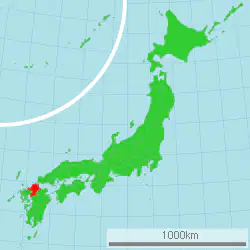
豚骨らめん(とんこつ)is associated with this prefecture, one of seven located on 九州(きゅうしゅう).
熊本県(くまもとけん)
鹿児島県(かごしまけん)
宮崎県(みやざきけん)
長崎県(ながさきけん)
佐賀県(さがけん)
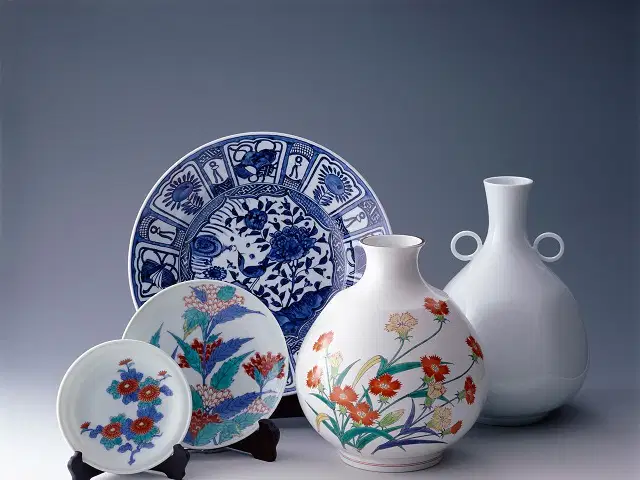
有田焼(ありたやき)is a hand-crafted, high-quality (and consequently expensive) ceramic originating from ________.
福岡県(ふくおかけん)
佐賀県(さがけん)
宮崎県(みやざきけん)
鹿児島県(かごしまけん)
長崎県(ながさきけん)
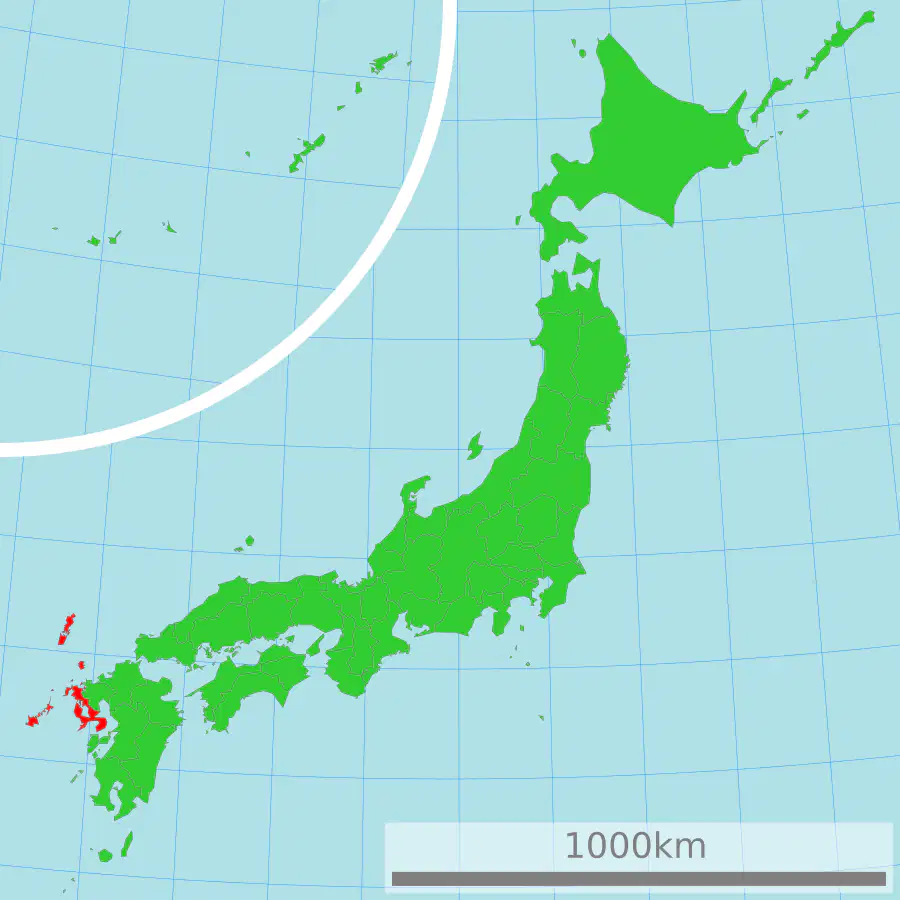
The prefectural capital of _______ was the second of two cities hit by an American atomic bomb near the end of World War II.
This area is also where Westerners (Portuguese traders and missionaries) first made contact with the Japanese in the sixteenth century. Consequently, some of its traditional architecture and cuisine (e.g. カステラ) contain more Western influences, and its small Christian (mostly Roman Catholic) community predates the 江戸(えど) Period.
The artificial, fan-shaped island called 出島(でじま), where Dutch traders were allowed to conduct business with Japanese merchants during the 江戸 Period, is also located in this prefecture. Although 出島 no longer exists as a standalone island, the area where it once stood is now a museum.
長崎県(ながさきけん)
宮崎県(みやざきけん)
広島県(ひろしまけん)
熊本県(くまもとけん)
鹿児島県(かごしまけん)
_______ is famous for its black-walled castle and the country's largest active volcano called 阿蘇山(あそざん)which is surrounded by a very picturesque park. The grave of one of Japan's most famous warriors, 宮本武蔵(みやもとむさし), is also located here.
This prefecture is also famous for its horse meat, which is typically eaten raw.
長崎県(ながさきけん)
宮崎県(みやざきけん)
広島県(ひろしまけん)
熊本県(くまもとけん)
鹿児島県(かごしまけん)
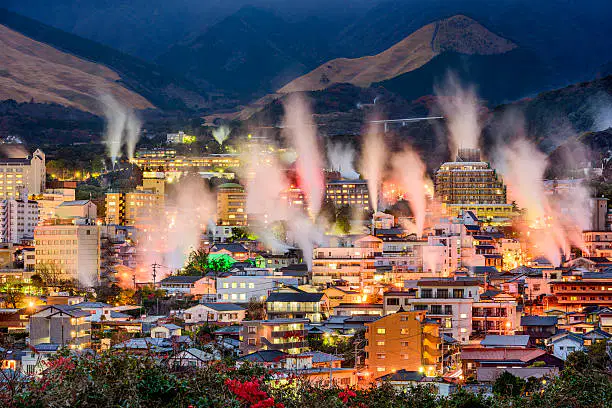
別府市(べっぷし)is located in _______, and is famous for its numerous 温泉(おんせん)- hot spring baths. The city and surrounding areas are known for their active geothermal activity; jets of steam can often be seen shooting upward from the ground there.
長崎県(ながさきけん)
熊本県(くまもとけん)
大分県(おおいたけん)
福岡県(ふくおかけん)
鹿児島県(かごしまけん)

_______ is where 桜島(さくらじま - "Cherry Blossom Island")is located. The volcano located on this island is the most active in Japan and has been erupting on a near-continuous basis since 1914, frequently dropping volcanic ash on the prefectural capital.
長崎県(ながさきけん)
熊本県(くまもとけん)
大分県(おおいたけん)
福岡県(ふくおかけん)
鹿児島県(かごしまけん)

_______ is famous for the tropical fruits it produces, such as mangoes. Among its most famous attractions is the 高千穂(たかちほ)gorge - said to be one of the most beautiful places in Japan. Visitors can rent a boat and sail its waters.
長崎県(ながさきけん)
熊本県(くまもとけん)
大分県(おおいたけん)
福岡県(ふくおかけん)
宮崎県(みやざきけん)

The inhabitants of ________ have among the highest life expectancies in the world. This has been attributed to the area's subtropical climate, more relaxed beach-centred lifestyle, and a traditional cuisine famous for its use of ごや or "bitter melon."
This prefecture was also the birthplace of 空手(からて), and the only part of Japan that experienced ground combat and military invasion during World War II. Since it is located quite far away from the rest of the country, its culture and language are quite distinct.
北海道(ほっかいどう)
東京(とうきょう)
沖縄県(おきなわけん)
鹿児島県(かごしまけん)
大分県(おおいたけん)
Japan has _______ major islands.
(a)
本州(ほんしゅう)is the largest of Japan's main islands and contains _______ of the country's eight regions.
(a)

