
 Worksheets
Crystal Bonding and Phonon
Total questions: 15
Worksheet time: 34mins
Which crystals below are not formed by ionic bond?
LiF
SiC
NaCl
GaAs
MgO
What element connect the metallic atoms?
Electron
Atom
Ion
Phonon
Photon
What kind of crystal bonding possessing high melting and boiling points?
Ionic Lattice
Hydrogen Bonded Crystal
Metal
Molecular Lattice
Covalent Lattice
Which crystals below are formed by van der Waals force?
Diamond
Graphite
Monolayer Graphene
Few-layers Graphene
Carbon Nanotubes

What energies involved for A, B, and C in the figure below:
Binding Energy
Cohesive Energy
Electron Affinity
Lattice Energy
Ionization Energy

In the figure below, what is the point of the minimum energy for the red curve?
Attractive Energy
Zero-point Energy
Equilibrium Distance
Minimum Separation Distance
Cohesive Energy
Referring to the non-grading assessment 1 question 3, the cohesive energy ratio of bcc to fcc for neon is 0.956. Which factors affecting the stability of the fcc structure?
Mass of Atom
Radius of Atom
Number of Atoms
Nearest-neighbor Distance
Atomic Packing Factor

In the figure below, what is the C represented?
Elastic Constant
Lattice Constant
Heat Capacity
Force Constant
Atomic Constant
By given the dispersion relation, vg=(Ca2/M)1/2 cos1/2 Ka, for an atomic vibration in the first Brillouin zone boundary K = <pi>/a, the group velocity depending on?
Unit Cell
Atom
Element
Binding Energy
Lattice
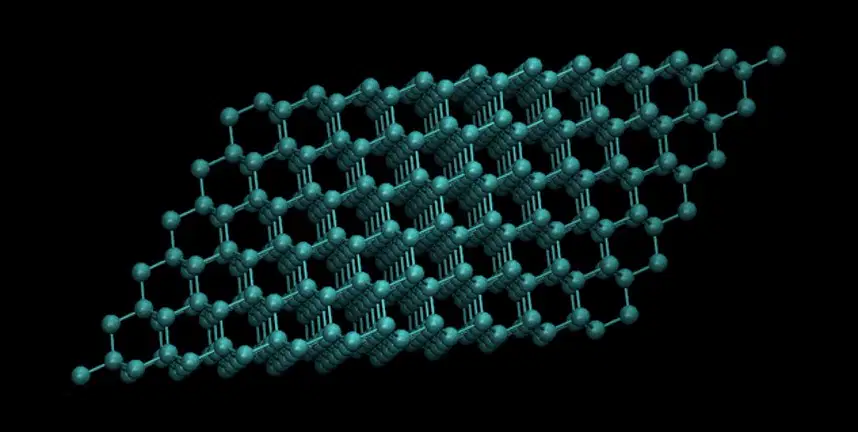
What is a phonon?
Ionic Energy
Charge Energy
Elastic Wave Energy
Quantum Oscillator
Thermal Energy

According to the heat capacity, Cv, why Germanium possessing higher heat capacity than Silicon at the low temperature region as shown in figure below:
Atomic Mass
Atomic Number
Unit Cell
The Debye Temperature
No of Phonons
According to the thermal conductivity, k = 1/3 Cv v l, at low temperature region, what are the main factors affecting the thermal conductivity of a metal?
Atomic Mass
Density of States
Number of Electron
Volume of Unit Cell
Phonons
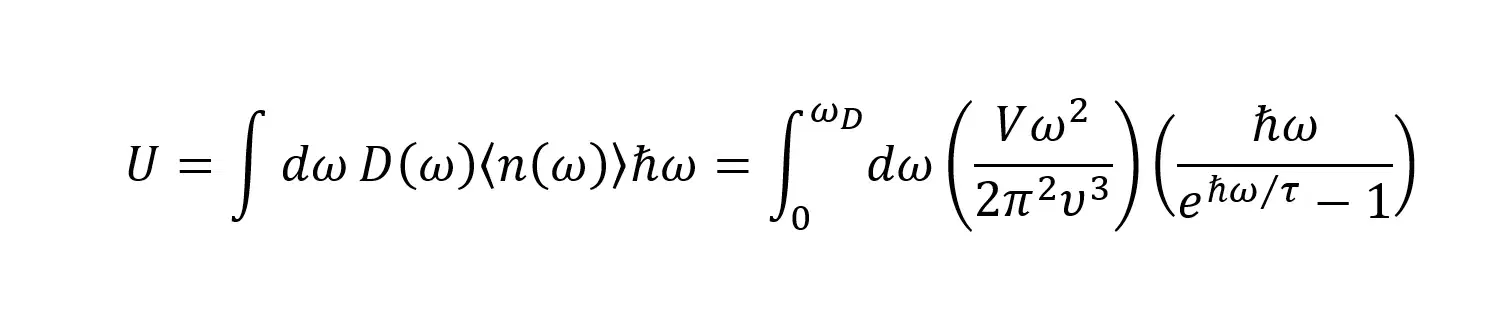
The total phono energy, U = f dw D(w) <n(w)> h'w, for each polarization modes. According to the Debye model, the density of states, D(w) = dN/dw, what are the important parameters affecting the total phonon energy?
Photon energy
Number of Phonons
Degree of Freedom
Thermal Energy
Velocity of Sound
According to the thermal conductivity, k = 1/3 Cv v l, why Copper (400 W/m K) possessing higher thermal conductivity than Gold ( 320 W/m K)?
Gold has larger atomic number than Copper
Gold has larger lattice than Copper
Copper has higher specific heat capacity than Gold
Copper has higher Debye temperature than Gold
I am not sure!!!
If you are assigned to make a heater for a super-efficient electric kettle, what metal element you going to choose?
Sodium
Silicon
Zinc
Cobalt
Carbon

