
 Worksheets
Heat and Water Cycle Quiz
Total questions: 20
Worksheet time: 20mins
Rays from the sun are shining down on a house, as shown in the illustration. What effect does the sun have on the temperature of the house?
The temperature of the house increases because heat radiates from the sun.
The temperature of the house increases because heat is conducted by the sun.
The temperature of the house decreases because heat is convected by the sun.
The temperature of the house decreases because the sun absorbs heat from the house.
The area in front of a fire feels warm on a cold evening. What are the processes that cause the person in front of the fire to feel warm?
conduction and convection
radiation and conduction
radiation and convection
radiation, convection, and conduction
What conditions are necessary for heat conduction to occur between two objects?
The objects must be surrounded by air or water.
Two objects at different temperatures are touching one another.
Two objects at different temperatures are located close to one another.
One object must emit energy as light and heat and another object absorbs the energy.
Which best describes how heat moves from one solid to another solid?
through conduction
through convection
through insulation
through radiation
Which best describes how heat is transferred due to convection?
through direct contact with a hot object
through the movement of gases or liquids
through the absorption of the sun’s energy
through the process of liquid changing into a gas
Manuel was having trouble opening a new glass jar of pickles. His father told Manuel to hold the metal lid of the jar under running hot water for a few seconds, then try again. Then the lid opened easily. What is the MOST likely reason Manuel’s father suggested using hot water to loosen the lid?
Glass contracts when it is heated.
Metals expand when they are heated.
Metals are easier to grip when they are warm.
Hot water reduces friction between metal and glass.
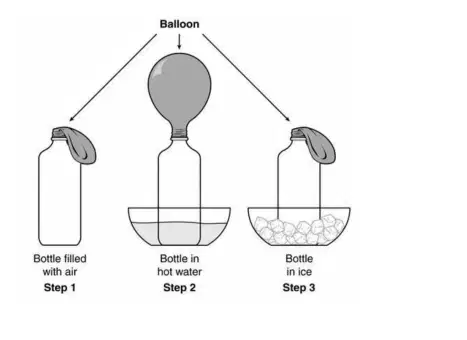
Uneven heating of Earth causes convection currents. What part of this process is being demonstrated in this diagram?
Heat causes gases to expand.
Heat causes gases to contract.
As air cools, currents flow clockwise.
As air cools, currents flow counterclockwise.
Which best describes the flow of heat?
from a larger object to a smaller object
from a warmer object to a cooler object
from a cooler object to a warmer object
from a smaller object to a larger object
Josiah is going to have a cup of hot cocoa. If he wants the cocoa to stay warm as long as possible, which type of cup should he put his hot cocoa in?
An iron cup because it is a conductor
A foam cup because it is an insulator
A metal cup because it is an insulator
A glass cup because it is a conductor
Why do asphalt streets often have cracks in them?
because asphalt is a good conductor of heat
because asphalt expands when heated and contracts when cooled
because asphalt is an insulator that helps keep heat from escaping
because asphalt contracts when heated and expands when cooled
Why does ice cream placed in a foam cooler melt slower than ice cream placed in an aluminum container?
because aluminum is a better insulator than foam
because foam is a better insulator than aluminum
because aluminum insulates against more heat
because foam conducts more heat
Which steps of the water cycle MOST directly cause floods?
Precipitation and runoff
Condensation and evaporation
Runoff and condensation
Evaporation and precipitation
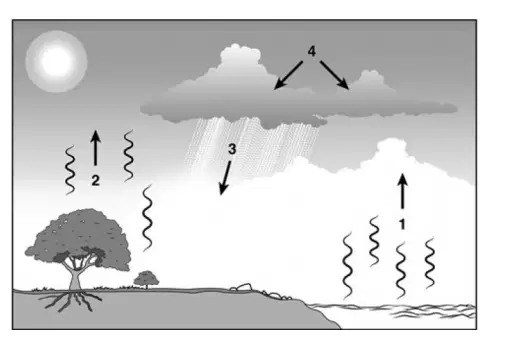
Use the diagram of the water cycle to answer the question that follows. In the diagram, transpiration can be represented by which numbered area?
1
2
3
4
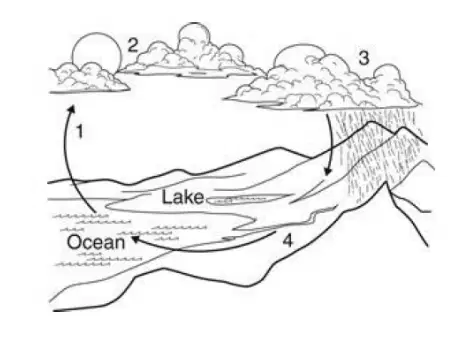
The picture below shows the water cycle. In which part of the water cycle does water change from a liquid to a gas?
1
2
3
4
In the morning, students observed puddles of water all over the playground. What would BEST explain why the playground was dry in the afternoon?
Animals drank the water
The wind stopped blowing
Someone dried the puddles
The water evaporated during the day
Which of these could cause water vapor to condense into rain droplets?
Sunlight warming the surface of the ocean.
Air rising into colder regions of the atmosphere.
Lightning beating the air in the atmosphere.
Winds blowing along the surface of the ground.
Camilla put water in two flat, uncovered pans. She placed one pan in a sunny spot and put the other pan in a shady spot. She left the pans for 12 hours, then returned and measured the water in both pans. What MOST likely happened to the water in the pans?
More water evaporated from the pan exposed to sunshine.
More water evaporated from the pan left in the shade.
The same amount of water evaporated from both pans.
No water evaporated from either pan.
A glass of cold water is set on a desktop. Later that day, beads of water had formed on the outside of the glass. The MOST likely explanation for the beads of water is that
Some water dripped over the side.
The water soaked through the glass.
Water vapor condensed on the sides.
Someone sprayed the glass with water.
The sun shines on the lake and water vapor rises from the lake into the atmosphere. The vapor cools and becomes water droplets in the clouds. The droplets return to Earth as rain, snow, or hail in a continuous cycle. Which is the correct sequence for these processes?
Condensation, evaporation, and runoff
Runoff, transpiration, and evaporation
Evaporation, condensation, and precipitation
Precipitation , evaporation, and transpiration
After a hot sunny day, a plant withers and dries up. Which explains how this happens?
The hot sun causes respiration of the plant’s water.
The hot sun causes precipitation of the plant’s water.
The hot sun causes transpiration of the plant’s water.
The hot sun causes condensation of the plant’s water.

