
 Worksheets
object and face recognition part 1
Total questions: 20
Worksheet time: 12mins
stimulation of a sensory receptor which produces neural impulses that the brain interprets as a sound, visual image, odour, taste, pain, etc.
Sensation
Perception
Recognition
the brain organizes the information and translates/interprets it into something meaningful or something that can be made sense of or rationalized
Sensation
Perception
Recognition
the brain organizes the information and translates/interprets it into something meaningful or something that can be made sense of or rationalized
Sensation
Perception
Recognition
percepts are matched to stored representations in memory enabling categorization and identification.
Sensation
Perception
Recognition
What is a memory representation of the three-dimensional structure of objects?
Structural description
Efference copy
Firure-ground segregation
Object recognition
Object constancy
At which of the 4 stages do the gestalt principles and figure-ground segmentation come into play?
2
3
1
4
Object constancy
At which stage of object recognition is object constancy achieved through structural descriptions?
2
3
1
4
Object constancy
What is a key stage in translating simple features into 3D descriptions of the world – essential for object recognition - and explains why certain visual features become grouped together to form perceptual wholes?
Gestalt grouping
View normalisation
Structural descriptions
Configurl processing
Disorders in object recognition are called
Akinetopsia
Achromatopsia
Agnosia
Optic Ataxia
Integrative agnosia is a type of _______ agnosia in which_________ disrupted
Apperceptive agnosia
Associative agnosia
grouping principles are
Optic Ataxia
the ventral "what" stream is
This prevents stored knowledge of objects being accessed and ends up seeing parts but not wholes, but does not prevent the patient from seeing basic visual elements:
Integrative agnosia
Associative agnosia
Akinetopsia
Optic Ataxia
Achromatopsia
Mark all that is true for patient HJA.
He is unable to recognise pictures but gives a reasonable description of their parts.
He is unable to perform an object decision task in which novel objects are created by recombining the parts of real objects
He is able to draw objects from memory
Was able to colour components of complex drawings
Mark all that is true for patient F.R.A
He is unable to perform an object decision task in which "novel" objects are created by recombining the parts of real objects
Had integrative agnosia
Had associative agnosia
Was able to colour components of complex drawings
Succeeded in parsing the stimuli
Mark all that is true for patient HJA.
14 years after his stroke, he was assessed to have lost visual knowlege
He has associative agnosia
He had integrative agnosia
He was able to recognise objects from modalities other than vision and has good verbal knowledge about them
He was able to describe the objects in great detail but could not name them
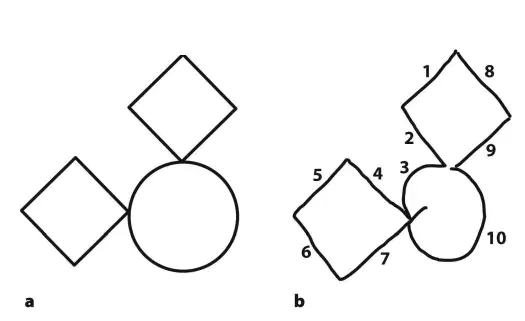
Who is this and what he have?
C.K. - Integrative agnosia
H.J.A. - Integrative agnosia
F.R.A. - Associative agnosia
C.K. - Associative agnosia
H.J.A. - Associative agnosia
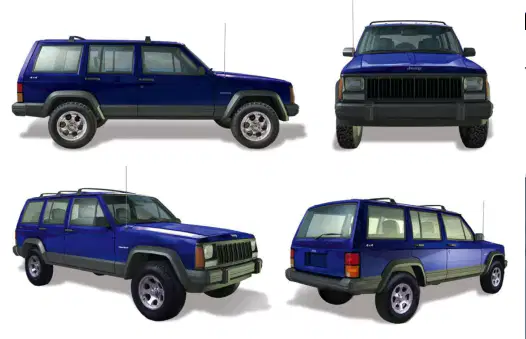
Even though these are each different retinal images, we still recognise them as the same object, why?
Object constancy
Optic Taxia
Canonical perspectives
Associative Nosia
Objects are recognized fastest ___________ - the standard or preferred way of viewing an object
Through object constancy
Trhough an Optic Taxia
From a canonical perspective

View-dependant recognition ______
View-invariant recognition _______
A) requires matching the different sensory inputs to different structural representations in memory.
B) suggests that stored structural descriptions are accessed by matching feature by feature
B) requires matching the different sensory inputs to different structural representations in memory.
A) suggests that stored structural descriptions are accessed by matching feature by feature
Patients with _______ may be unable to recognize objects in unusual views but able to recognize them in canonical views. This supports _________.
A) Right parietal lobe damage
B) View-dependent theories
B) view-invariant theories
A) Bilateral temporal lobe damage
Which disorder supports view-invariant theories?
Object orientation agnosia
Apperseptive agnosia
Integrative agnosia
Associative agnosia

