
NEW
Font size
 Worksheets
Review for Egypt Final
Total questions: 37
Worksheet time: 31mins

Which of the following explains why the Egyptians built the pyramids?
The pyramids were built as symbols of their power and wealth
The pyramids were built as protection against enemies
The pyramids were built as burial places and monuments to the Pharaohs.
The pyramids were built to store valuable resources.

There are around 138 Egyptian pyramids. Which one is the largest?
the Pyramid of Khufu, also called the Great Pyramid of Giza.
Djoser Pyramid
Khafre's Pyramid and the Great Sphinx
The Red Pyramid

Nearly all Egyptian Pyramids are located on the west bank of what River?
The Nile River
The Tigris River
The Amazon River
The Guadalupe River
Which continent are the Egyptian Pyramids found in?
Egypt
Africa
Asia
South America
Who records the amount of work accomplished each day?
Painter
Mason
Scribes
Carver
Who were the pyramids built for?
The workers
Pharaohs
They were just decoration
The gods
How long did it take to build a pyramid?
Days
Years
Weeks
Months
Why did later pharaohs decide to be buried in tombs instead of pyramids?
Tombs took less time to build
Tombs made it easier to reach the afterlife
Tombs were harder to spot by tomb raiders
Tombs were more impressive
Egypt's Black land was caused by
the damming of the Nile
pollution from farmers
deserts around the Nile
yearly flooding of the Nile

If a pharaoh's son became the next pharaoh, this started a _________.
government
kingship
pyramid
dynasty

How did the Egyptians view their pharaoh?
As a father to all of them
As a legend
As a deity (god)
As one of them

Who was usually the pharaoh's heir?
his wife
his brother
his favorite child
his oldest son

Why is Tutankhamun (King Tut) the most famous pharaoh in history?
He was buried in the Great Pyramid at Giza.
He was the son of Akhenatun, the Heretic King who changed Egypt's religion.
He accomplished so much in his short life.
His tomb was found by archaeologists in 1922 unopened.

What did Egyptians have to help them reach the afterlife?
a statue
a bible
Book of the Dead
journal
A. A body is washed in Natron
B. A body is wrapped up in bandages.
C. A body's internal organs are removed.
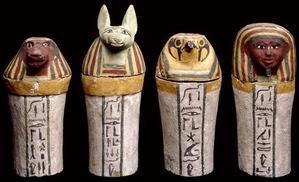
Egyptian Doctors might treat a disease by using spells
True
False
Egyptian doctors only used herbal cures
True
False
Workers that kept written records were called
viziers
artisans
scribes
priests
Egyptians used this material to write on.
Papyrus
bark
bamboo
clay tablets
This ingredient was included in Egypt's breath mints
ginger
peppermint
cinnamon
garlic
An Egyptian pharaoh ruled for
4 years
10 years
life
2 years
This animal effectively pulled plows for farming Egyptian lands.
horse
oxen
donkeys
cows


