wayground logo

Free Printable Worksheets

Font size

S
M
L
XL
Worksheets

Unit 4/5 Review

Total questions: 36

Worksheet time: 1hrs 12mins
Name
Class
Date
1.
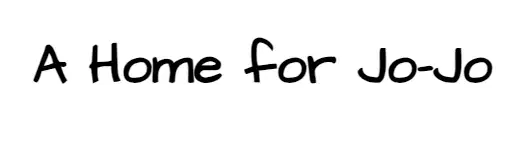
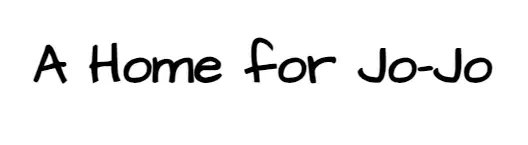
Which of these events help Jo-Jo solve his problem? choose 2 answers
a)
Santa tells Jo-Jo not to give up.
b)
Jo-Jo sees the bright star and follows it.
c)
Evan believes in Santa’s magic.
d)
Jo-Jo asks people to take him home for Christmas.
2.
What theme is shown in the passage?
a)
Don’t judge a book by its cover.
b)
Once you choose hope, anything is possible.
c)
Failing is not an option.
d)
Dogs are man’s best friend.
3.
Because the play is written in third person point of view the audience can better understand -
a)
that each person Jo-Jo meets thinks he is ugly and broken
b)
how Santa feels performing Christmas miracles
c)
that Evan and Jo-Jo’s wishes are connected
d)
how much Evan’s mom wishes she could get a puppy for him
4.
Based on the events in Scene 6 of the play, “A Home for Jo-Jo,” what will Evan and Jo-Jo most likely do next?
a)
go to the animal shelter and see if any other animals need adopting
b)
spend time getting to know each other while celebrating Christmas
c)
find Santa and thank him for bringing them together
d)
celebrate finding each other by throwing a big party
5.
Which sentence from the play shows Jo-Jo’s persevering spirit?
a)
Santa says I can’t give up, so I won’t.
b)
What was that? Was it Santa Claus?
c)
But I’m too cold and tired to look further.
d)
The star is shining on this house.
6.

What does the reader learn from the stage directions?

a)

the author's feelings

b)

the character's tone of voice

c)

the character's actions

d)

the character's interest in Christmas
7.
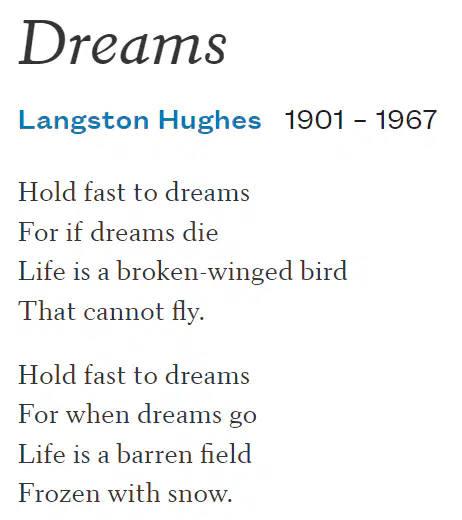
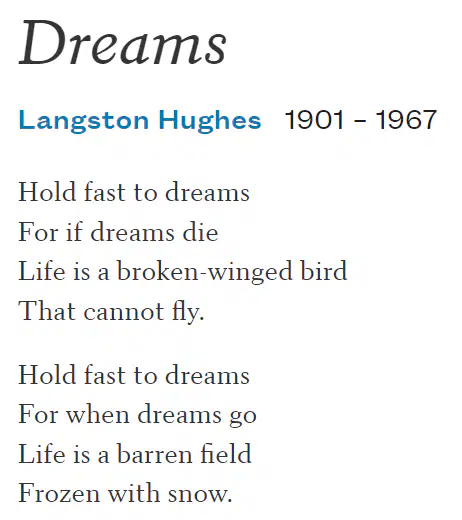
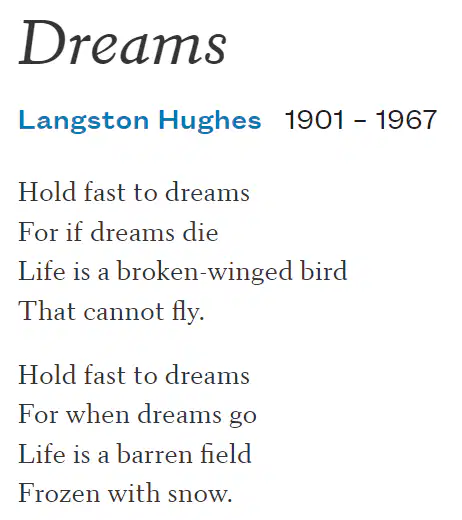
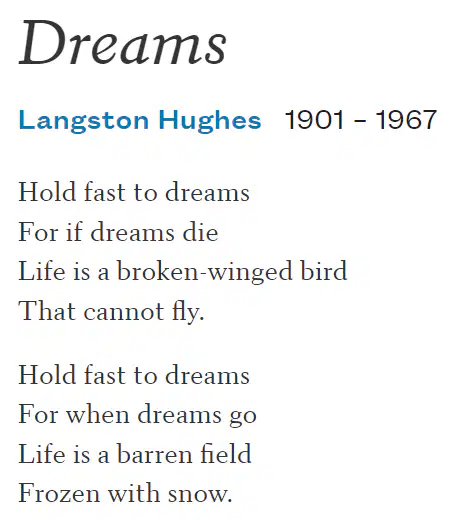
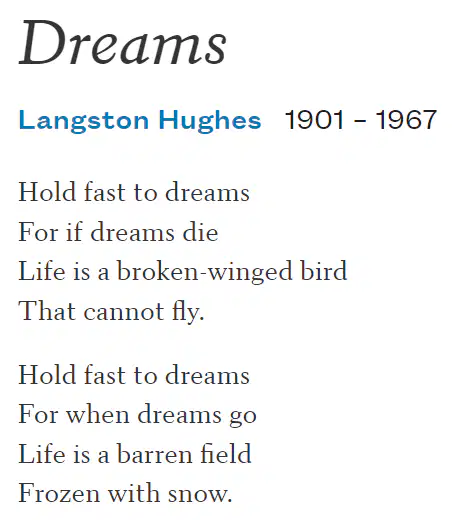
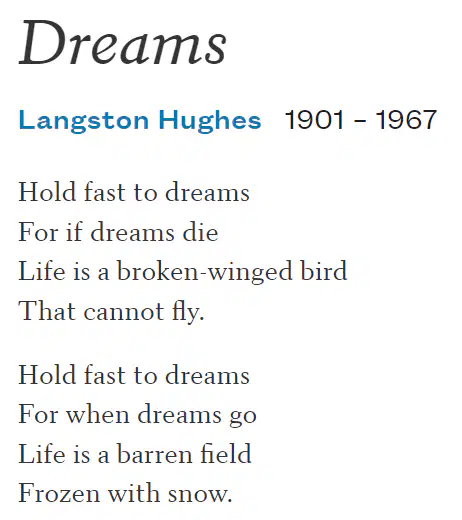
What does the poet mean when he compares life without dreams to a broken-winged bird and a barren field?
a)
Life is scary without dreams.
b)
It is harder to move around without dreams.
c)
Life can feel broken and empty without dreams.
d)
It doesn’t matter whether you have dreams or not.
8.
The author organizes the poem into stanzas for the purpose of -
a)
comparing life without a dream to different sad examples
b)
describing a dream the speaker had last night about a bird with a broken wing in the snow
c)
telling a story about a person who has no dreams
d)
describing what a broken winged bird and a barren field look like
9.

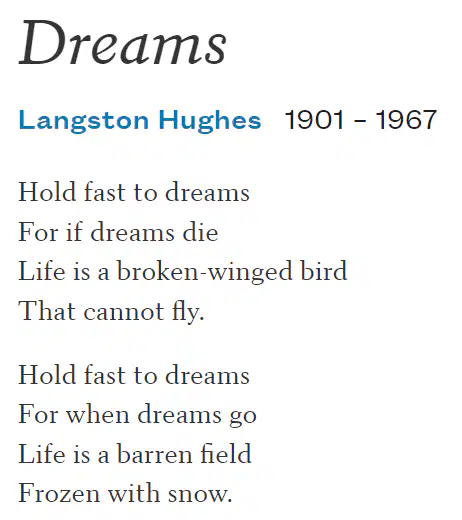
Which is an example of metaphor from the poem?
a)
a barren field frozen with snow
b)
life is a broken winged bird that cannot fly
c)
hold fast to dreams for when dreams go
d)
hold fast to dreams for if dreams die
10.

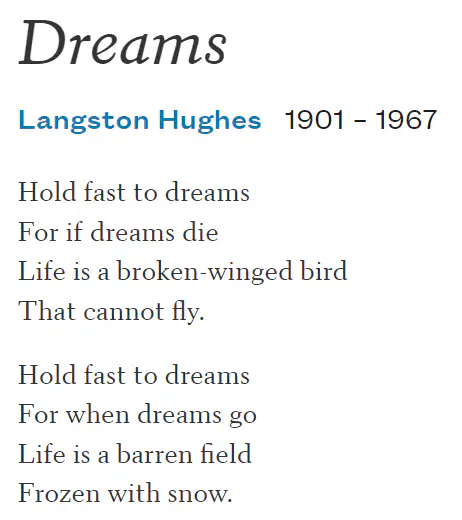
How does the metaphor "life is a broken winged bird that cannot fly" contribute to the meaning to the poem?
a)
It describes how to hold on to your dreams
b)
It compares types of things that happen when dreams die
c)
It illustrates that a barren field is sad
d)
It describes what happens to life without dreams
11.
Read lines the following lines from the poem: Hold fast to dreams For if dreams die Life is a broken-winged bird That cannot fly. Why did the poet include these lines?
a)
To tell the reader how to hold on to dreams and not let them die
b)
To explain that if a bird has a broken wing then it will have trouble flying
c)
To describe what it feels like when you don’t reach your dreams
d)
To describe how to hold on to and help birds that have broken wings
12.
Based on the details in the poem, the speaker most likely - choose 2 answers
a)
hopes that farmers can keep their fields from turning barren
b)
knows what it feels like to have dreams fail
c)
wants people to help wildlife that have injured themselves
d)
doesn’t want other people to feel the pain of losing their dreams
13.
The poem is most likely written from the point of view of a -
a)
adult
b)
bird
c)
child
d)
farmer
14.
What poetic device did the author include throughout the poem to emphasize meaning?
a)
personification
b)
alliteration
c)
simile
d)
metaphor
15.
Read the following lines from the poem. For when dreams go Life is a barren field These two lines reveal the speaker is -
a)
caring
b)
hardworking
c)
melancholy
d)
thoughtful
16.
The poem is mostly about a speaker who -
a)
fulfilled his dreams
b)
lost a dream
c)
likes animals
d)
likes the snow
17.
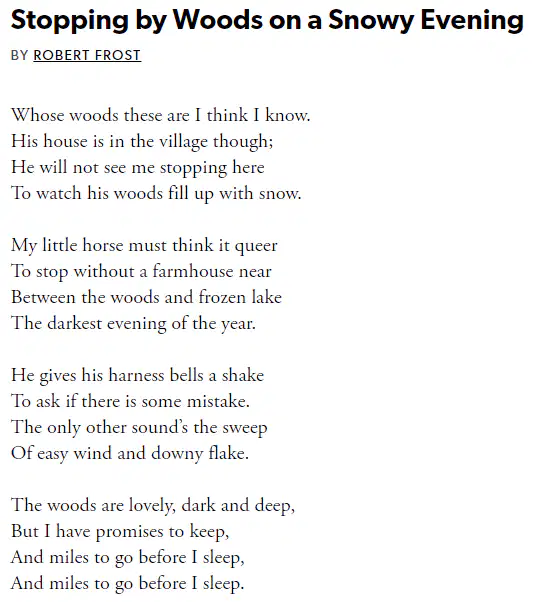
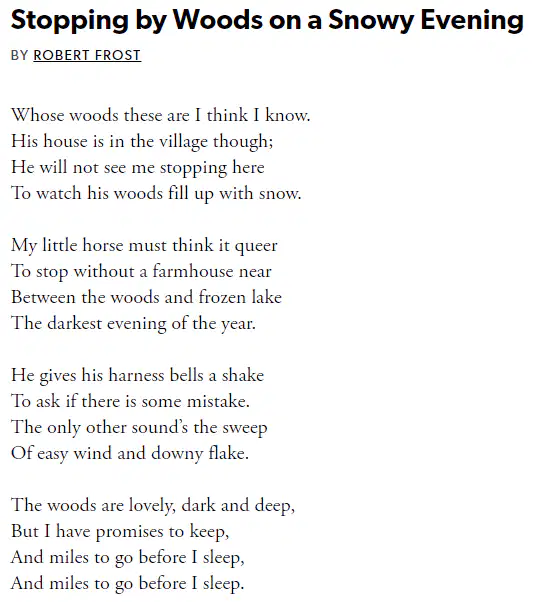
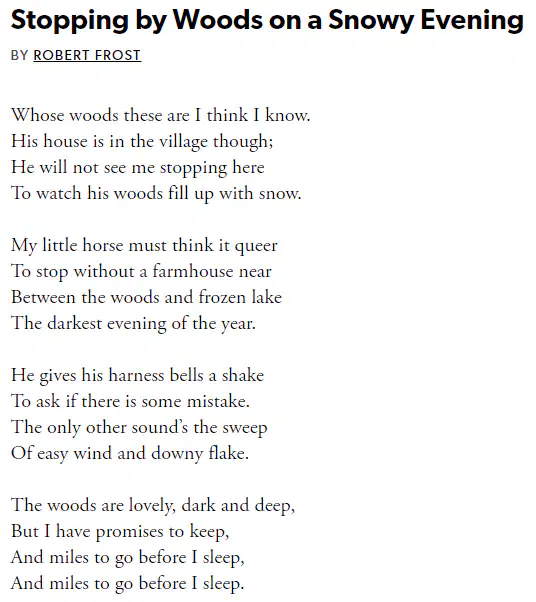
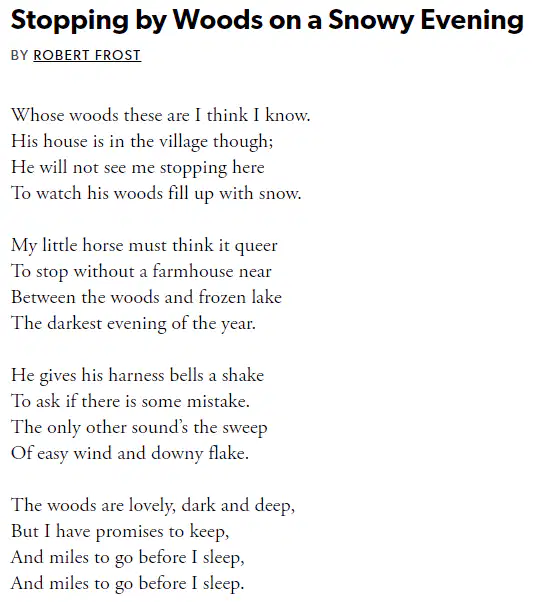
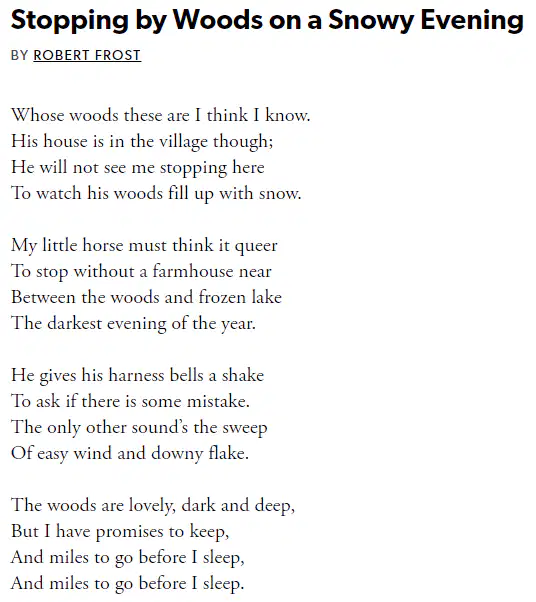
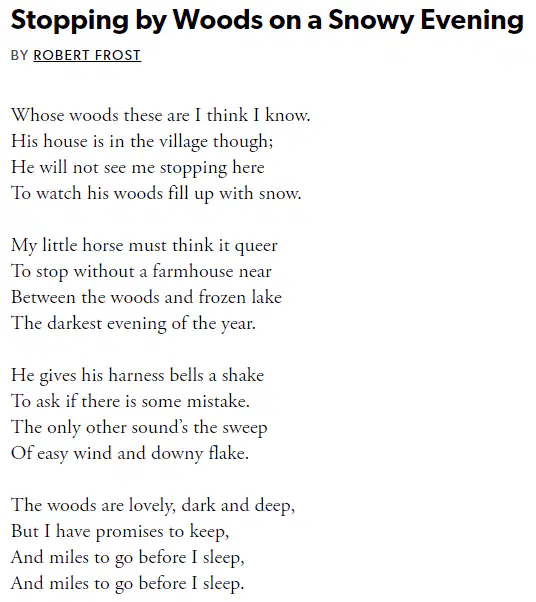
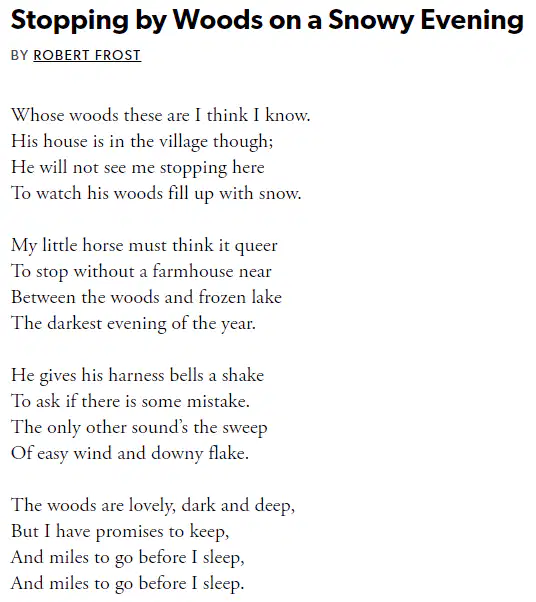
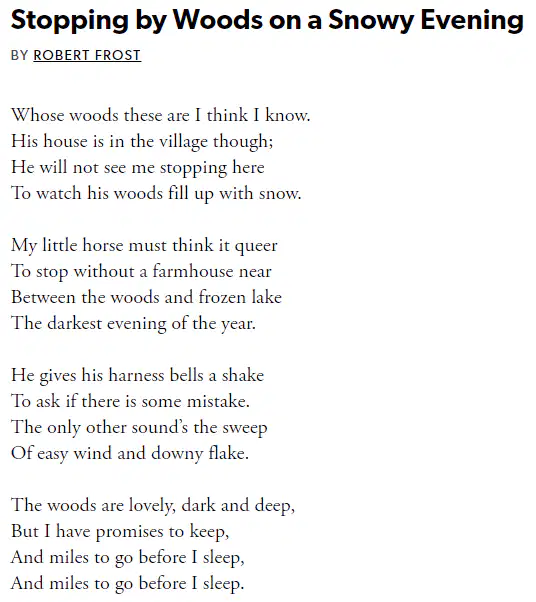
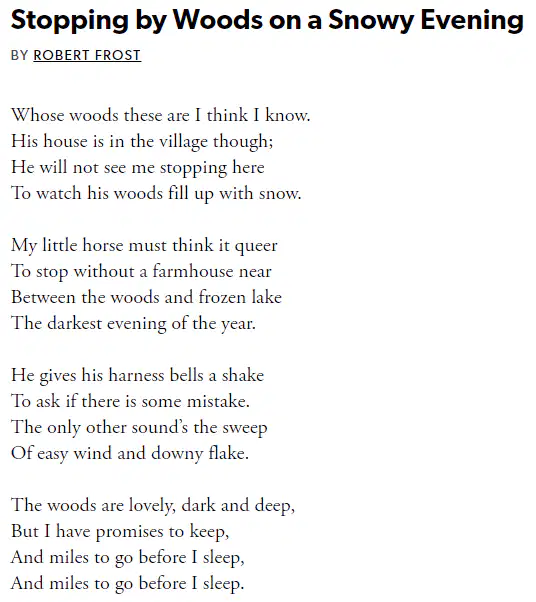
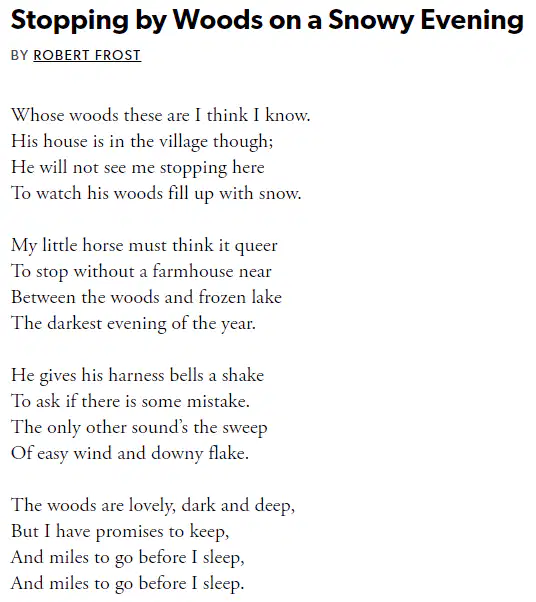
The author organizes the poem into stanzas for the purpose of -
a)
telling a story about a traveler and his horse as they stop by a village in the snow
b)
comparing what would happen if the traveler stops for the night or keeps going
c)
describing events as someone is traveling through the snowy woods
d)
describing how a horse feels as his rider takes him on a journey through the snowy woods
18.

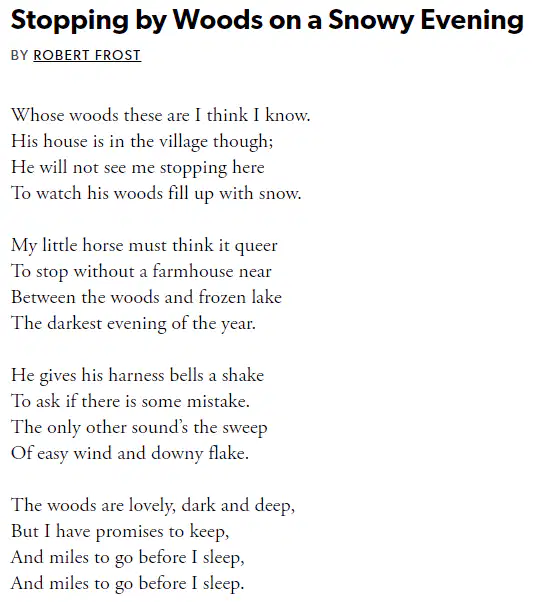
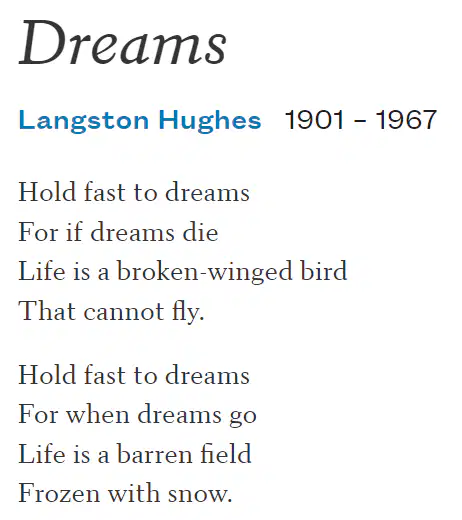
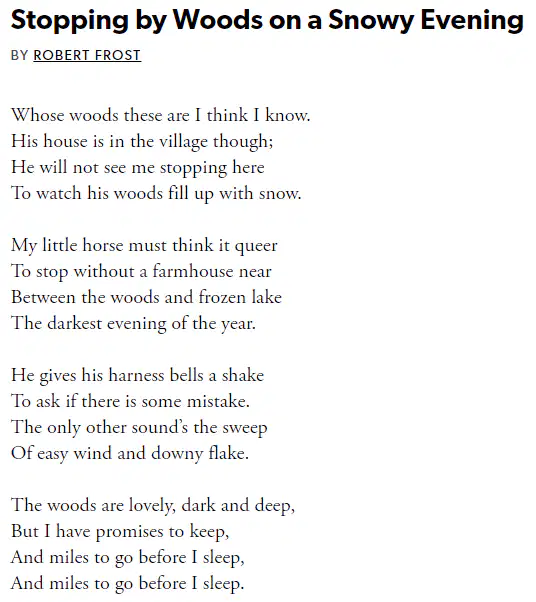
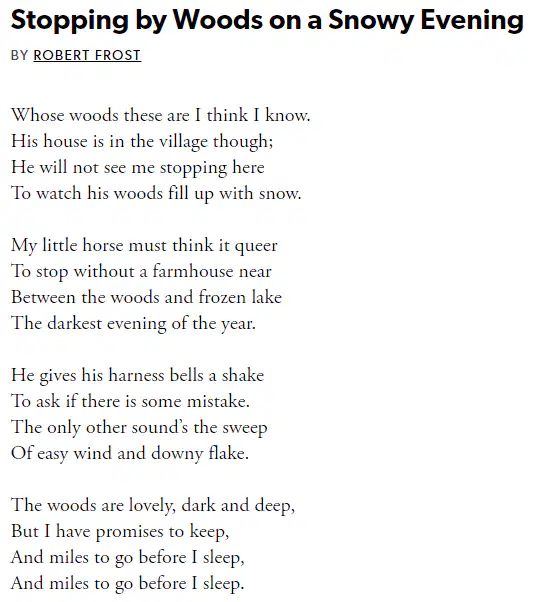
Which is an example of personification from the poem?

a)
My little horse must think it queer
b)
He gives his harness bells a shake
c)
The darkest evening of the year
d)
To watch his woods fill up with snow
19.

How does the personification "my little horse must think it queer" contribute to the meaning to the poem?
a)
It describes a snowy evening by comparing it to something strange
b)
It reinforces that animals have thoughts and feelings just like humans
c)
It illustrates how the reader feels about his horses actions
d)
It reinforces that the reader and his horse are lonely and lost
20.
Read lines the following lines from the poem: The woods are lovely, dark and deep, But I have promises to keep, And miles to go before I sleep, And miles to go before I sleep. Why did the poet include these lines?
a)
To describe how much the poet needs to complete before his time on Earth is over
b)
To explain to the reader how to tired the poet is
c)
To tell the reader how dark and cozy the woods are and how nice it would be to take a nap
d)
To explain how long the journey has been for the speaker and his horse
21.
Based on the details in the poem, the speaker most likely - choose 2 answers
a)
wants to visit someplace warmer
b)
wants to accomplish a lot in their life
c)
often rides their horse through the snow
d)
enjoys the quietness of the snowy woods
e)
has a hard time keeping promises
22.
The poem is mostly about a speaker who -
a)
is on a journey
b)
is going to die soon
c)
likes to ride horses
d)
doesn’t like the cold
23.
In the fourth stanza what is the actual meaning behind lines 14-16?
a)
the speaker is very sleepy and would like to nap
b)
the speaker doesn’t want to let others down
c)
the speaker has commitments to fulfill before they die
d)
the speaker still has a very long journey before they reach their destination
24.
Read the following lines from the poem. The only other sound's the sweep Of easy wind and downy flake The author uses these words to show the reader that -
a)
the speaker can’t hear over the snowstorm
b)
the woods are very quiet
c)
the horse is shaking its bells very loudly
d)
the wind is whistling very loudly
25.
Read the following lines from the poem. Whose woods these are I think I know His house is in the village though These two lines reveal the speaker is -
a)
annoyed to be far from town
b)
near a friend’s house
c)
close to a big town
d)
near a familiar place
26.
The poem is most likely written from the point of view of a -
a)
animal
b)
child
c)
elderly person
d)
adult
27.
What poetic device did the author include throughout the poem to emphasize meaning?
a)
metaphor
b)
simile
c)
personification
d)
alliteration
28.
Based on the poem, what will the speaker most likely do next?
a)
continue to watch the woods fill up with snow
b)
keep going until they reach their destination
c)
find a place to rest
d)
stop by the village for supplies
29.
Which of these events help Amy solve her problem? choose 2 answers
a)
checking that Paws ate the sandwich Erin made
b)
letting Jack ask her questions even though that wasn’t the normal way question a suspect
c)
interviewing Brett and deciding if Brett had 10 fingers or 8 fingers and 2 thumbs
d)
remembering what happened to the big chunks of ice on the Antarctica documentary
e)
having experience solving many other mysteries
30.

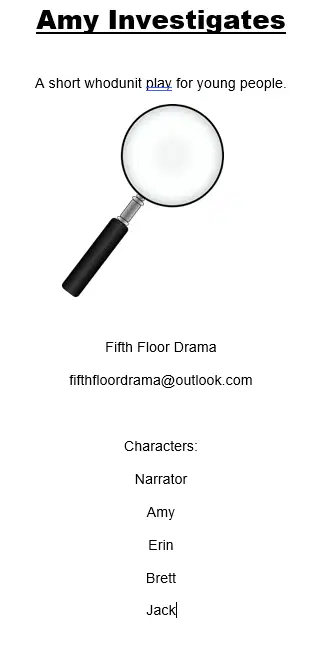
Which of the following is an example of dialogue from the play Amy Investigates?

a)

JACK -

b)

I have to get to the bottom of this, I need to solve it.

c)

Turning to ERIN

d)

A short, whodunit play for young people. 
31.
Based on the events in the play, “Amy Investigates,” what will Amy most likely do next?
a)
Amy will watch the documentary about Antarctica again.
b)
Amy will investigate more suspects.
c)
Amy will find another mystery to solve.
d)
Amy will put another glass of ice out to see if the same thing happens again.
32.

What is the BEST summary of the passage?

a)

Do not up on what you want out of life. Hold on to your dreams and don’t let them go. If you do let them go your life might feel empty and without purpose.

b)

Dreams are essential. If they die then you can’t fly. Flying is an important tool to reach your dreams.

c)

Having more than one dream can be confusing for others, but it can also provide an opportunity to dream more often.

d)

Our dreams are more than what we see. They can be unpleasant and scary.
33.

What is the BEST summary of the passage?

a)

The rider knows the owner will not notice his stop in the woods to enjoy the view of the snow however the rider soon realizes he must keep traveling many miles to fulfill a promise.

b)

The rider wants to stop in the woods of someone he thinks he knows, however the owner of these woods actually has his home in the village and will have no knowledge of the rider’s visit to the woods.

c)

The rider’s horse is very confused. It does not seem to make sense why they are stopping in a forest where there are no farmhouses nearby and the horse begins to shake his harness bells.

d)

The rider has to travel many miles before he can sleep. He has a very special promise to keep and so he and his horse ride for a very long time.
34.

What is the BEST summary of the passage?

a)

Amy uses her investigative skills to solve the case of the missing ice. She starts by interrogating Erin who doesn’t know anything about the missing ice. Next, she moves on to Brett who is busy trying to figure out if he has 10 fingers or 8 fingers and 2 thumbs. Jack keeps trying to talk to Amy, because he knows what happened. Jack tries to convince her that it was the sun, but really he was the one who stole the ice.

b)

Amy, Brett, Jack, and Erin are working on the case of the missing ice. Their detective agency has solved many mysteries before. Erin is unable to help, because she is making a sandwich. Brett is unable to help, because he is trying to solve his own mystery.  Jack is busy solving the mystery of the icebergs in Antarctica. Amy is forced to solve the case on her own. She soon figures out it was the sun who stole the ice by causing it to melt into the water.

c)

 Amy is investigating the case of the missing ice. She left a glass of ice on the table and later that day someone replaced it with a glass of water. Amy uses her investigative skills to interrogate her friends. Erin and Brett don’t know anything about the missing ice, but when she gets to Jack he reminds her of a show they watched about Antarctica. He helps her realize nobody stole the ice, but that it had melted into water.

d)

A glass of ice water has gone missing. Amy left it on the table and someone replaced it with water. Amy investigates the mystery. She starts by interrogating Erin. Erin was making a sandwich at the time of the disappearance. Amy determines she didn’t steal the ice. Next, Amy interrogates Brett. She determines he didn’t steal the ice either. Last, she interviews Jack to see if he knows anything about the disappearance of the ice.
35.

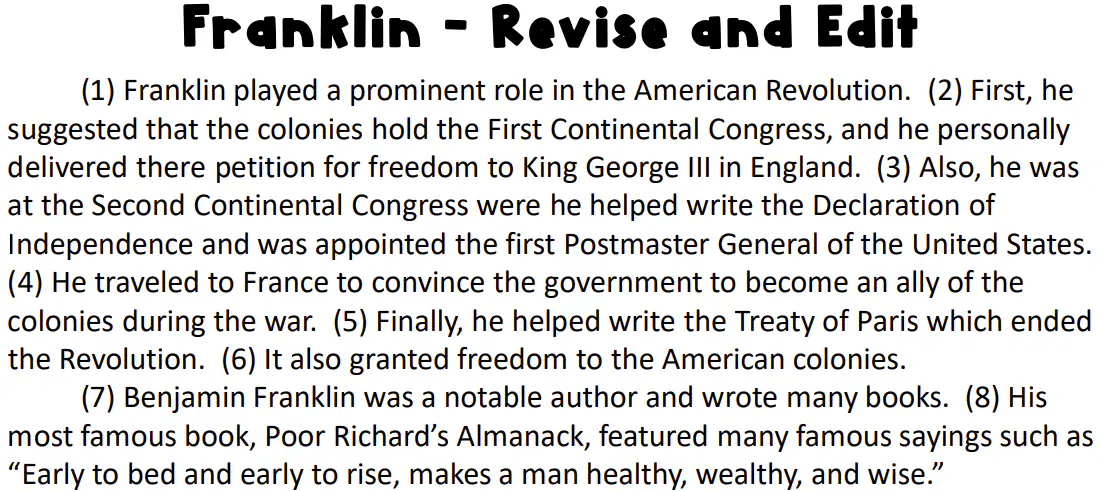
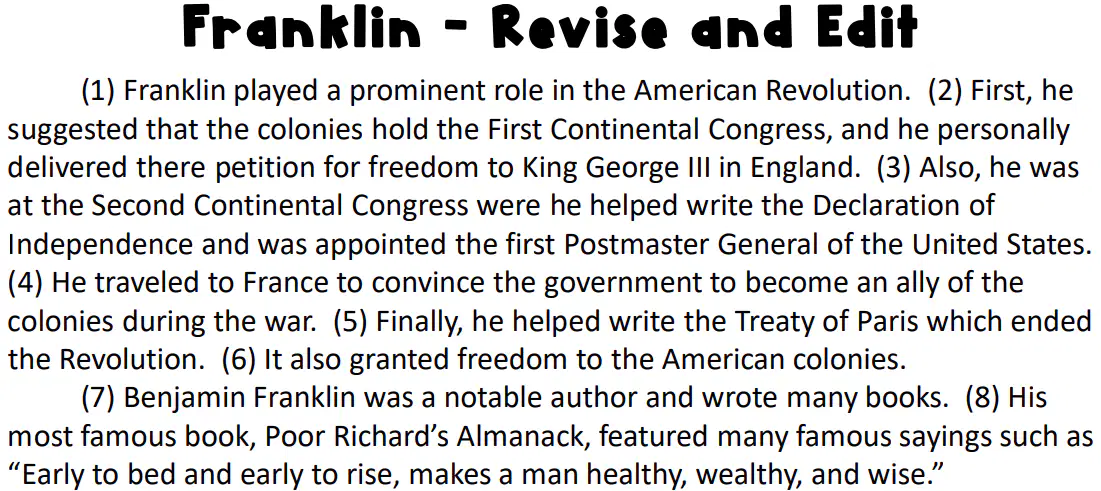
Combine sentences 5 and 6 into one new sentence.
4 lines
36.

What change, if any, should be made to sentence 7?

a)

Insert a comma before the word author

b)

Insert a comma after the word author

c)

Change author to Author

d)

No change should be made