
 Worksheets
States of Matter Quiz
Total questions: 18
Worksheet time: 9mins
What is the state of matter that has a definite shape and volume?
liquid
plasma
gas
solid
Which state of matter takes the shape of its container but has a definite volume?
Liquid
Solid
Plasma
Gas
In which state of matter do particles have the most energy and are far apart?
Solid
Gas
Liquid
Plasma
What is the property of a solid that allows it to maintain its shape and not flow?
Rigidity
Flexibility
Softness
Fluidity
What property of a liquid allows it to take the shape of its container?
Inflexibility
Fluidity
Rigidity
Solidity
Which property of a gas allows it to be squeezed into a smaller container?
Melting Point
Density
Color
Compressibility
What is the process of a solid turning into a liquid called?
Freezing
Sublimation
Condensation
Melting
What is the process of a liquid turning into a gas called?
Sublimation
Condensation
Solidification
Evaporation
What is the process of a gas turning into a liquid called?
Sublimation
Solidification
Evaporation
Condensation
How does an increase in temperature affect the particles in a solid?
The particles remain stationary and do not change position
The particles lose energy and vibrate less, causing them to move closer together
The particles transform into a liquid state
The particles gain more energy and vibrate more, causing them to move further apart
What happens to the particles in water when it is heated?
The particles lose energy and move slower, causing the liquid to contract and eventually turn into a solid.
The particles gain energy and move faster, causing the liquid to contract and eventually turn into a solid.
The particles gain energy and move faster, causing the liquid to expand and eventually turn into a gas.
The particles gain energy and move faster, causing the liquid to stay the same and not change state.
What happens to the particles in a water vapour when they are cooled gently?
The particles condense into water.
The particles evaporate into water vapour.
The particles freeze into ice.
What are the three main states of matter?
solid, liquid, gas
gas, plasma, solid
earth, air, fire
metal, plastic, sand
Which state of matter has a definite shape and volume?
Liquid
Gas
Solid
Plasma
In which state do particles have the most energy and move freely?
solid
liquid
gas
What happens to paper when it is heated above 233 degrees Celsius?
melts
combusts
condenses
It is wet break at school. Rain falls on the playground at lunch time. Small puddles of rain form on the basketball court. The rain stops. It is 20 degrees Celsius. The children go out to the playground the following day. What has happened to the puddles of rain?
nothing
boiled
frozen
evaporated
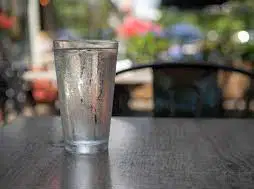
You pour a cold glass of water on a hot summer day. Water appears on the outside of the glass. Where has the water come from?
condensation from the air
from inside of the glass
from nowhere

