wayground logo

Free Printable Worksheets

Font size

S
M
L
XL
Worksheets

Biology Review

Total questions: 105

Worksheet time: 3hrs 38mins

Name
Class
Date
1.

What is Biology?

a)

The Study of Life

b)

Earth and science

c)

How humans are made

d)

The study of plants and bacteria

2.

How is the total magnification calculated on a microscope?

a)

Objective x Power

b)

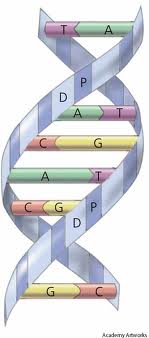
Eyepiece x Objective

c)

Power x Eyepiece

3.

What is the purpose of a buffer?

a)

To make a solution become more acidic

b)

To make a solution become more basic

c)

To maintain a stable,desirable pH

4.

Which of the following is not a sugar?

a)

Maltase

b)

Sucrose

c)

Fructose

5.

What is a Polymer?

a)

A solid made of little things

b)

A substance made of many parts

c)

A solid made of many things

d)

A substance made of little parts

6.

What is the function of a cell membrane?

a)

To protect the cell from its surroundings

b)

To provide energy to the cell

c)

To help in cell division

d)

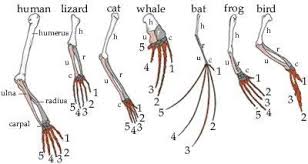
To aid in digestion

7.

What is the role of enzymes in a biological system?

a)

To speed up chemical reactions

b)

To slow down chemical reactions

c)

To stop chemical reactions

d)

To initiate chemical reactions

8.

What is the primary function of DNA?

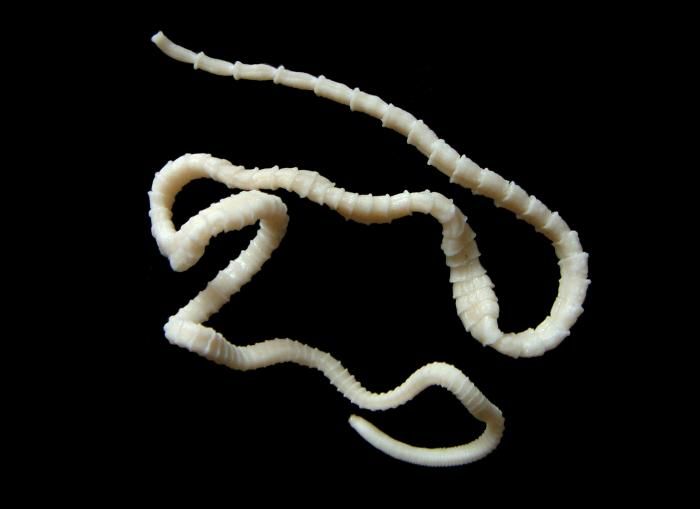
a)

To provide structure to the cell

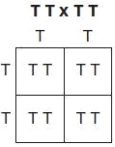
b)

To store and transmit genetic information

c)

To aid in digestion

d)

To provide energy to the cell

9.

What is the function of mitochondria in a cell?

a)

To provide structure to the cell

b)

To aid in digestion

c)

To provide energy to the cell

d)

To help in cell division

10.

What is the role of ribosomes in a cell?

a)

To provide energy to the cell

b)

To aid in protein synthesis

c)

To help in cell division

d)

To provide structure to the cell

11.

What is the monomer for carbohydrates?

a)

Amino acids

b)

Nucelotide

c)

Monosaccharide

d)

Lipids

12.

What is the function of the nucleus in a cell?

a)

To provide energy to the cell

b)

To aid in digestion

c)

To control cell activity

d)

To help in cell division

13.

What is the role of chloroplasts in a plant cell?

a)

To provide structure to the cell

b)

To aid in digestion

c)

To provide energy to the cell

d)

To help in photosynthesis

14.

What is the primary function of RNA?

a)

To provide structure to the cell

b)

To store and transmit genetic information

c)

To aid in protein synthesis

d)

To provide energy to the cell

15.

What is the organic compound for Amino Acids ?

a)

Proteins

b)

Nucleic acids

c)

Lipids

d)

Carbohydrates

16.

What is the role of ATP in a cell?

a)

To provide structure to the cell

b)

To store and transmit energy

c)

To aid in digestion

d)

To provide energy to the cell

17.

What is the function of a lysosome in a cell?

a)

To protect the cell from its surroundings

b)

To provide energy to the cell

c)

To help in cell division

d)

To aid in digestion

18.
During osmosis
a)
water moves from high to low concentration
b)
large or oddly shaped molecules move across a cell membrane
c)
water moves when energy is used
d)
proteins are built
19.
Permeable means
a)
things can pass through
b)
the concentration levels are different
c)
it is permanent
d)
things are stuck
20.
When both inside and outside of a cell have the same amount of water it is said that the cell has reached a state of
a)
Osmosis
b)
Diffusion
c)
Equilibrium
21.
In a solution of water and salt, salt is considered the _______.
a)
solvent
b)
solute
c)
solution
22.
HYPO means...
a)
Low
b)
High
c)
Equal
d)
Fat
23.
A student noticed that placing wilted lettuce in a bowl of cool water caused the lettuce to become more crisp and firm. What is the best explanation for his observation?
a)
Water moved into the lettuce cells by active transport.
b)
Water moved into the lettuce cells by osmosis.
c)
Salt moved into the lettuce cells by diffusion.
d)
Water moved out of the lettuce cells by osmosis.
24.
The diffusion of water is called
a)
active transport 
b)
osmosis
c)
endocytosis
25.
What part of the cell membrane is the arrow pointing to? 
a)
phospholipid
b)
carbohydrate chain 
c)
protein channel 
d)
amino acid 
26.
What structure in the cell contains most of the cells genetic information? 
a)
A. rough Endoplasmic Reticulum 
b)
B. mitochondria 
c)
C. nucleus 
d)
D. cytoplasm 
27.
What is the primary function of the cell's selectively permeable membrane? 
a)
Regulate energy production 
b)
Keeps the cell's shape
c)
Control what enters and leaves the cell
d)
Maintain a free flow of molecules
28.
Active transport does not require energy.
a)
True 
b)
False 
29.
Which 2 molecules forms the sides (backbone) of the DNA ladder?
a)
deoxyribose and adenine
b)
deoxyribose and a hydrogen bond
c)
sugar and the nucleus
d)
deoxyribose (sugar) and phosphate
30.

The following describes ________ during mitosis. The chromosomes line up along the center/middle of the cell and the spindle fibers attach to each chromosome at the centromere.

a)

prophase

b)

metaphase

c)

anaphase

d)

telophase

31.

What does DNA stand for?

a)

Denatured Acid

b)

Dominant Acid

c)

Deoxyribonucleic Acid

d)

Diribonucleic Acid

32.

TT,tt,PP,pp,SS,ss are examples of alleles that are?

a)

homozygous

b)

heterozygous

c)

different

d)

homologous

33.

Females-XX; MalesXY. A couple has 4 girls. What is the chance the next child will be a boy?

a)

75%

b)

100%

c)

25%

d)

50%

34.
Which statement is part of Darwin’s theory of evolution by natural selection?
a)
More offspring are produced than can possibly survive.
b)
The organisms that are the fittest are always largest and strongest.
c)
The number of offspring is not related to fitness.
35.
According to this cladogram, birds are LEAST related to -
a)
Amphibians
b)
Sharks
c)
Ray Finned Fish
d)
Crocodiles
36.
If green is dominant over purple, then what is the genotype for this individual?
a)
Purple
b)
Green
c)
GG
d)
gg
37.
A phenotype is the...
a)
letter combination
b)
dominant gene
c)
recessive gene
d)
physical appearance
38.
Tt is-
a)
homozygous dominant
b)
homozygous recessive
c)
heterozygous
d)
none of these
39.
The longest phase of the cell cycle 
a)
prophase
b)
interphase
c)
metaphase
d)
mitosis
40.
The process by which the nuclear material is divided equally between two new cells
a)
mitosis
b)
cancer
c)
spindle
d)
centromere
41.
This picture shows which process?
a)
mitosis
b)
meiosis
c)
the cell cycle
42.

Which statement best describes the process of evolution?

a)

Populations can survive in different locations on earth

b)

Environmental conditions limit the number of species on Earth

c)

Populations grow when resources are abundant

d)

The traits of a species can change over time

43.

Which statement best describes the relationship between the products of photosynthesis and the reactants in cellular respiration?

a)

The products of photosynthesis serve as the reactants in cellular respiration to provide chemical energy.

b)

The products of photosynthesis combine with the reactants in cellular respiration to remove ATP from cells.

c)

The products of photosynthesis inhibit the reactants in cellular respiration in the presence of light.

d)

The products of photosynthesis change the structure of the reactants in cellular respiration in the presence of light.

44.

What does RNA stand for?

(a)  

45.

Prokaryotes have a nucleus.

a)

True

b)

False

46.

Viruses are living.

a)

True

b)

False

47.

Give the names of the stages of Mitosis in order.

(a)  

48.
Osmosis is a form of ______________. 
a)
Passive Transport
b)
Active Transport
49.

Cells must pass through a critical checkpoint during which stages of the cell cycle?

a)

G1

b)

G2

c)

M phase

d)

All of these are correct.

50.

Does mitosis or meiosis produce more genetic variation? 

a)

Mitosis

b)

Meiosis

51.
What is the phenotype in the bottom right square? (Yellow is dominant and green is recessive)
a)
yy
b)
Yy
c)
yellow
d)
green
52.
What % of the offspring in the Punnet square are heterozygous?
a)
25%
b)
50%
c)
75%
d)
100%
53.
In rabbits, black fur (B) is dominant over brown fur (b). If a rabbit has brown fur, what can you conclude about its genotype?
a)
It is BB.
b)
It is Bb
c)
It is brown
d)
It is bb.
54.
If B = brown hair and b = blonde hair, what is the probability of brown hair?
a)
25%
b)
50%
c)
0%
d)
75%
55.
What ratio of the offspring from the cross shown will be homozygous recessive for the  trait of tallness? 
a)
0 in 4
b)
1 in 4
c)
2 in 4
d)
4 in 4
56.
Two brown eyed parents (Bb) have a baby. What is the chance the baby is blue eyed?
a)
0 %
b)
25%
c)
50%
d)
75%
57.

A student researching Gregor Mendel recorded the following notes about the scientist.​

​Which statement best explains a concept of heredity that is supported by Mendel’s findings?

a)

The environment in which plants are grown affects their appearance

b)

Recessive traits are more likely to be expressed than dominant traits

c)

The appearance of certain traits is predictable and is controlled by genes

d)

Crossing pea plants in the wild produces results without observable patterns.

58.

What is the correct definition?

Recessive

a)

Different forms of the same gene

b)

The characteristic that is expressed even if only one copy of this allele is present

c)

The characteristic that remains hidden

d)

A mistake that happens as DNA is copied

59.
A man, who has red-green colorblindness, and his wife, who is a carrier for colorblindness, have a colorblind son. What is the probability that their next son will also be colorblind?
a)
0%
b)
25%
c)
50%
d)
100%
60.
In certain species of plants, purple flowers (P) are dominant to white flowers (p). If two heterozygous plants are crossed, what will be the phenotype of the offspring?
a)
100% purple flowers
b)
100% white flowers
c)
75% white flowers, 25% purple flowers
d)
25% white flowers, 75% purple flowers
61.
Scott was looking at the results of a cross between red and white flowers. Which is the most likely result of a cross that demonstrates incomplete dominance?
a)
0%
b)
50%
c)
75%
d)
100%
62.
Which of the following is a phenotype?
a)
BB
b)
Bb
c)
bb
d)
Blue eyes
63.
Which of the following is a true statement about natural selection?
a)
it is goal directed
b)
individuals evolve
c)
variation exists in a population
d)
acquired characteristics
64.
Darwin theorized that individuals having an advantage due to their traits or abilities will be more likely to survive and reproduce.  This theory is known as
a)
evolution
b)
speciation
c)
adaptation
d)
natural selection
65.
Who was the naturalist that traveled the world to study plants and animals?
a)
Albert Einstein
b)
Charles Darwin
c)
Charles Barkley
d)
Isaac Newton
66.
What is the study of organisms at the early stages of development?
a)
DNA studies
b)
embryology 
c)
extinction
d)
fossil record
67.
What is this an example of?
a)
vestigial structures
b)
embryology
c)
homologous structures
d)
fossil record
68.

features of different species that are similar in function but not necessarily in structure and which do not derive from a common ancestral feature

a)

Analogous Structure

b)

Homologous Structure

c)

Biogeography

d)

Vestigial structure

69.

The four butterflies in the illustration represent the offspring in the F1 generation. Which statement is best supported by the phenotypes of these offspring?

a)

The F1 generation is composed only of males.

b)

Two of the offspring in the F1 generation will not be able to reproduce.

c)

The F1 generation is the result of a dihybrid cross.

d)

Two of the offspring in the F1 generation will experience a spontaneous mutation

70.
Name the process in the picture.
a)
transcription
b)
mitosis
c)
translation
d)
replication
71.
Name M.
a)
light dependent cycle
b)
Carbon dioxide
c)
glucose
d)
Calvin cycle
72.
Name B.
a)
phosophate
b)
glucose
c)
deoxyribose
d)
nitrogen base
73.

The diagram represents one way an enzyme can be inhibited. Which statement explains the effect of an inhibitor on an enzyme?

a)

A substrate will be able to bond with the enzyme.

b)

The enzyme will likely be attacked by immune cells

c)

The enzyme will be unable to produce more enzymes.

d)

A substrate will be unable to attach to the enzyme.

74.

Viruses are considered nonliving because they need a host to reproduce.

a)

True

b)

False

75.

Which is a step in the process of producing transgenic bacteria?

a)

A plasmid is used to replace a faulty gene in a human cell.

b)

A chain of bacterial amino acids is inserted into human DNA.

c)

A human gene is inserted into a bacterial plasmid.

d)

A mutation is produced in a bacterial cell.

76.

Which best explains why muscle cells are different from blood cells?

a)

A mutation occurs during the development of muscle cells but not in blood cells.

b)

Different genes are activated in muscle cells than in blood cells.

c)

Muscles cells experience different environmental influences than blood cells.

d)

Muscle cells are produced by the brain, but blood cells are produced by the heart.

77.

What is the purpose of strand "A"?

a)

To carry amino acids to the ribosome

b)

To carry the genetic information to the cytoplasm

c)

To serve as a template for the synthesis of mRNA

78.
Replicate the following strand of DNA: 
AATCATGGA
a)
AATCATGGA
b)
TTAGTACCT
c)
UUAGUACCU
d)
GGATAUCUA
79.

What activity most contributes to the depletion of the ozone layer?

a)

burning of fossil fuels

b)

release of CFCs

c)

deforestation

d)

overuse of fertilizers

80.
A tapeworm and a cat have this type of relationship.
a)
mutualism
b)
parasitism
c)
commensalism
d)
competition
81.
Which type of cell?
a)
Prokaryote
b)
Eukaryote
82.
What are the possible genotypes for this cross?
(Click the picture to see it without the text)
a)
TT = 25% Tt= 50% tt=25%
b)
all tall
c)
TT= 75% tt = 25%
d)
Tt = 100%
83.
If you cross a black guinea pig with a white guinea pig and the offspring are gray, what type of dominant trait would that be.
a)
incomplete dominance
b)
codominance
c)
codependant
d)
cooperative
84.
This punnett square shows a cross between
a)
A hybrid Parent and a Homozygous parent
b)
A heterozygous parent and a heterozygous parent
c)
Two homozygous parents
d)
Two Hybrid Parents
85.
This is an example of
a)
Complete dominance
b)
Mendelian Genetics
c)
Codominance
d)
Incomplete Dominance
86.

source of quick energy

a)

carbohydrates

b)

lipids

c)

proteins

d)

nucleic acids

87.

Which amino acid matches with the following codon:

GAU

a)

GLU

b)

SER

c)

ASP

d)

ILE

88.

Which information can the fossils provide?

a)

They show how a modern elephant would have looked millions of years ago.

b)

They provide evidence of what structures are similar between the mastodon and elephant.

c)

They provide detailed information on how the mastodon raised its young.

d)

They show how an elephant would have attracted a mate in the past.

89.

Which action will occur if a checkpoint during a cell cycle finds that the DNA was unsuccessfully replicated?

a)

The cell will divide quicker with less DNA.

b)

The cell will grow proteins to replace DNA.

c)

The cell will perform the cell cycle in reverse.

d)

The cell will not complete the cell cycle.

90.
The stages of the cell cycle are shown in random order below.  Starting with prophase, sequence the diagrams to show the stages of mitosis.  
                       
a)
5-3-1-2-4
b)
3-1-4-2-5
c)
4-1-2-5-3
d)
2-3-1-5-4
91.
A daughter cell that resulted from a mitotic division has 24 chromosomes.  How many chromosomes did the parent cell have?   
a)
6
b)
12
c)
24
d)
48
92.
In mitosis, the two resulting cells are
a)
different from the starting cell and identical to each other.
b)
different from the starting cell and different from each other.
c)
identical to the starting cell and different from each other.
d)
identical to the starting cell and identical to each other.
93.

What is the image above:

a)

Chromosome

b)

Chromotid

c)

Centromere

d)

Centriole

94.

What stage of mitosis is depicted here

a)

Prophase

b)

Anaphase

c)

Telophase

d)

Metaphase

95.

What stage of mitosis is depicted here

a)

Prophase

b)

Metaphase

c)

Anaphase

d)

Telophase

96.

What stage of mitosis is depicted here

a)

Prophase

b)

Metaphase

c)

Anaphase

d)

Telophase

97.

What stage of mitosis is depicted here

a)

Prophase

b)

Metaphase

c)

Anaphase

d)

Telophase

98.

What stage of mitosis is depicted here

a)

Prophase

b)

Metaphase

c)

Anaphase

d)

Telophase

99.

The picture above represents what happens after mitosis which is

a)

Interphase

b)

Cytokinesis

c)

Metaphase

d)

G1

100.

Nuclear membrane breaks down, spindle fibers form describes:

a)

Prophase

b)

Anaphase

c)

Metaphase

d)

Telophase

101.
Mitosis results in the formation of...
a)
Two identical cells with all of the original chromosomes
b)
Two different cells with half of the original chromosomes
c)
Four identical cells with all of the original chromosomes
d)
Four different cells with half of the original chromosomes
102.

Which phase is shown here?

a)

metaphase

b)

prophase

c)

anaphase

d)

telophase

103.

Which phase is shown here?

a)

anaphase

b)

telolphase

c)

metaphase

d)

prophase

104.
What is the longest stage of the cell cycle called?
a)
Cytokinesis
b)
M phase
c)
Interphase
d)
G1 Phase
105.

Why is the synthesis stage called this?

a)

because protein synthesis is taking place

b)

because DNA synthesis is taking place

c)

because it combines several smaller stages into one

d)

because the chromosomes come together