
 Worksheets
Driver Education: Chapter 2 Right-Of-Way
Total questions: 40
Worksheet time: 20mins
Right-of-way rules:
apply only at intersections
apply only to motorized vehicles
are automatically obeyed by all road users
apply any time two or more road users want to occupy the same space simultaneously

On a two-way traffic roadway, as illustrated, you should drive in the right lane except:
when preparing to turn left
to check your blind spot
to check the traffic behind you
when passing another vehicle
On a road without lines to designate traffic lanes, you should drive:
wherever you wish
in the center of the road
to the left of center
to the right of center

Approaching red signal lights, when a police officer in the intersection signals to proceed, as shown, you should:
stop and wait for the green light
stop and then drive through the intersection
turn left
proceed through the intersection

Approaching an intersection where traffic signal lights are inoperative, you should:
accelerate to clear the intersection quickly
reduce speed, check space for areas, then proceed
stop and apply the four-way stop rules
maintain speed and proceed through the intersection
You must give a signal either by hand or by a signal device:
anytime you intend to change lanes or turn
unless you have checked carefully and no other traffic will be affected
unless you move gradually and safely
only when other vehicles are close by
When you intend to turn or change lanes, you must communicate your intentions to other road users by a hand signal or by activating your turn signal device over a distance of at least:
50 feet
100 feet
200 feet
500 feet
Following vehicles, you must keep a reasonable and prudent distance. To do this, you must take into the account four principal factors. They are:
traffic density, length of the trip, road surface and number of passengers
speed, length of the trip, traffic density, and weather conditions
speed, the number of passengers, weather conditions, and the road surface
speed, the road surface, weather conditions, and traffic density
When applying the basic speed limit, the most important thing to consider is:
the weather conditions
the traffic conditions
the road conditions
all of these
Which is not a prima facie (legal non-posted) speed limit in Texas?
30 mph in an urban residential district
15 mph in an alley
30 mph in school zones, unless otherwise posted (sign)
75 mph on numbered highways

Is vehicle A permitted to use the shoulder to legally pass on the right of vehicle B?
No, except on an expressway
Yes
Yes, if it is an improved shoulder
No, it is against the law in Texas

Driving the red vehicle, intending to proceed straight, you should yield to:
pedestrians A and D
pedestrians A and C
pedestrians A and B
pedestrians B and C
Driving the red vehicle, intending to turn left, you should yield to:
pedestrians A and D
pedestrians A and C
pedestrians A and B
pedestrians B and C
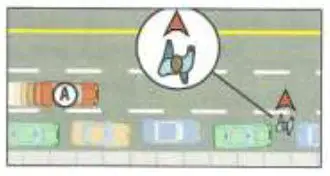
Driving vehicle A in this situation, you should:
change lanes to the left
accelerate to pass the pedestrian quickly
reduce speed and yield to the pedestrian
communicate your presence by honking the horn and flashing the headlights

Are you permitted to drive through a gas station to avoid stopping for a red light?
Yes, if done safely
Yes
Yes, if there is a traffic jam
No, it is against the law in Texas
To enter a public roadway from private property, you should:
honk your horn and proceed with caution
stop and yield the right-of-way to road users close enough to present a hazard
signal your intention and then proceed quickly
enter the roadway as quickly as possible to clear the way for other road users

Driving the red vehicle intending to turn left, you should activate the turn signal, stop before the sidewalk, and then yield to:
the pedestrian only
the motorcycle only
the blue automobile only
all of the other road users

To EVALUATE the situation shown in the illustration, you should:
look first to the left
look first to the right
look far ahead
check the rear-view mirror
Before entering this intersection, you should:
look right, left and again to the right
look left, center, right and then left again
inch forward looking right, left and then right again
inch forward looking left and right
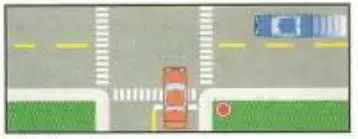
Driving the blue vehicle, you should:
stop
reduce speed and check the traffic
proceed as you have the right of way
accelerate to cross the intersection
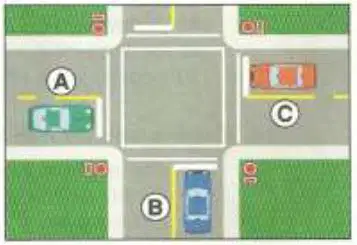
If they stopped simultaneously, which vehicle should be given the right-of-way?
Vehicle A
Vehicle B
Vehicle C
It does not matter
Which of these vehicles should be the last to move?
Vehicle A
Vehicle B
Vehicle C
It does not matter

If all the vehicles arrive simultaneously and intend to continue straight, which vehicle should be given the right of way?
CAREFUL: Look at the red stop signs.
Vehicle A
Vehicle B
Vehicle C
It does not matter

In the situation illustrated, which vehicle should be given the right-of-way?
Vehicle C, turning left
Vehicle B, turning left
Vehicle A, proceeding straight
The vehicle that stopped first
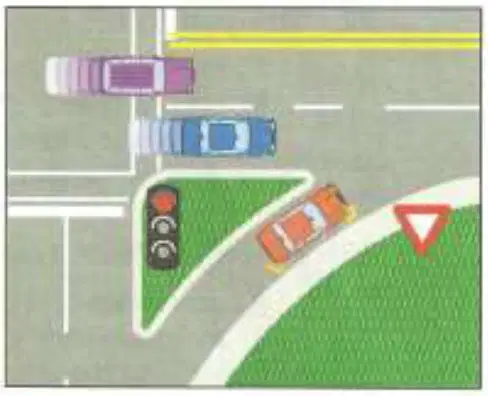
Driving the red vehicle, you should:
accelerate to pass first
reduce speed and check the traffic light
proceed as you would have the right of way
yield
Driving the blue vehicle, you should:
accelerate to pass first
check the red car and be prepared to stop
proceed as you have the right-of-way
reduce speed, check the traffic and stop

Driving the red car, you should:
honk and then cross before the pedestrian
yield to the pedestrian and the blue vehicle, then perform the turn
accelerate to turn in front of both of them
yield to the pedestrian but turn before the oncoming blue vehicle
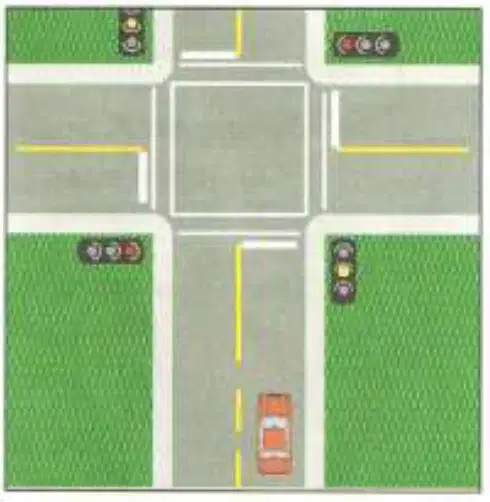
Approaching an intersection, the signal light changes to yellow (amber). You should:
tap the brake, then apply the brake firmly
check the rear-view mirror
stop your vehicle at the stop line
all of these
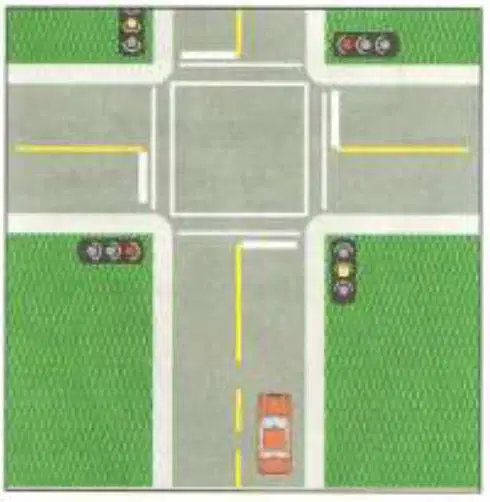
If you are too close the the intersection to stop safely, you should scan the intersection and:
reduce speed
check the rear-view mirror
accelerate
proceed cautiously
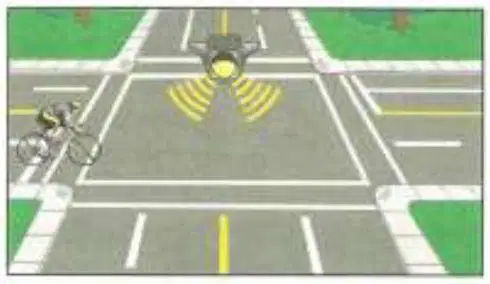
Approaching the flashing yellow (amber) signal light as shown, you must:
Assume the cyclist is moving
reduce speed, check the traffic and proceed
stop
accelerate to clear the intersection
proceed at the same speed
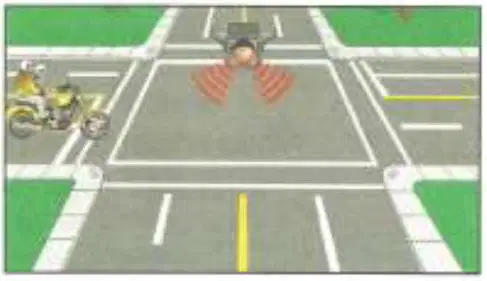
Approaching this flashing red light traffic light, you should:
stop and wait for the green traffic light
slow, check the traffic, and then proceed
stop, look, and yield before proceeding
accelerate to cross before the motorcycle
Stopped traffic prevents you from crossing an intersection, you should:
enter the intersection regardless
reduce speed, check the traffic and then stop in the intersection
enter the intersection as long as you can cross half-way
stop at the stop line and wait for the traffic to move before entering.
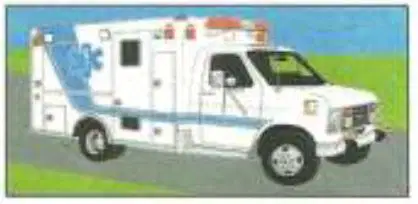
When you hear a siren coming, you should:
accelerate and get out of the way
maintain your speed and position
yield to the emergency vehicle
activate hazard lights and reduce speed.

While stopped at a red traffic light, you notice an emergency vehicle with its siren and lights operating approaching from the rear. You should:
stay stopped until it passes
check traffic, signal and turn right
check traffic, and cross the intersection
check traffic, signal and turn left
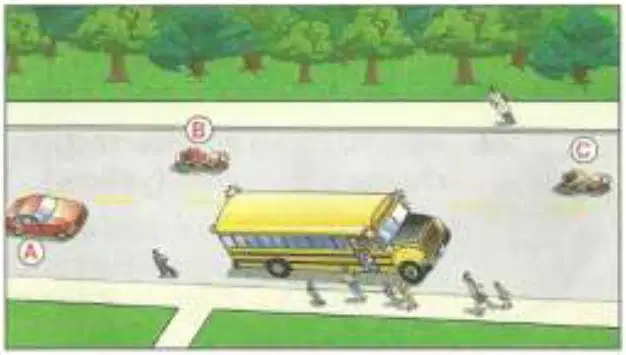
Which vehicles must stop?
Vehicles A and B
Vehicles B and C
Vehicles A, B, and C
Vehicles A and C
Driving car A, you must stop at least:
10 feet away
20 feet away
30 feet away
50 feet away

The school bus is stopped with its signal lights flashing. Which vehicles must stop?
Vehicles A and B only
Vehicles C, D, and E only
Vehicles A, B, D, and E only
Vehicles D and E only
Pedestrians walking on a road without sidewalks must walk:
on the left side in order to face oncoming traffic
on the right side so approaching vehicles may see them better
on the side that has the widest shoulder
on the side where there is the highest volume of traffic
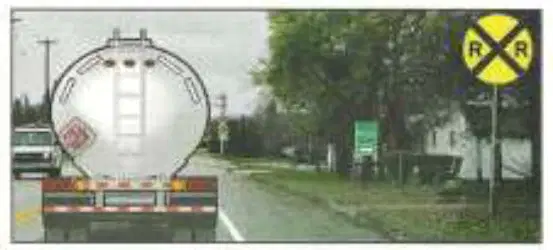
Following the fuel tanker illustrated, you should:
reduce speed and prepare to stop
reduce speed and proceed cautiously
accelerate to pass the tanker trailer
maintain your speed, check and proceed
When required to stop at a railroad crossing, you must stop at least:
10 feet away
15 feet away
25 feet away
50 feet away

