
 Worksheets
Geometry Semester 1 Master Review
Total questions: 209
Worksheet time: 11hrs 19mins

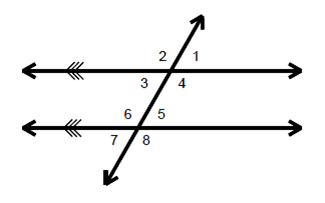
Which two angles are Same-Side Interior Angles
Angles 2 and 3
Angles 1 and 3
Angles 3 and 7
Angles 3 and 5

Which are two Alternate Exterior Angles?
Angles 1 and 6
Angles 1 and 4
Angles 1 and 8
Angles 3 and 7

Which are two Corresponding Angles?
Angle 2 and 3
Angle 1 and 2
Angle 2 and 7
Angle 2 and 5

Which are two Alternate Interior Angles?
Angles 2 and 6
Angles 4 and 5
Angles 4 and 7
Angles 3 and 6

What lines are parallel AJ? CLICK ALL THAT APPLY!
BF
EI
AB
FG
DH

Which lines are skew to JI? CLICK ALL THAT APPLY
BF
CD
ED
DH
HG
Parallel lines have what kind of slope?
The same
Opposite Reciprocals
Opposite
None

Find x
80
100
90
180

y = 1/2(x) + 2.3

Which of the following equations represents a line that is perpendicular to the line in the graph? Select all that apply
y = -⅓ x + 5
y = -3x + 7
y = -3x + 1
y = 3x + 5

Are l1 and l2 perpendicular lines?
Yes
No
I know, you have a 50/50 chance, you could just guess
But it is YOUR test tomorrow that you will have to show work for
What's the slope between the two points (1,4) and (3,9)
-5/2
-2/5
5/2
2/5

y = -4x + 6 (2, -1)
y = 3x + 2 (3, -4)
y = -1/3x - 5
y = 1/3x + 2

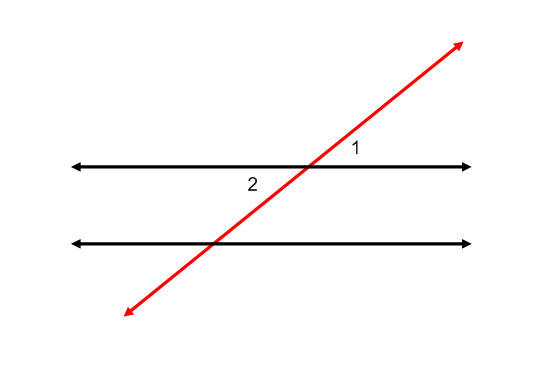
y = 3/2x + 9
These lines are...

Find y.
80°
100°

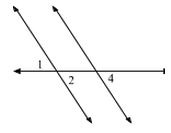
Find the measure of angle 4
Parallel lines have what kind of slope?
The same
Opposite Reciprocals
Opposite
None
y = 1/2(x) + 2.3
y = -4x + 6 (2, -1)


m = 5/8
y = 5/7x - 30
These lines are...
y = -6x + 2
These lines are...

y = 2x + 4

Which equation describes a line that is perpendicular to the line y = -2/7x + 4/7 and contains the point (-6, 5)?
y = 7/2x + 26
y = 7/2x - 16
y = 7/2x - 26
y = 7/2x + 16
Write the equation of a line PARALLEL to y = 2x + 3 that passes through the point (3, 1).
y=2x −3
y=2x−5
y=2x + 1
y=−21x+25
Write the equation of a line PARALLEL to that passes through the point (3, 1). y=−25x+10
y=−25x + 6
y =−25x+217
y=52x+6
y=52x+ 8
Write the equation of a line PERPENDICULAR to y=31x−9 that passes through the point (-6, 10).
y=31x−9
y=31x+10
y=−3x+6
y=−3x−8
Select the two lines that are perpendicular.
y=4x−2
y=−41x
y=−4x+1
None are perpendicular.


Point C (-5, 4)
Reflect over the x-axis.
What is C'?
(5, 4)
(-5, -4)
(5, -4)
(-5, 4)
What is the rule for a reflection over the y-axis?
(x,y)→(-x,y)
(x,y)→(x,-y)
(x,y)→(-x,-y)
(x,y)→(y,x)
What is the rule for a reflection over the x-axis?
(x,y)→(-x,y)
(x,y)→(x,-y)
(x,y)→(-x,-y)
(x,y)→(y,x)
B(-2, -4)
Reflect over the line y = x
What is B'?
(2, -4)
(-4, 2)
(-4, -2)
(4, 2)
What is the rule for reflecting ( x , y )
over the line y = x?
( -x , y )
( x , -y )
( y , x )
( x , y )
Point B ( -6,1)
Reflected over the line y = -x?
(-1,-6)
(6,-1)
(1,6)
(-1,6)
(x, y) ----> (-x, y)
(x,y) maps onto which coordinates after reflection in the line y = -x?
(-x,-y)
(-y,-x)
(y,x)
(-y,x)
(x, y) ---> ___________
(x, y) ---> ___________
(x, y) ---> ___________
Rotate K (7, 8) around the origin 90° counterclockwise. State the image of K'.
K' (-7, -8)
K' (8, -7)
K' (-8, 7)
K' (8, 7)
What is the image of M (3,2) after a rotation 270° counterclockwise?
M' (-2, -3)
M' (-2, 3)
M' (2, -3)
M' (-3, -2)

Which of the following is the correct sequence of transformations that maps triangle ABC onto triangle DEF?
A reflection over the x-axis followed by a translation moving up.
A reflection over the y-axis followed by a translation moving up .
A reflection through the origin followed by a translation moving down.
A translation moving down followed by a reflection over the y-axis.

Enlargement or reduction?
Enlargement
Reduction
Dilations have which operation?
Addition
Subtraction
Multiplication
Division
Which of the following algebraic rules represents a dilation? Select all that apply.
(x, y) --> (3x, 3y)
(x, y) --> (3x, 2y)
(x, y) --> (x - 3, y + 5)
(x, y) --> (0.5x, 0.5y)
(x, y) --> (3x, 0.5y)
Which of the following algebraic rules represents a reduction? Select all that apply.
(x, y) --> (3x, 3y)
(x, y) --> (0.5x, 0.5y)
(x, y) --> (0.75x, 0.75y)
(x, y) --> (0.999x, 0.999y)
(x, y) --> (5x, 5y)
Which of the following algebraic rules represents an enlargement? Select all that apply.
(x, y) --> (3x, 3y)
(x, y) --> (0.5x, 0.5y)
(x, y) --> (0.75x, 0.75y)
(x, y) --> (0.999x, 0.999y)
(x, y) --> (5x, 5y)

Triangle ABC will be dilated using the rule (x, y)→(2x, 2y). What will be the coordinates of C'? Write your answer with no spaces.
(a)

Write the algebraic rule for the dilation. Don't put any spaces in your answer.
(a)

Write the algebraic rule for the dilation. Don't put any spaces in your answer.
(a)
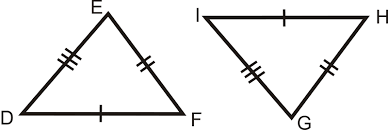
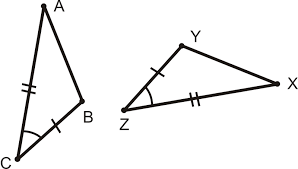
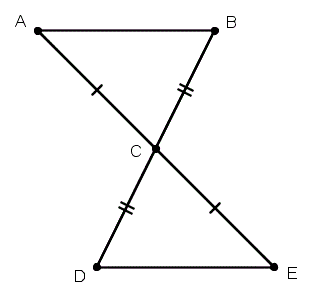

Which triangle congruence theorem can be used to prove the triangles are congruent?
SSS
SAS
ASA
NONE
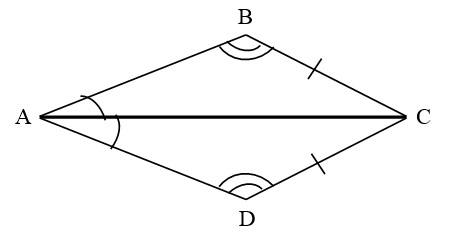
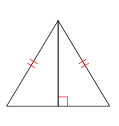
ΔBIG≅ΔLAD , which side is congruent to BG ?
BI
LA
AD
LD
ΔBIG≅ΔLAD , which angle is congruent to ∠B ?
∠G
∠L
∠A
∠D
If ΔGAM≅ΔERS , what angle is congruent to ∠RES ?
∠GAM
∠AGM
∠GMA
∠MAG
ΔGAM≅ΔERS , GA=11 , GM=8 , and AM=7 . What is the length of ER ?
7
8
11
26
Given that ΔSTA≅ΔBLE . If m∠S=97° and m∠T=43° ? What is the measure of angle L?
40°
43°
90°
97°
Given that ΔSTA≅ΔBLE . If m∠S=97° and m∠T=43° ? What is the measure of angle E?
40°
43°
90°
97°
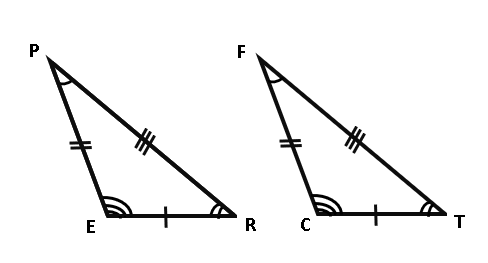
What is the name of the triangle congruent to ΔRPE ?
ΔCFT
ΔFTC
ΔTFC
ΔFCT
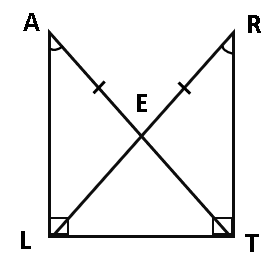
What postulate or theorem proves that ΔALE≅ΔRTE ?
AAS Theorem
ASA Postulate
SAS Postulate
SSS Postulate
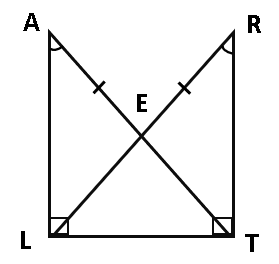
What triangle is congruent to ΔALT ?
ΔLRT
ΔRTL
ΔTLR
ΔTEL
What postulate or theorem proves that ΔALT≅ΔRTL ?
AAS Theorem
ASA Postulate
SAS Postulate
SSS Postulate
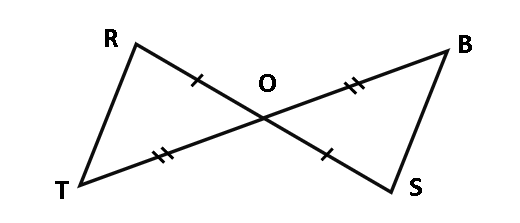
What triangle congruence postulate or theorem justifies the congruency of ΔRTO and ΔBSO ?
AAS Theorem
ASA Postulate
SAS Postulate
SSS Postulate

What triangle congruence postulate or theorem justifies the congruency of ΔIEL≅ΔEIF ?
AAS Theorem
ASA Postulate
SAS Postulate
SSS Postulate
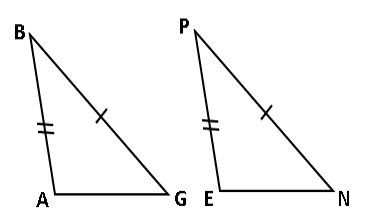
What parts of the triangles must be marked so that the triangles are congruent via SAS Postulate?
∠B and ∠P
∠A and ∠E
∠G and ∠N

What parts of the triangles must be marked so that ΔHOE and ΔPOE are congruent via AAS Theorem?
∠H and ∠P
∠HEO and ∠PEO
HO and PO
HE and PE
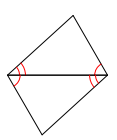
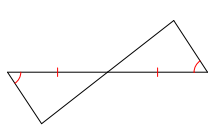
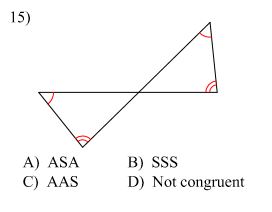
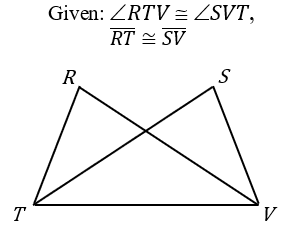
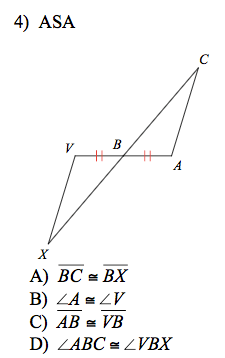
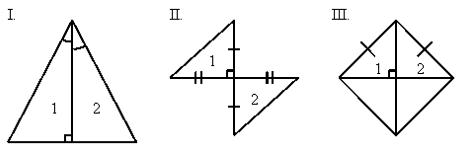
For which situation could you prove
∆1≅ ∆2 using the H-L Theorem?
I only
II only
I & II
I & III
III only
Which of the following are NOT sufficient to prove two triangles are congruent? Choose all that apply.
SSS
AAA
ASA
SSA
AAS
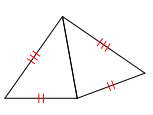
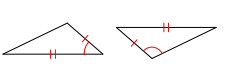


Find the value of x
(a)

Find the value of x
5
15
25
35

Given ΔABC ≅ ΔDEF , find the value of x.
17
18
19
20

Which of the following is true about the conditional statement below?
If a man is 7 feet tall, then he plays basketball.
Hypothesis: a man is 7 feet tall
Conclusion: he plays basketball
Hypothesis: IF a man is 7 feet tall
Conclusion: THEN he plays basketball
Hypothesis: THEN he plays basketball
Conclusion: IF a man is 7 feet tall
Hypothesis: he plays basketball
Conclusion: a man is 7 feet tall
Which of the following is true about the conditional statement below?
If you are flying, then you are in a
jet.
Hypothesis: you are flying
Conclusion: you are in a
jet
Hypothesis: IF you are flying
Conclusion: THEN you are in a
jet
Hypothesis: THEN you are in a
jet
Conclusion: IF you are flying
Hypothesis: you are in a
jet
Conclusion: you are flying
Which of the following is a valid conditional statement for the following phrase:
An acute angle has a measure less than 90°.
If an angle is acute, then it has a measure less than 90°.
If an angle is not acute, then it does not have a measure less than 90°.
If an angle is acute, then it is acute.
If an angle does not measure less than 90°, then it is not acute.

Name the figure.
(Select all that apply)
PV
PV
TP
PV

Name the figure.
(Select all that apply)
OM
MO
MV
OV

Name the angle shown.
(Select all that apply)
∠Q
∠SQR
∠RSQ
∠RQS
Which angles are properly named?
∠Q
∠P
∠S
∠R

Name the angle.
(Select all that apply)
∠S
∠RST
∠TSR

Which of the following statements is incorrect?
BC=DC
mBC=mDC
BC≅DC

Which of the following statements are correct?
∠C=∠A
m∠C=m∠A
∠C≅∠A

Which of the following angles is not in the figure?
∠TUW
∠VUW
∠VWT
∠TUV

Name the figure.
(Select all that apply)
CL
AL
CA

Name the figure.
(Select all that apply)
JA
AW
JW
.
.
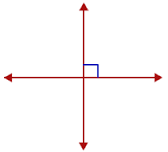
What kind of intersecting lines are these?
Parallel Lines
Perpendicular Lines
adjacent
opposite

What is a line segment?
Part of a line with that connects 2 points
Part of a line that has 1 point
A line that goes on without end
Part of a line with 5 points

What is a ray?
Part of a line with 2 points
Part of a line with 1 point and goes on forever
Part of a line with 0 points
Part of a line with 5 points
This symbol,→ , means?
and
or
not
if, then
What symbol is a negation?
∨
∧
→
~
A counterexample is an example that proves a conjecture to be true.
True
False
To fully disprove a conjecture, one needs to find only ONE counterexample.
True
False
Which of the following is a counterexample to the following conjecture? If x2 = 4 , then x = 2
x = 4
x = -2
x = 2
x = -4
Which of the following provide a counterexample to the claim:
"If two angles are supplementary, then they are not congruent."
40° and 140°
80° and 80°
30° and 150°
90° and 90°
Given: If an animal is a dog, then they like biscuits.
Sammy is a dog.
Conclusion: Sammy likes biscuits.
If you live in Orlando, then you live in Florida.
You live in Orlando.
If a whole number is even, then its square is divisible by 4.
The number I am thinking of is an even number.
Statement 1: If you exercise regularly, then you have a healthy body
Statement 2: If you have a healthy body, then you have more energy
If the sun is shining it is a beautiful day. If it is a beautiful day then we will go go hiking.
If the sun is not shining, we will not go hiking.
If the sun is shining then we will go hiking.
No conclusion can be made.
If we go hiking, then it is a beautiful day.
If you go to the swimming pool, then you will enjoy yourself. If you enjoy yourself, you will want to return.
If you return to the pool you will enjoy yourself.
If you enjoy yourself, then you went to the pool.
If you go to the pool, you will want to return.
No conclusion can be made.
What property of equality is shown below?
25 + d = 36
25 + d - 25 = 36 - 25
addition property of equality
subtraction property of equality
division property of equality
multiplication property of equality
What property of equality is shown below?
y - 12 = 30
y -12 + 12 = 30 +12
addition property of equality
subtraction property of equality
multiplication property of equality
division property of equality
What property of equality is shown below?
7n=28
7n ÷ 7 = 28 ÷ 7
addition property of equality
subtraction property of equality
multiplication property of equality
division property of equality
if a=b, then b=a
symmetric
reflexive
transitive
substitution
if a=b, and b=c, then a=c (the only 3 eq. property)
transitive
reflexive
symmetric
substitution
if a(b+c)=ab+ac, then ab+ac=a(b+c)
distributive
substitution
Associative
communitive
Identify this property.
If j = k, then k = j.
Addition Property of Equality

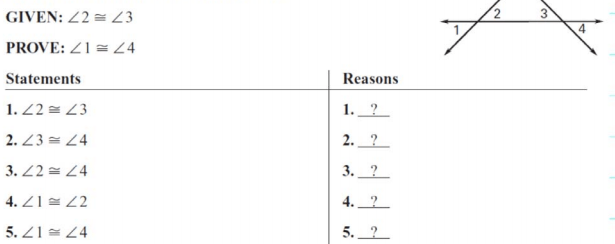


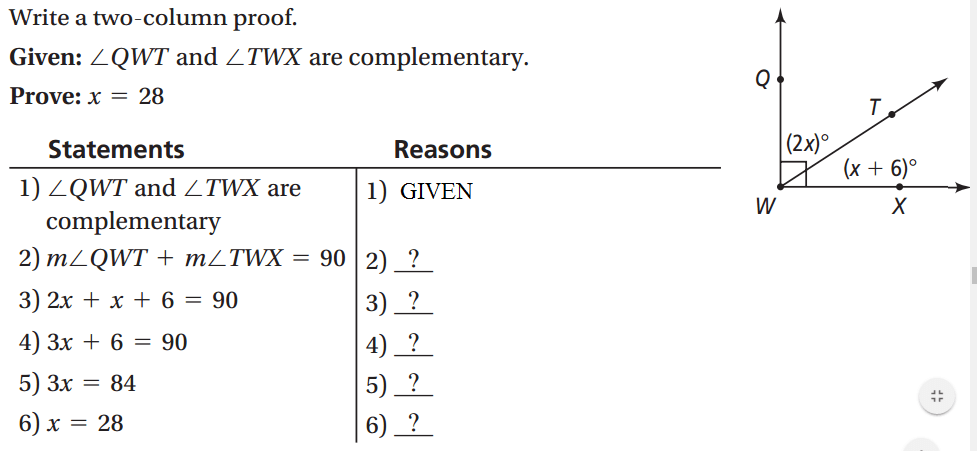

1) Which statement restates the Given from the question?


Which of the following is true about the conditional statement below?
If a man is 7 feet tall, then he plays basketball.
Hypothesis: a man is 7 feet tall
Conclusion: he plays basketball
Hypothesis: IF a man is 7 feet tall
Conclusion: THEN he plays basketball
Hypothesis: THEN he plays basketball
Conclusion: IF a man is 7 feet tall
Hypothesis: he plays basketball
Conclusion: a man is 7 feet tall

Which of the following is the CONVERSE of the statement below?
If an object is a bird, then it can fly.
If an object can fly, then it is a bird.
If an object is not a bird, then it cannot fly
If an object cannot fly, then it is not a bird
There is no converse of the statement
All students at Hermitage take an English class.
If the conditional statement was "If an angle is acute, then it has a measure less than 90°.", which type of statement is the following?
If an angle does not have a measure less than 90°, then it is not acute.
Contrapositive
Converse
Biconditional
Inverse
If it is snowing heavily, then school will be canceled.
If school is canceled, the big test will not be given today.
It is snowing heavily, then...
q→r
∴p→r
Which law is modeled?
∠A is 40⁰.
Using the Law of Detachment, what is the logical statement to conclude?

Can you assume the following is true based on the diagram:
Planes L and K intersect at Line PS?
Yes
No
Can you assume the following is true based on the diagram:
Line MQ is in Plane L
Yes
No

Which reason justifies the statement?
Subtraction Property of Equality
Combine Like Terms
Division Property of Equality
Addition Property of Equality

Which reason justifies the statement?
Addition Property of Equality
Multiplication Property of Equality
Subtraction Property of Equality
Division Property of Equality

Which reason justifies the statement?
Combine Like Terms
Distributive Property
Multiplication Property of Equality
Division Property of Equality


What is the relationship between <EAD and <DAC?
They are a linear pair.
They are complementary.
They are supplementary.
They are Vertical.

The conclusion from this diagram is that angle 1 and angle 2 are a linear pair.
What's the reason for this conclusion?
m∠1+m∠2=180
Definition of linear pair
Linear pair postulate
definition of supplementary

Which option best fills in the blank in the proof?
Substitution Property
Definition of Linear Pair
Definition of Supplementary Angles
Angle Addition Postulate
12, 17, 22, 27, ___, ___
Reasoning based on facts, definitions, accepted properties, and the laws of logic is called ____________ reasoning.
Inductive
Deductive
Is Inductive or Deductive reasoning used in this situation?
The catalog states that all incoming freshman must take the math placement exam.
You are an entering freshman.
Therefore you must take the math placement exam.
Inductive
Deductive
Consider the following statement.
If a figure is a square, then it has four sides.
New Statement: If the figure is not a square, then it does not have four sides.
What does the new statement represent?
converse
inverse
contrapositive
Consider the following statement.
If a figure is a square, then it has four sides.
New Statement: If the figure does not have four sides, then it is not a square.
What does the new statement represent?
converse
inverse
contrapositive
Consider the following statement.
If a figure is a square, then it has four sides.
New Statement: If the figure has four sides, then it is a square.
What does the new statement represent?
converse
inverse
contraspositive

Fill in the reason that justifies the step to solve for x in the diagram.
Given: QS = 42
Step: QR + RS = QS
Division Property of Equality
Segment Addition Postulate
Simplify or CLT

Find the value of the variable.
2
18
1⁄2
4 1⁄2

Find the value of the variable.
8 3⁄4
25
20
40

m∠3 = 57. Find m∠1.
123
133
57
47

Find the values of x and y.
x = 51, y = 129
x = 129, y = 51
x = 42, y = 17
x = 17, y = 42

What are the values of x and y?
x=-7;y=5
x=-10;y=-3
x=33, y=147
x=10; y=-3
What are complementary angles?
Angles that add up to 180°
Angles that add up to 90°
Angles that are equal to each other
Angles that are opposite of each other when lines intersect.

vertical
adjacent
linear pair
complimentary
supplementary

vertical
adjacent
linear pair
complementary
supplementary
right angle
45
90
180
100
A part of a line that has one endpoint and continues infinitely in the other direction.
Line Segment
Line
Ray
Point
straight angle
45
90
100
180

which two angles are vertical?
1 2
2 3
3 4
2 4

are angles 1 and 4 a linear pair?
yes
no
Match the vocabulary word with its definition:
Congruent angles
two angles whose measures have a sum of 90 degrees
a pair of adjacent angles whose noncommon sides are opposite rays
two angles whose measures have a sum of 360 degrees
angles that have the same measure

Which of these groups of points is noncollinear? (select all that apply)
Q, P, V
S, P, T
T, V, R
P, R, Q

AB = 31, BC = 31
AB = 30, BC = 32
AB = 40, BC = 22

What is XY?
XY = 7
XY = 5
XY = 1
XY = 6

