
 Worksheets
3rd Form Chemistry Common Task 1
Total questions: 23
Worksheet time: 33mins
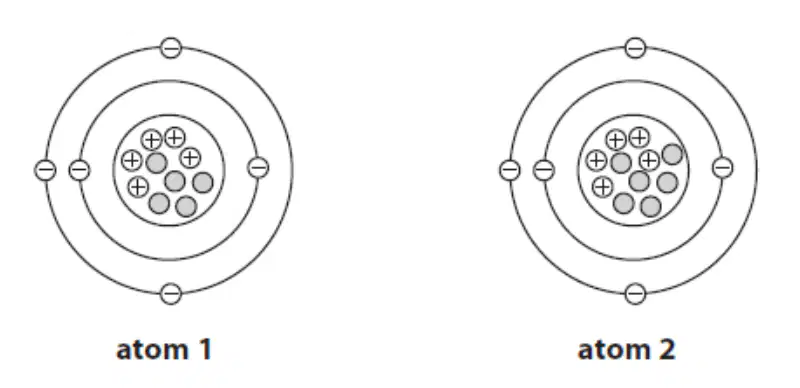
State how the diagram shows that both of these atoms are neutral.
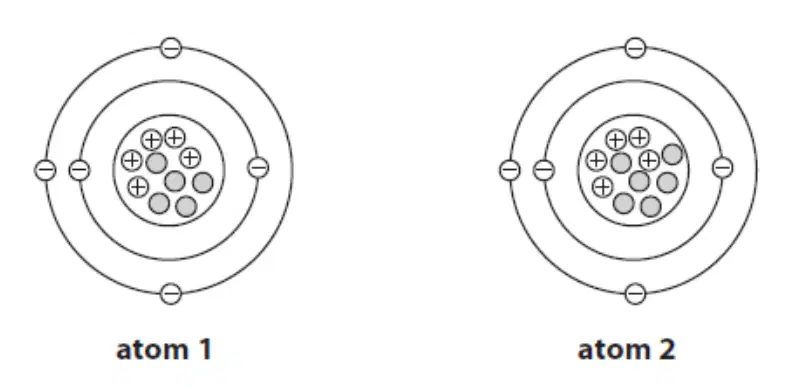
Explain how the diagram shows that these atoms are isotopes.
Complete the table to show the atomic number and mass number of atoms 1 and 2.

Calculate the relative atomic mass (Ar ) of this element. Give your answer to one decimal place.

The boxes list changes that may happen in a laboratory and the names of some changes. Draw one straight line from each change to its correct name.

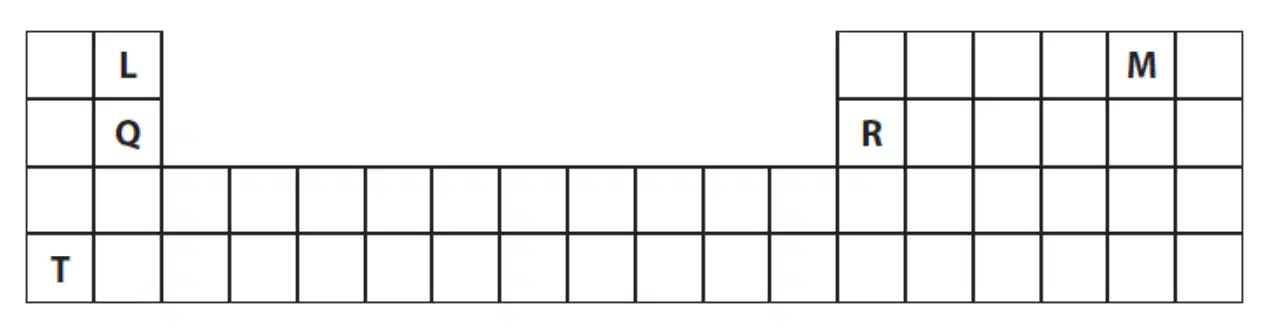
The diagram shows part of the Periodic Table, with elements represented by the letters L, M, Q, R and T. The letters in the diagram represent elements but are not their chemical symbols. Use the Periodic Table to help you answer this question.
Which of the letters represent a non-metal
L
Q
T
R
M
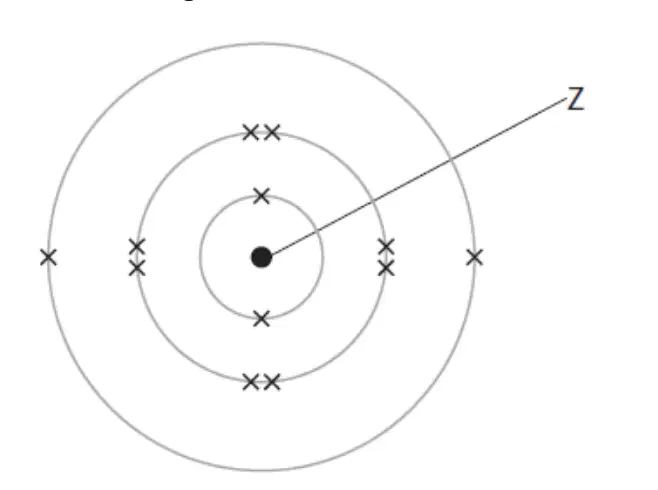
Name the part of the of the atom that is labelled Z
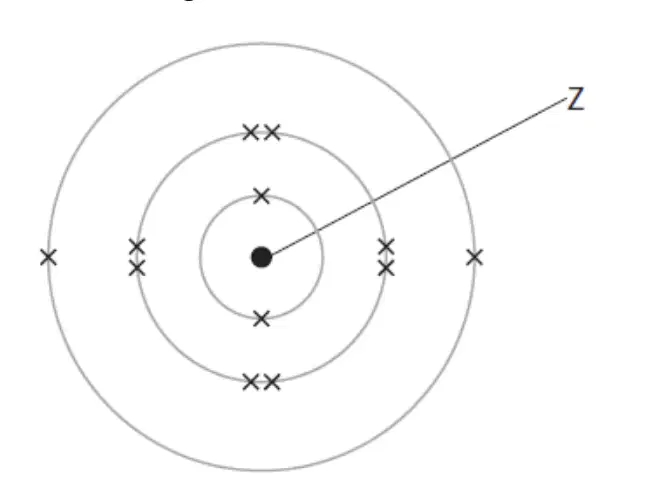
Number of protons in this atom
2
8
10
12
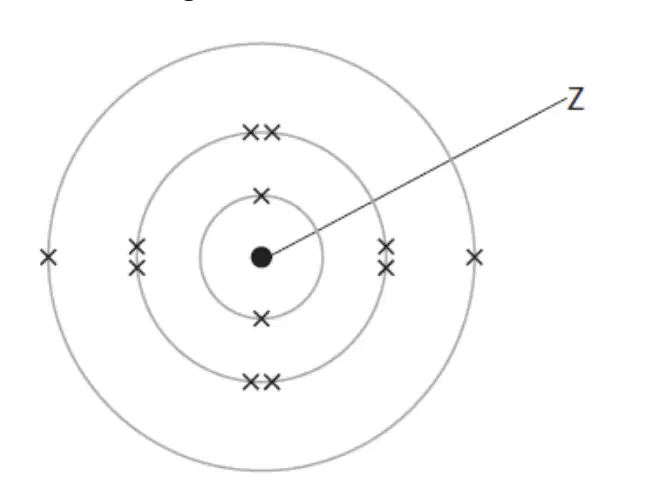
Number of the group that contains this element
1
2
3
8
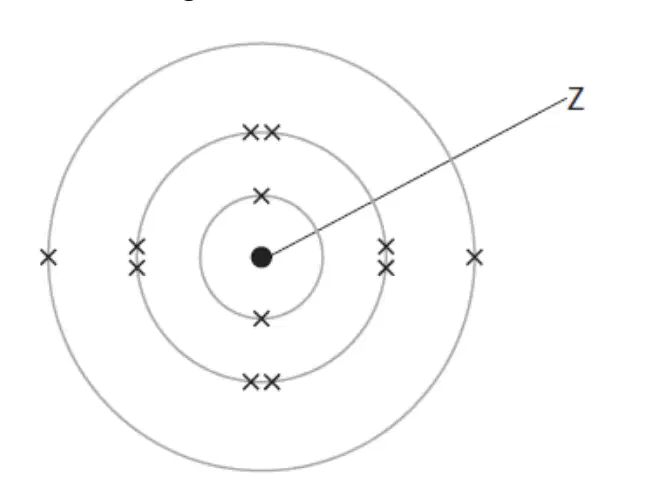
Number of the period that contains this element
1
2
3
8
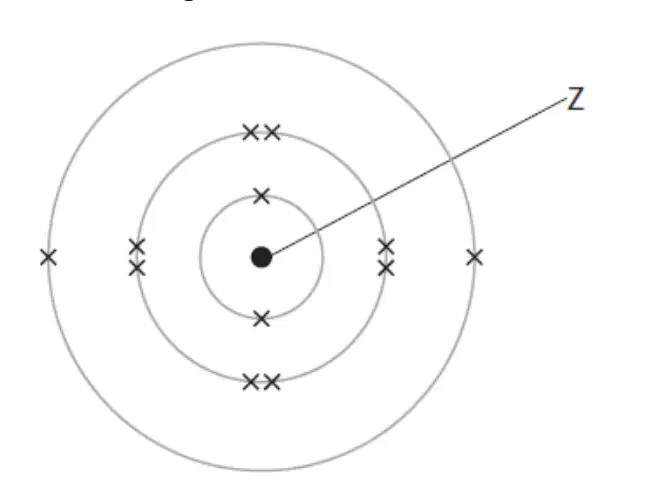
The charge of the ion formed from this atom
1
2
6
8
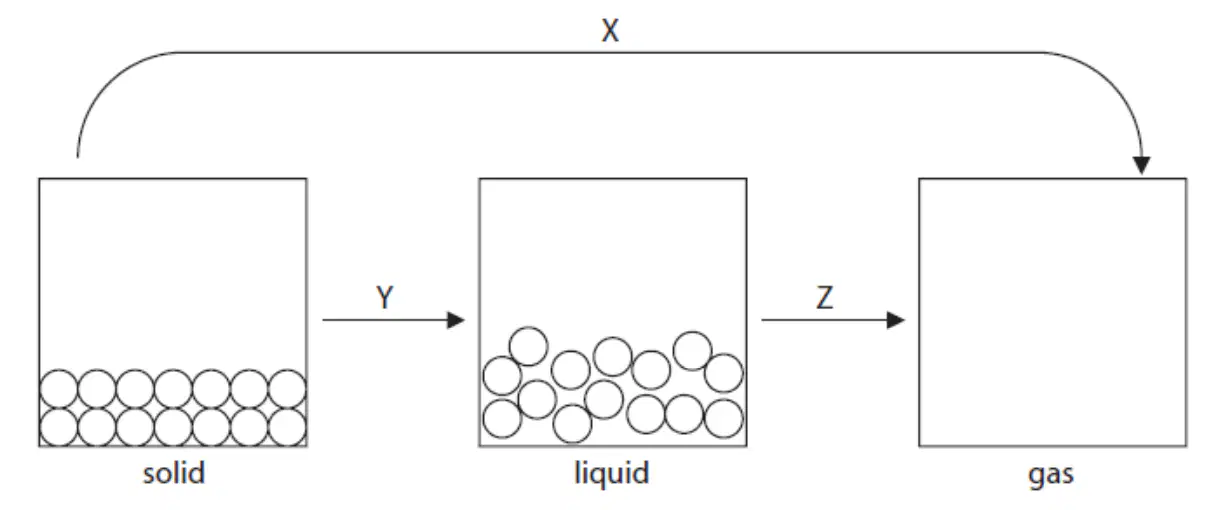
This question is about states of matter.
The diagram shows the arrangement of particles in a solid and in a liquid.
Complete the diagram by drawing six circles to represent the particles in a gas.
Use state symbols to complete the equation for the freezing of water.

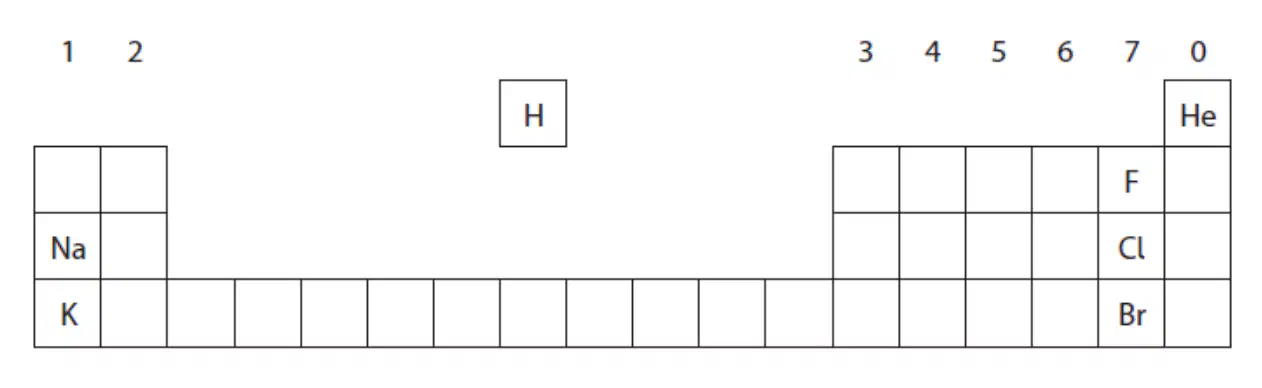
The diagram shows the positions of some elements in the Periodic Table.
Give the symbol of a metal.
Na
K
He
F
Cl
The diagram shows the positions of some elements in the Periodic Table.
Give the symbol of a noble gas.
Na
H
He
F
Cl
The diagram shows the positions of some elements in the Periodic Table.
Give the symbol of a liquid at room temperature.
Na
H
He
Br
Cl
The diagram shows the positions of some elements in the Periodic Table.
Give the symbols of the two elements in Period 3
Na & Cl
K & Br
Na & K
F & Cl
Cl & Br
The diagram shows the positions of some elements in the Periodic Table.
Deduce the electronic configuration of Na
2,8,1
2,1
1,8,2
8,2,1
2,8
The diagram shows the positions of some elements in the Periodic Table.
Deduce the electronic configuration of F- ion
2,7
7
1,8,8
8,2
2,8
The diagram shows the positions of some elements in the Periodic Table.
Potassium fluoride is made from combining potassium (K) with the diatomic element fluorine (F2)
What is the ionic formula for potassium fluoride
KF
KF2
F2K
K2F
Ionic compounds can conduct electricity when molten or in aqueous solutions because the _ are free to move
(a)
What is the ionic formula of magnesium chloride
(Magnesium is in group 2 and chlorine is in group 7)
MgCl
Mg2Cl7
Mg2Cl
MgCl2
Mg7Cl2
A student uses the reaction between iron and oxygen to find the percentage of oxygen in air.
The diagram shows the apparatus the student uses.
Use the results from the table to calculate the percentage by volume of oxygen in the air.


