Worksheets
Functional Anatomy - Corrective Exercise
Total questions: 23
Worksheet time: 12mins
Which of the following are actions of the tibialis anterior?
Ankle dorsiflexion and inversion
Ankle plantarflexion and inversion
Knee flexion
Ankle extension
The two antagonists of the tibialis anterior. Action: plantar flexion. (Select all)
Gastrocnemius
Soleus
Vastus lateralis
Fibularis Longus
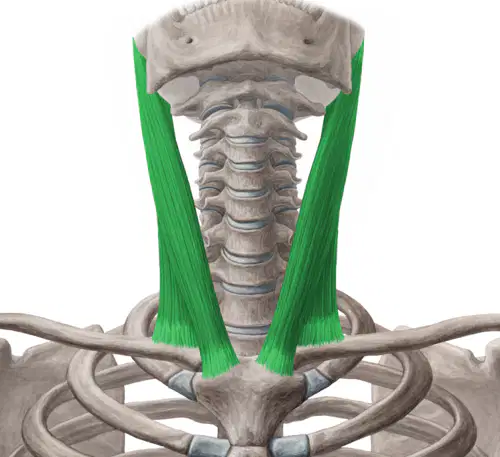
Emma, Lily, and Aiden are studying for their anatomy exam. They come across a diagram of a muscle they can't identify. Can you help them name the muscle?
Pectoralis Minor
Upper trapezius
Scalenes
Sternocleidomastoid
What is the function of a stabilizer muscle during an exercise?
It is the primary muscle that creates the movement
It assists the primary muscle in the movement
It opposes the movement
It helps maintain a posture or fixate a joint by contracting without significantly moving
Which of the 4 quadricep muscles can extend the knee AND flex the hip?
Vastus lateralis
Vastus medialis
Vastus intermedius
Rectus femoris
What group of muscles are known as the antagonists to the quadricep muscles?
The adductor muscles
The abductor muscles
The hip flexor muscles
Hamstring muscles
Grace, Oliver, and Daniel are training for a marathon. They need to strengthen 3 specific muscles that help in flexing the knee and extending the hip. Which muscles should they focus on?
Semimembranosus, semitendinosus, biceps femoris
Vastus lateralis, vastus medialis, biceps femoris
Gracilis, sartorious, TFL
Piriformis, obturator internus, gemellus inferior
Emma, Noah, and Liam are training for a triathlon. They learned that a specific type of muscle contraction, where the muscle lengthens as it resists a load, is crucial for their training. What is this type of muscle contraction called?
Agonist
Eccentric
Concentric
Isometric
What is the term for a muscle that assists the primary muscle in performing a complex movement?
Antagonist
Stabilizer
Synergist
Agonist
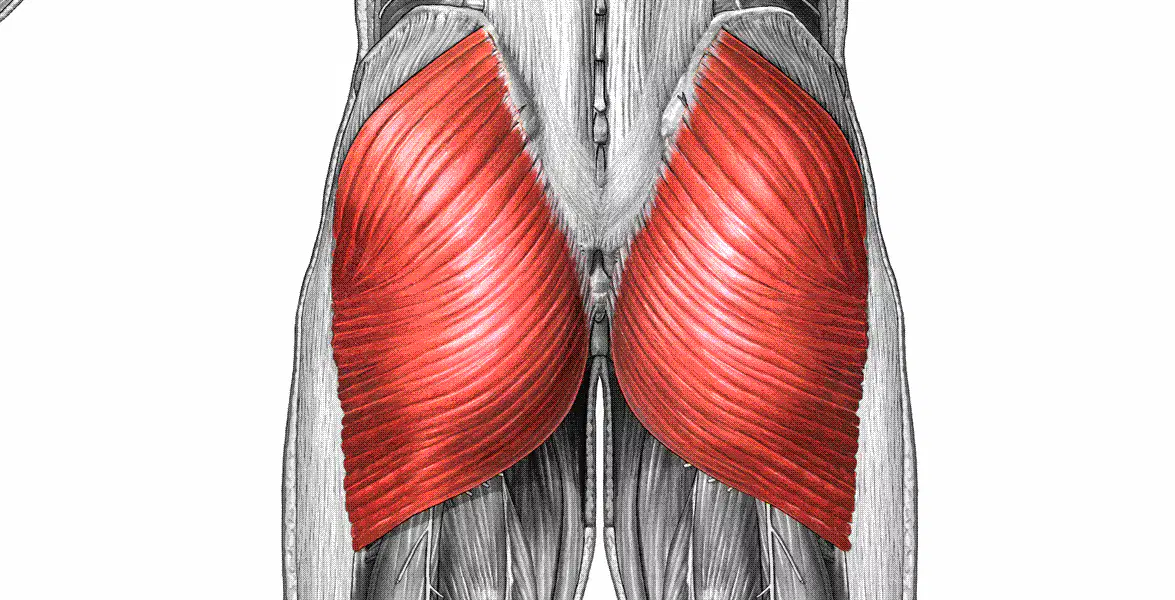
What is the name of this muscle and what are its actions?
Gluteus maximus: hip flexion and internal rotation
Gluteus medius; hip extension and external rotation
Gluteus maximus; hip extension and external rotation
Gluteus medius; hip flexion and internal rotation
The gracilis is a hip adductor. The action of its antagonist is hip (a) .
What is the longest muscle in the body?
Gracilis
Piriformis
Sartorius
Iliopsoas
Our strong hip flexors include which of the following muscles?
Psoas major
Psoas minor
Iliacus
Piriformis
Charlotte, Aiden, and Elijah are training for a marathon. They learned that a common imbalance occurs when core muscles are weak and their antagonists are overactive. They are curious to know, what is the antagonist to the core muscles in this scenario?
Erector Spinae
Transverse abdominis
Psoas major
Internal oblique

Name the muscle.
Trapezius
Quadratus Lumborum
Latissimus Dorsi
Lower Trapezius
This muscle has anterior, medial, and posterior fibers. Its actions include shoulder flexion, abduction, and extension. What is the muscle?
Triceps
Deltoid
Biceps
Teres Major
What is the term for a muscle that directly opposes the action of a primary muscle?
Agonist
Antagonist
Synergist
Stabilizer
Abigail, Rohan, and Grace are studying for their anatomy exam. They are trying to remember the rotator cuff muscles. They've listed supraspinatus, infraspinatus, subscapularis, and one more. Which one are they missing?
(a)

Name the muscle.
Biceps brachii
Brachialis
Triceps brachii
Pronator teres
What type of muscle contraction occurs when the muscle shortens while generating force?
Eccentric
Concentric
Isometric
Agonist
Oliver, Emma, and Noah are studying for their physiology exam. They learned about a muscle that is responsible for the flexion of the forearm and supination of the hand. Can you help them identify this muscle?
Brachialis
Biceps Brachii
Triceps Brachii
Brachioradialis
What type of muscle contraction occurs when the muscle maintains the same length while generating force?
Isometric
Concentric
Eccentric
Agonist
Draw a muscle.