
 Worksheets
Electricity & Magnetism
Total questions: 20
Worksheet time: 5mins
What is electricity?
Flow of electrons in insulator
Flow of electrons in conductor
Flow of protons in insulator
Flow of protons in conductor
What is matter?
Anything that takes up space and when subjected to gravity, has weight
Anything that takes up space and when subjected to gravity, has height
Anything that takes up space and when subjected to gravity, has width
Anything that takes up space and when subjected to gravity, has length
What is element?
A substance that can be composed any further by chemical action
A substance that cannot be decomposed any further by mechanical action
A substance that can be composed any further by mechanical action
A substance that cannot be decomposed any further by chemical action
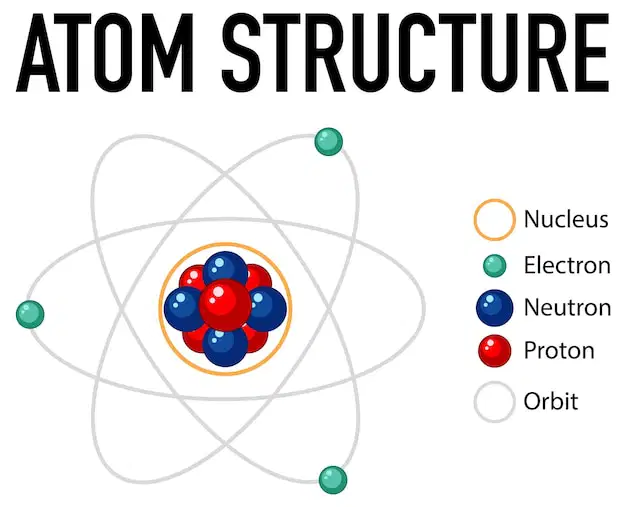
What is the charge of electrons, according to the diagram on the side?
Positive charge
Neutral
Negative Charge
No Charge
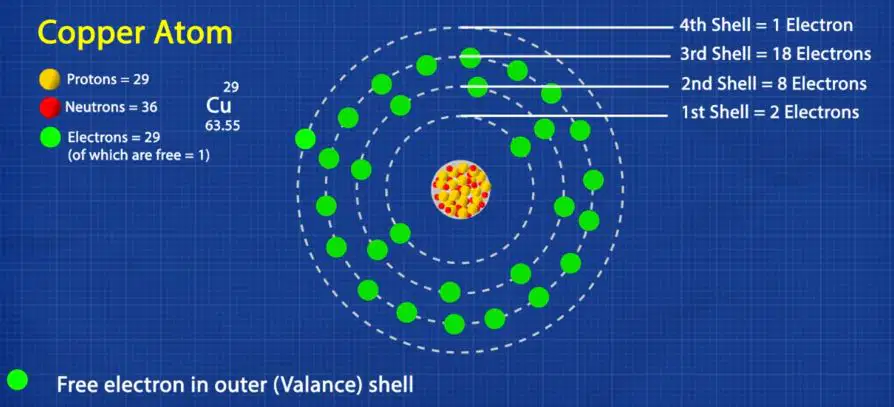
What is the atomic number and atomic weight, according to the diagram on the side?
Atomic Number = 29
Atomic Weight = 65
Atomic Number = 29
Atomic Weight = 29
Atomic Number = 65
Atomic Weight = 65
Atomic Number = 65
Atomic Weight = 29
What is a voltage?
Ability to do work of forcing protons to move
Ability to do work of forcing neutrons to move
Ability to do work of forcing electrons to move
Ability to do work of forcing nucleus to move
What is the unit and symbol for voltage?
Volt / v
Volt / V
Voltage / v
Voltage / V
What is a current?
The movement or drift of protons.
The movement or drift of neutrons.
The movement or drift of neutral.
The movement or drift of electrons.
What is the unit and symbol for current?
Amperes / I
Amp / A
Amperes / V
Amperes / R
What is a resistance?
Opposes voltage flow
Opposes current flow
Opposes resistance flow
Opposes protons flow
What is the unit and symbol for resistance?
ohm / Ω
omega / Ω
ohm / omega
Ω / ohm
The resistance of a conductor is determined by several factors:
Atomic structure/Length of the material/ Width of the material/ Temperature of the material
Atomic structure/Length of the material/ Width of the material/ Cross-sectional of the material
Material structure/Height of the material/Width of the material/Temperature of the material
Material structure/Height of the material/Cross-sectional of the material/Temperature of the material
What is a conductor?
Easy for protons to flow
Difficult for electrons to flow
Easy for electrons to flow
Difficult for protons to flow
What is a insulator?
Easy for protons to flow
Difficult for protons to flow
Easy for electrons to flow
Difficult for electrons to flow
What is a semiconductor?
Neither not good conductors or insulators
Neither good insulator or insulators
Neither good conductors or insulators
Neither good conductors or conductor
What is a magnetism?
Another form of force that causes proton flow or voltage
Another form of force that causes electron flow or voltage
Another form of force that causes electron flow or current
Another form of force that causes proton flow or current
Three basic types of magnets:
Neutral magnets/Artificial magnets/Electromagnets
Natural magnets/Artificial magnets/Electromagnets
Natural magnets/Artifact magnets/Electromagnets
Neutral magnets/Artifact magnets/Electromagnets
The strength of an induced voltage depends on several factors:
Strength of magnetic field/Speed of the relative motion between the field and the insulator/Numbers of conductor in the insulator
Strength of magnetic flux/Speed of the relative motion between the field and the coil/Numbers of conductor in the coil
Strength of magnetic field/Speed of the relative motion between the field and the insulator/Numbers of conductor in the coil
Strength of magnetic field/Speed of the relative motion between the field and the coil/Numbers of conductor in the coil
There are few ways in which a voltage can be induced by electromagnetic induction:
Electromagnetic induction/Self induction
Electromagnetic induction/Self induction/Mutual induction
Generated voltage/Self induction
Electromagnetic induction/Self induction/Mutual induction/Generated voltage
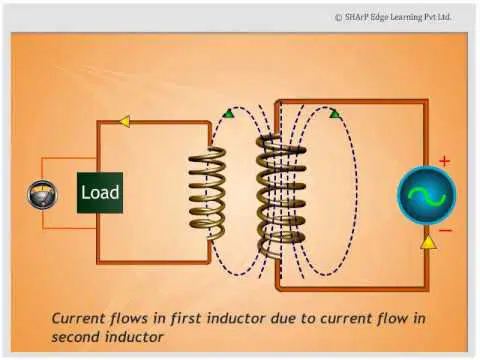
How is voltage produced, according to the diagram on the side?
Electromagnetic Induction
Self Induction
Mutual Induction
Generated Voltage

