
 Worksheets
Vocabulary - Meiosis & Fertilization
Total questions: 24
Worksheet time: 16mins
The number of complete sets of chromosomes in a cell.
Haploid
Diploid
Ploidy
Chromosomes which do not determine the sex of an organism.
Gametes
Autosomes
Genomes
Zygote
A complete set of an organism's DNA for the entire species.
Genome
Autosome
Ploidy
A sequence of genetic material that determines the gender of an organism.
Autosome
Sex Chromosome
Gamete
Genome
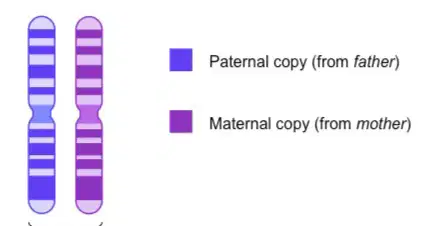
A pair of chromosomes with similar shape, size and gene regions.
Homologous Chromosome
Genome
Sister Chromatids
Autosome
One set of a chromosome pair.
Autosome
Sex Chromosome
Haploid
Diploid
A pair of chromosomes with similar size, shape & genes. One chromosome is from the mother and one chromosome is from the father.
Autosome
Sex Chromosome
Haploid
Diploid
A process of cell division which creates the sex cells for sexual reproduction.
Mitosis
Meiosis
Fertilization
Zygote
The first cell produced after the fusion of an egg and sperm.
Mitosis
Meiosis
Fertilization
Zygote
The fusion of male and female gametes to produce an offspring which are genetically similar but not identical to the parents.
Sexual Reproduction
Meiosis
Fertilization
Zygote

What does this diagram represent?
Mitosis
Meiosis I
Meiosis II
Fertilization

What does this diagram represent?
Mitosis
Meiosis I
Meiosis II
Fertilization
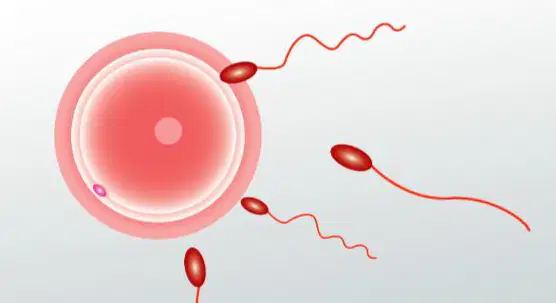
What does this diagram represent?
Mitosis
Meiosis I
Meiosis II
Fertilization
The cellular process which produces a single ovum or four sperm cells.
Fertilization
Spermatogenesis
Oogenesis
Gametogenesis

What does this diagram represent?
Fertilization
Spermatogenesis
Oogenesis
Gametogenesis

What does this diagram represent?
Fertilization
Spermatogenesis
Oogenesis
Gametogenesis
The cellular process which produces a single ovum.
Fertilization
Spermatogenesis
Oogenesis
Gametogenesis
The cellular process which produces four sperm.
Fertilization
Spermatogenesis
Oogenesis
Gametogenesis
(a) Reduces the homologous chromosomes in the (b) by (c) and which makes (d) cells.
(a) divides the (b) in two cells at the same time which makes (c) genetically (d) cells.
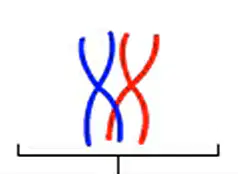
The following diagram is an example of a ______________, which is formed in _________________.
Tetrad; Prophase I
Tetrad; Prophase II
Zygote; Prophase I
Zygote; Prophase II
Correctly label the following diagram of sexual reproduction.
Fertilization
Meiosis
Match the following terms & processes with the correct term.
Gametes like egg & sperm
Haploid
Zygote
Diploid
This process produces 2 cells with half the original genome of the organism.
Meiosis I
Produces 4 genetically different cells.
Meiosis II
A diploid cell is represented by (a) while a haploid cell is represented by (b) because it has (c) the number of chromosomes.

