
Font size
 Worksheets
The Structure of DNA
Total questions: 16
Worksheet time: 9mins
In a DNA strand, the rungs of the "ladder" are made of *
sugar molecules
phosphate molecules
nucleotide bases
alternating sugar and phosphate molecules
Chargaff's rules are represented as *
A = T and G = C
A = G and T = C
A = C and T = G
T = C and G = A
Chargaff's rules of base pairing are explained by which structural feature of DNA?
Each strand of DNA contains a phosphate and sugar backbone.
The nucleotides of DNA may be arranged in a wide variety of sequences.
DNA is double stranded, and covalent bonds between identical nucleotides hold the two strands together.
DNA is double stranded, and hydrogen bonds between base pairs hold the two strands together.
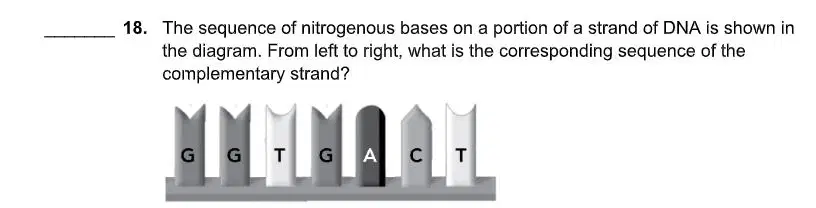
The sequence of nitrogenous bases on a portion of a strand of DNA is shown in the diagram. From left to right, what is the corresponding sequence of the complementary strand?
CCACTGA
GGUGTAT
GGTGACT
OTTAGATC
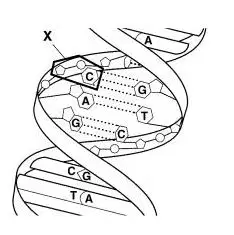
Figure 12-5 (the whole thing, not just X) shows the structure of a(an) *
amino acid
DNA molecule
protein
RNA molecule
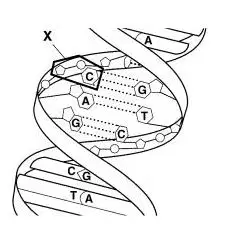
In Figure 12.5, the part labeled X is *
RNA
a nucleotide
a phosphate
a gene
TA
If 45% of an organism's DNA is thymine, what is the percentage of guanine?
5%
10%
45%
90%
Hershey & Chase did an experiment with bacteriophages. Which term describes a bacteriophage?
a bacteria that can infect other cells
A Virus that kills infects bacteria
a bacteia the infects viruses
Which is a definition of transformation?
*
a permanent change in gene expression
a permanent change in the function or activity of a cell
a temporary change in the genetic composition of an organism
a permanent change in the genetic composition of an organism
Choose the things that DNA can do that makes it an important biological molecule.
It can store information.
It can be copied in a cell.
It can express a trait by giving directions to a cell.
Hershey & Chase's experiment ______ Avery's conclusion.*
confirmed
refuted (proved wrong)
What did Griffith observe when he injected into mice a mixture of heat-killed disease-causing bacteria and live harmless bacteria?
The disease-causing bacteria changed into harmless bacteria.
The mice developed pneumonia.
The harmless bacteria died.
The mice were unaffected.
Avery’s experiments showed that bacteria are transformed by
*
RNA
DNA
proteins
carbohydrates
What is the role of DNA?
DNA stores genetic information
What is a kind of virus that infects bacteria, and can be used for antibiotic resistant bacteria?
In Base pairing bonds in DNA can form only between what
adenine and thymine
guanine and cytonsine
sugar and nucleotides
all of these

