

wayground logo

Free Printable Worksheets

NEW

Font size

S
M
L
XL
Worksheets

Rock and Fossil Quiz

Total questions: 41

Worksheet time: 34mins
Name
Class
Date
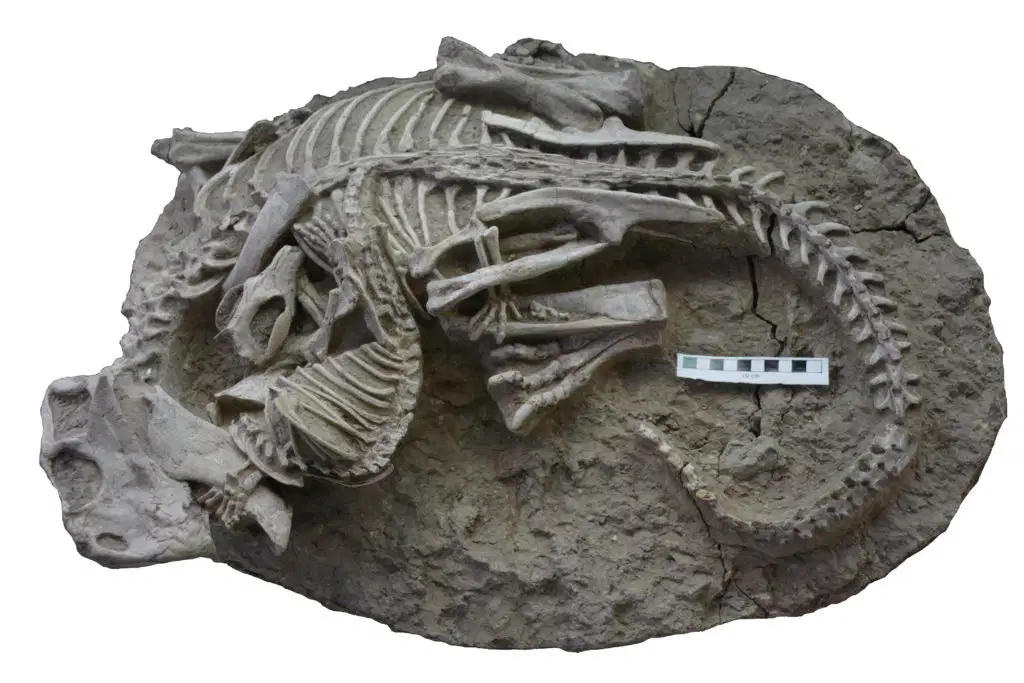
1.

What is a fossil?

a)

A layer of soil in the ground

b)

Molten rock material

c)

A type of sedimentary rock

d)

 the remains or impression of an organism preserved in rock

2.

How are intrusions formed in rock layers?

a)

By cooling of metamorphic rocks

b)

By solidifying and cooling beneath the Earth's surface

c)

By cooling and solidifying beneath the Earth's surface

d)

By solidifying lava under the Earth's surface

3.

What is the Law of Superposition?

a)

The youngest rock layer is on the bottom

b)

The oldest rock layer is on the top

c)

The oldest rock layer is on the bottom

d)

The youngest rock layer is on the top

4.

What is magma?

a)

Rock formed through deposition of sediment

b)

Molten rock material

c)

Solidified lava

d)

Rock formed from extreme heat and pressure

5.

What is an igneous rock?

a)

Rock formed through deposition of sediment

b)

Layer of rock in the ground

c)

Rock that has been changed by extreme heat and pressure

d)

Rock formed from cooled lava/magma

6.

The _____________ states that in undisturbed rock layers, the youngest layer is on the top and the oldest layer is on the bottom.

a)

Law of Gravity

b)

Law of Superposition

c)

Law of Physics

d)

Fossil Law

7.

What is a rock layer?

a)

A layer of rock formed through deposition of sediment

b)

A layer of soil in the ground

c)

A horizontal layer of rock arranged one on top of another

d)

A layer of rock formed from cooled lava/magma

8.

What is the process that forms a metamorphic rock?

a)

Deposition of sediment

b)

Cooling and solidification of lava/magma

c)

Exposure to extreme heat and pressure

d)

Accumulation of layers in the ground

9.

What is sedimentary rock?

a)

Rock formed through deposition of sediment

b)

Rock formed from cooled lava/magma

c)

Rock that has been changed by extreme heat and pressure

d)

Layer of rock in the ground

10.

What is the rock cycle?

a)

A layer of soil in the ground

b)

Rock formed through deposition of sediment

c)

A representation of the transitions made over time amongst the three main rock types

d)

Molten rock material

11.

What is strata?

a)

A layer of soil in the ground

b)

A layer of rock formed through deposition of sediment

c)

A layer of rock formed from cooled lava/magma

d)

A layer of rock or soil in the ground

12.

What is the difference between magma and lava?

a)

Magma is the same as lava

b)

Magma is molten rock material under the Earth's crust, while lava is the same material that has reached the surface through a volcano vent

c)

Magma and lava are both solidified rock

d)

Lava is molten rock material under the Earth's crust, while magma is the same material that has reached the surface through a volcano vent

13.

What is the process of MOVING sediments from location to another?

a)

Deposition

b)

Erosion

c)

Weathering

d)

Compaction

14.
Sediment goes through _________________ to become sedimentary rock.
a)
heat and pressure
b)
compacting and cementing
c)
weathering and erosion
d)
melting and cooling
15.

Melted rock below the ground

a)

Metamorphic rock

b)

Sediment

c)

Rock cycle

d)

Magma

16.

A rock that forms from magma or lava

a)

Sediment

b)

Rock cycle

c)

Magma

d)

Igneous rock

17.
What are the 3 major types of rocks?
a)
Igneous, Metamorphic, Sedimentary
b)
Metamorphic, Igneous, Cementation
c)
Brown, Red, Gray
d)
Streak, Hardness, Breakage
18.
This rock started as lava that cooled and then was heated and put under pressure over time. What type of rock is this?
a)
Sedimentar
b)
Igneous
c)
Metamorphic
19.
The process when rocks break into smaller pieces due to exposure to natural elements is called
a)
erosion
b)
weathering
c)
sediments
20.
This rock was formed when magma cooled very slowly inside the Earth. What specific type of rock is it?
a)
Intrusive Igneous Rock
b)
Extrusive Igneous Rock
c)
Foliated Metamorphic Rock
d)
Clastic Sedimentary Rock
21.
This rock formed when lava cooled very quickly on Earth's surface. What specific type of rock is it?
a)
Extrusive Igneous Rock
b)
Intrusive Igneous Rock
c)
Non-Foliated Metamorphic Rock
d)
Biochemical Sedimentary Rock
22.
This rock formed when bits of other rocks became pressed into a solid. What type of rock is it?
a)
Sedimentary Rock
b)
Metamorphic Rock
c)
Igneous Rock
23.
The Law of Superposition helps scientists to determine what?
a)
The absolute age of rock layers
b)
The age of fossils
c)
The relative age of rock layers
d)
the super powers of rocks
24.
How old do Paleontologists believe the Earth is?
a)
2015 years old
b)
3.6 billion years old
c)
4.6 billion years old
d)
4.6 million years old
25.
According to the law of superposition, the oldest fossils are found 
a)
At the top of the rock layers
b)
Near the bottom of the rock layers
c)
In the middle of the rock layers
d)
Somewhat near the surface
26.
Which rock layer in the diagram seems to be the oldest?
a)
F
b)
E
c)
B
d)
A
27.
This rock was formed by smaller pieces of rock that settled at the bottom of a lake millions of years ago. What type of rock is this?
a)
Sedimentary
b)
Igneous
c)
Metamorphic
28.
The process of sediment resting at the bottom of a river is called?
a)
deposition
b)
erosion
c)
weathering
d)
pressure
29.
According to the law of superposition, which layer is the youngest?
a)
A
b)
B
c)
C
30.
Which type of dating method can be used on rock layers by applying the Law of Superposition?
a)
relative dating
b)
absolute dating
c)
radioactive dating
d)
radiometric dating
31.
Why might a seashell fossil be found in the middle of a desert?
a)
The fossil was moved there by an animal.
b)
The fossil was moved there by a human.
c)
The landscape changed over time.
d)
It was formed in the desert.
32.
Which layer or layers prove that this area was once covered by water?
a)
1
b)
2
c)
3
d)
2 and 3
33.
Each rock type can follow only one pathway of the rock cycle.
a)
True
b)
False
34.
People who study fossils are called ____.
a)
meterologists
b)
fossilologists
c)
paleontologists
d)
fossil hunters
35.
The Law of Superposition helps scientists to determine what?
a)
The absolute age of rock layers
b)
The age of fossils
c)
The relative age of rock layers
d)
the super powers of rocks
36.
According to the law of superposition, the oldest fossils are found 
a)
At the top of the rock layers
b)
Near the bottom of the rock layers
c)
In the middle of the rock layers
d)
Somewhat near the surface
37.
What can scientists learn from the sequence of rock layers?
a)
Geologic history of that area
b)
Future geological events
c)
the number of organisms that live in the area
d)
the impact that hikers have had on an area.
38.
Letter "F" is a....
a)
inclusion
b)
intrusion
c)
fault
d)
unconformity 
39.
Relative dating of rock layers tells us that the deeper we dig, _______.
a)
the younger the rocks get
b)
the smellier the rocks get
c)
the harder the rocks get
d)
the older the rocks get
40.
Which type of dating method can be used on rock layers by applying the Law of Superposition?
a)
relative dating
b)
absolute dating
c)
radioactive dating
d)
radiometric dating
41.
What is the difference between magma and lava
a)
Magma is very hot, lava is cool
b)
Magma is molten rock within the earth; lava is molten rock on the earth's surface
c)
Magma is molten rock on the earth's surface; lava is molten rock within the earth
d)
Magma is cool, lava is very hot
