
Font size
 Worksheets
Chemistry Unit 3 Review
Total questions: 45
Worksheet time: 1hrs 6mins
What are the five main types of chemical reactions? Provide an example for each.
Addition, subtraction, multiplication, division, and exponentiation
Solid, liquid, gas, plasma, and Bose-Einstein condensate
Synthesis, decomposition, single displacement, double displacement, and combustion
Acidic, basic, neutral, alkaline, and acidic
Explain the difference between a synthesis reaction and a decomposition reaction.
Synthesis reaction releases energy, while decomposition reaction absorbs energy.
Synthesis reaction only involves one substance, while decomposition reaction involves multiple substances.
Synthesis reaction combines substances, while decomposition reaction breaks them down.
Synthesis reaction breaks substances down, while decomposition reaction combines them.
What are the factors that can affect the rate of a chemical reaction? Provide examples for each factor.
Color, pressure, volume, inhibitor
Time, velocity, weight, reagent
Temperature, concentration, surface area, catalyst
pH, mass, density, solvent
How does temperature affect the rate of a chemical reaction according to the collision theory?
Decrease in temperature leads to an increase in the rate of a chemical reaction.
Increase in temperature leads to an increase in the rate of a chemical reaction.
Temperature has no effect on the rate of a chemical reaction according to the collision theory.
Increase in temperature leads to a decrease in the rate of a chemical reaction.
Explain the concept of activation energy in relation to collision theory.
Activation energy is the maximum amount of energy required for a chemical reaction to occur.
Activation energy is the energy released during a chemical reaction.
Activation energy is the minimum amount of energy required for a chemical reaction to occur.
Activation energy has no relation to collision theory.
What is Le Chatelier's principle and how does it apply to chemical equilibrium?
Le Chatelier's principle explains how a system at equilibrium responds to changes in conditions such as temperature, pressure, or concentration.
Le Chatelier's principle only applies to solid-state reactions
Le Chatelier's principle has no application in chemical equilibrium
Le Chatelier's principle is used to predict the color of a chemical reaction
How does an increase in pressure affect a system at equilibrium according to Le Chatelier's principle?
The system will not shift at all.
The system will shift towards the side with fewer moles of gas.
The system will completely stop all reactions.
The system will shift towards the side with more moles of gas.
State the law of conservation of mass and provide an example to illustrate it.
When wood burns, the mass of the ash, smoke, and gases produced is less than the mass of the original wood
Mass can be destroyed in a chemical reaction
Mass can neither be created nor destroyed in a chemical reaction. For example, when wood burns, the mass of the ash, smoke, and gases produced is equal to the mass of the original wood.
Mass can be created in a chemical reaction
Explain how the law of conservation of mass is applied in balancing chemical equations.
Balancing chemical equations does not involve the law of conservation of mass
The law of conservation of mass is applied in balancing chemical equations by ensuring that the total mass of the reactants equals the total mass of the products.
The law of conservation of mass is not applied in balancing chemical equations
The total mass of the reactants does not need to equal the total mass of the products in balancing chemical equations
What happens to the total mass of the reactants and products in a chemical reaction according to the law of conservation of mass?
The total mass decreases
The total mass becomes zero
The total mass increases
The total mass remains constant
N2+O2--> _NO
Which equation is balanced?
PbO2 + 2H2
SO2 + H20 --> H2SO4
2Na + 2H2O --> 2NaOH + H2
What law governs the balancing of chemical equations?
Law of Energy
Law of Conservation of Matter/Mass
Law of Gravity
Law of Matter Movement
Balance this equation
_Al +_HCl --> _H2 +_AlCl3
2,6,3,2
it's already balanced
4,12,3,4
2,1,4,5
What are the coefficients that would properly balance this equation?
__H2 + __S --> __H2S
1,1 --> 1
2,2 --> 2
1,2 --> 1
1,2 --> 2

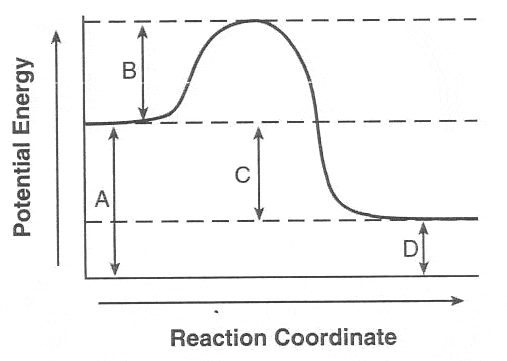
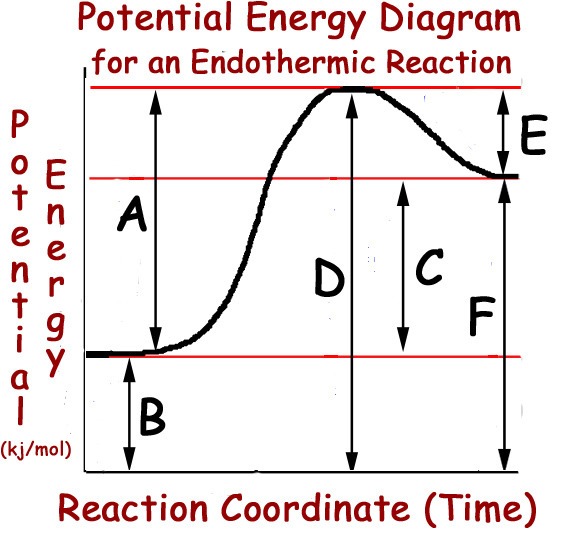
Compare the two pathway diagrams for the same reaction. Which pathway shows the reaction that has taken place with the help of a catalyst?
Pathway 1
Pathway 2
You cannot tell from these graphs.
Both reactions involved an enzyme.

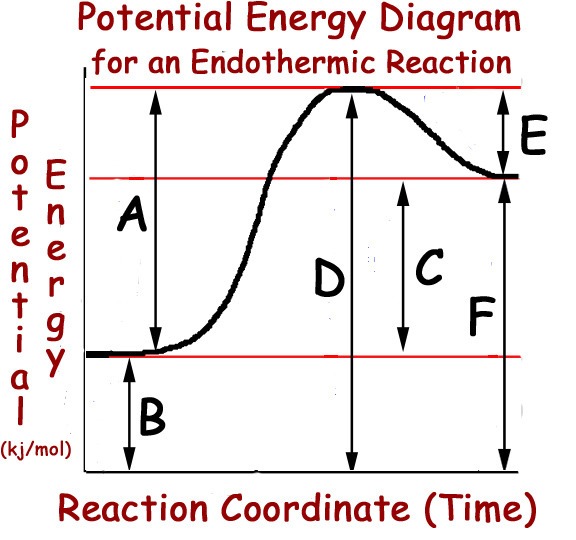
Judging by the energy diagram above, is this reaction exothermic or endothermic?
Exothermic
Endothermic
There is not enough information to tell.
There is not change in the amount of energy in the system.
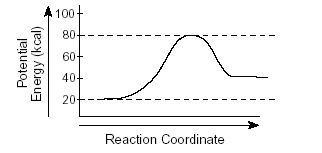
What is the ΔH of this reaction?
40 kJ
20 kJ
80 kJ
-60 kJ

At what time did the reaction reach equilibrium?
t1
t2
t3
t4
2SO2(g)+O2(g) ⇌ 2SO3(g) + Heat
Adding SO2(g) will
shift equilibrium right
shift equilibrium left
increase rate of reaction
have no change
2SO2(g)+O2(g) ⇌ 2SO3(g) + Heat
Increasing the temperature will...
shift equilibrium right
shift equilibrium left
increase pressure
have no change
2SO2(g) + O2(g) ⇌ 2SO3(g) + Heat
Removing O2(g) will
shift equilibrium right
shift equilibrium left
increase pressure
have no change
Increasing volume of container will
What is the effect of a catalyst on the rate of a chemical reaction?
A catalyst increases the rate of a chemical reaction by lowering the activation energy.
A catalyst decreases the rate of a chemical reaction by increasing the activation energy.
A catalyst has no effect on the rate of a chemical reaction.
A catalyst increases the rate of a chemical reaction by increasing the activation energy.
What is the correct Lewis structure for BF3?
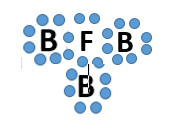
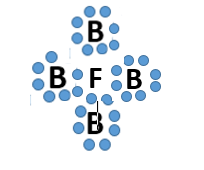

BF3 (The formula is the Lewis Structure)
MgCl2 + Na ---> NaCl + Mg
What type of reaction is shown by the equation?
Combination/Synthesis
Decomposition
Single Replacement
Double Replacement
What is the correct IUPAC name for the compound P2O5?
*IUPAC stands for International Union of Pure and Applied Chemistry and it is the naming system that we use in class.
phosphorus pentoxide
diphosphorus pentoxide
phosphorus oxide
potassium oxide
Which Lewis Dot Structure is correct for the particular element?


Which two statements are correct about the figure shown?
It is a covalent bond.
Hydrogen atoms loss electrons and Carbon gains the atoms.
It happens on metal and on another non-metal.
The valence electrons are shared by both atoms.
Fe (s)+CuSO4 (aq) → FeSO4 (aq)+Cu(s)
How do electrons move in this reaction?
Iron loses one electron and sulfate gains one electron
Iron loses two electrons and copper gains two electrons.
Copper loses two electrons, iron and sulfate each gain one electron
Copper gains two electrons, iron and sulfate each lose one electron
Select all of the systems in equilibrium.
two reactant compounds form products at twice the rate as the products decompose
two reactant compounds form products at the same rate as the products decompose
substance in a closed container reaches its melting point
substance in an open container reaches it boiling point
solution becomes saturated
The following equation is incomplete. 2 N2O5 (g) →
Which set of products completes and balances the incomplete equation?
4 NO(g) + SO2 (g)
2 N2(g) + 3 H2(g)
2 N2(g) + 2 O2 (g)
4 NO2 (g) + O2 (g)
The name of FeCl₂ is
iron chloride
iron(II) chloride
iron(I) chloride
iron dichloride
Name for SrBr2
strontium bromine
strontium bromide
strontium dibromide
strontium dibromine
Cr3+ O2-
Pb4+ O2-
What is the name for S3O8?
Trisulfide octaoxide
Trisulfide oxide
Sulfide octaoxygen
Trisulfur octaoxide
2NH3(g) + 22 kJ ↔ N2(g) + 3H2(g),
which of the following changes would result in the formation of more N2 and H2 at equilibrium?
Ammonia is produced commercially by the Haber reaction: N₂(g) + 3 H₂(g) ⇌ 2 NH₃(g) + heat. The formation of ammonia is favored by what?
an increase in pressure
a decrease in pressure
removal of N₂(g)
removal of H₂(g)
What is the correct Lewis Dot Structure for ammonia NH3



