
Font size
 Worksheets
Asexual Reproduction and Mitosis Y23-24
Total questions: 15
Worksheet time: 15mins
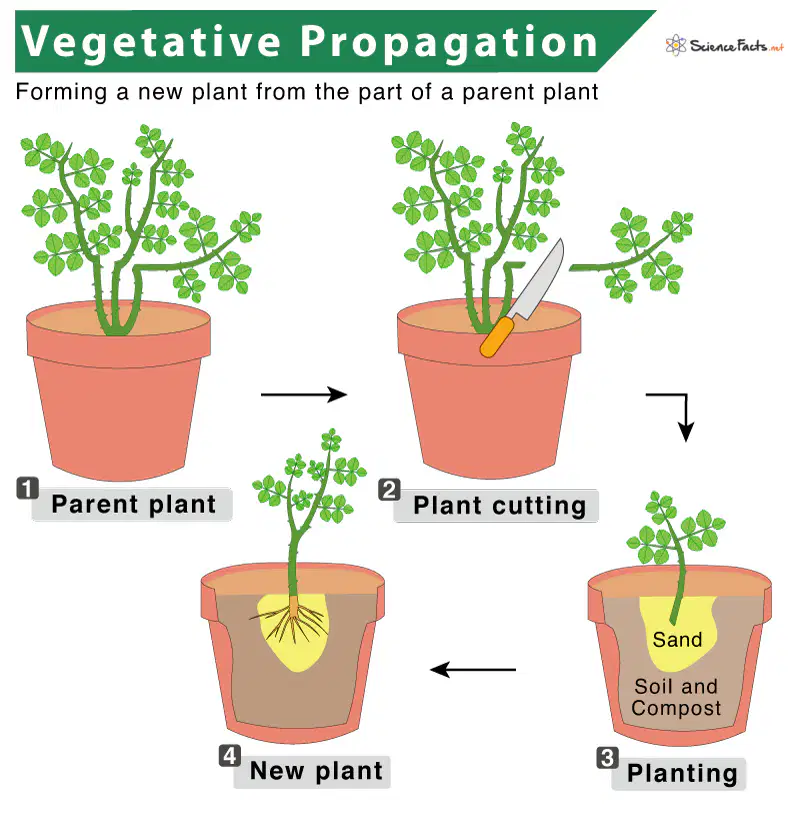
Jill wants to reproduce a plant that she can grow in her office at work. The technique she uses is shown. This technique is a form of ____ .
Osmosis
Sexual Reproduction
Asexual Reproduction
Budding
Tavon is conducting research on an unknown bacteria. Which of the following three statements supports the argument that the bacteria reproduces ASEXUALLY? Choose THREE statements.
The bacteria produces gametes.
The bacteria produces two genetically identical daughter cells.
The bacteria does not have a nucleus but has cytoplasm.
The bacteria was able to reproduce very rapidly within a short time.
The bacteria and all of its offspring can be wiped out (killed) by the same antibiotic.
Match the organism to its correct method of reproduction shown below.

Binary Fission

Budding

Fragmentation
Some organisms reproduce asexually. Which of the following would NOT be an example of asexual reproduction?


The Whiptail lizard is a species of lizards that can reproduce through parthenogenesis if needed. What is a disadvantage of this type of reproduction?
A new population can be established by a single individual in a relatively short period of time.
They are more likely to develop a variety of scale colors.
The offspring are genetically identical and less able to survive environmental changes.
They are smaller than lizards that reproduce sexually.
During mitosis, a cell can divide to make two new identical cells. Which is NOT a reason why cells divide?
In order for living things to grow
To replace dead or damaged cells
Reproduction for single-celled organisms
To produce gametes (sex cells)
If a human skin cell with 46 chromosomes undergoes mitosis, how many cells will be produced and how many chromosomes will be in each cell?
Two daughter cells each with 46 chromosomes
Two daughter cells each with 23 chromosomes
Four daughter cells each with 46 chromosomes
Four daughter cells each with 23 chromosomes
What are the advantages (pros) of asexual reproduction?
Select three choices.
No genetic variation; all offspring are identical
can reproduce quickly
only need one parent; no need to find mate
can easily be wiped out
Can produce a large number of offspring quicker
In 2017, a female zebra shark in an Australian aquarium had astounded scientists by producing live offspring asexually, three years after being separated from her long-term mate. Which type of asexual reproduction is this an example of?
parthenogenesis
budding
binary fission
regeneration
How many parents are necessary for asexual reproduction?
1
2
3
4

Which phase of mitosis happens AFTER the phase shown?
Metaphase
Prophase
Telophase
Anaphase

Which phase is shown?
If there are 20 chromosomes in the nucleus before mitosis how many will there be in each new daughter cell after cytokinesis?
20
10
40
200
Match the following description with its correct phase of mitosis.
Prophase
Chromosomes condense and become visible
Metaphase
Chromosomes line up in the middle of the cell
Anaphase
Chromatids separate and move to opposite ends of the cell
Telophase
Two new nuclei form & cytoplasm is split

