
 Worksheets
Africa Civilization Test
Total questions: 30
Worksheet time: 15mins
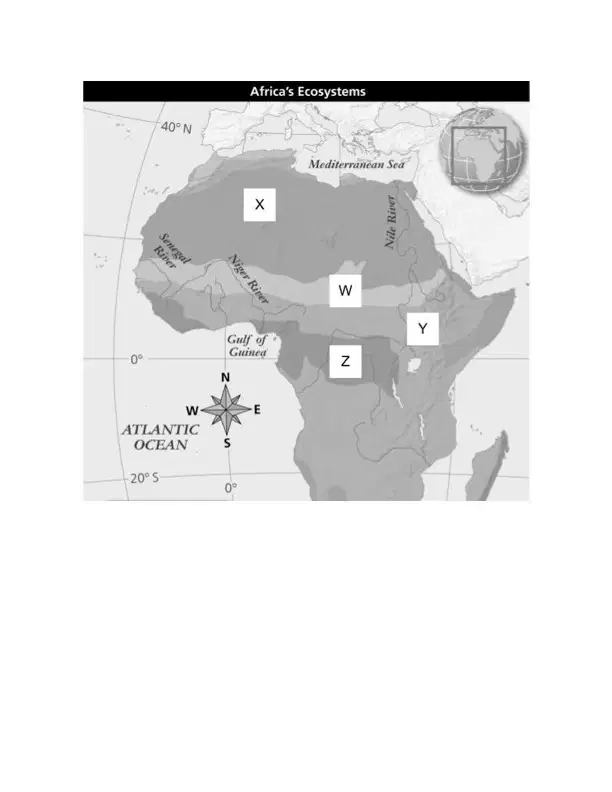
Use the map to answer the following question: Which letter on the map indicates the Sahara?
W
X
Y
Z
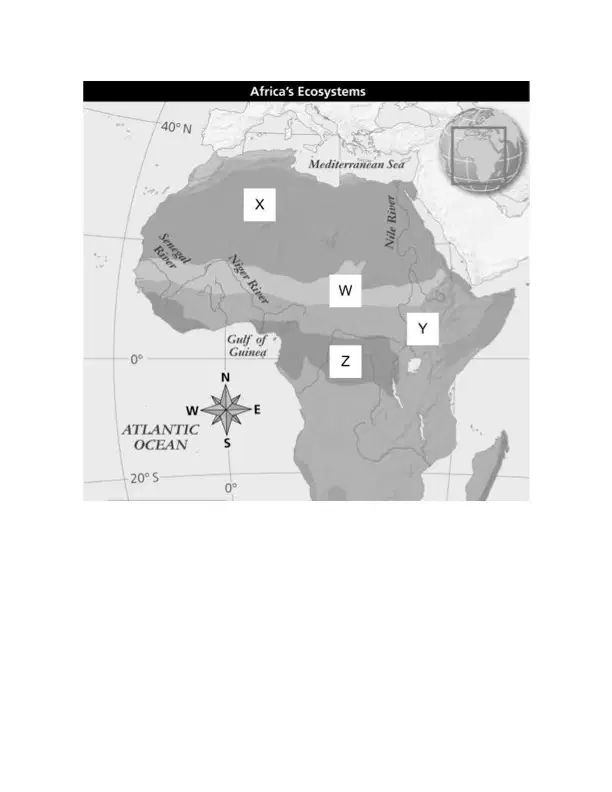
Use the map to answer the following question: Which letter on the map indicates the Sahel?
W
X
Y
Z
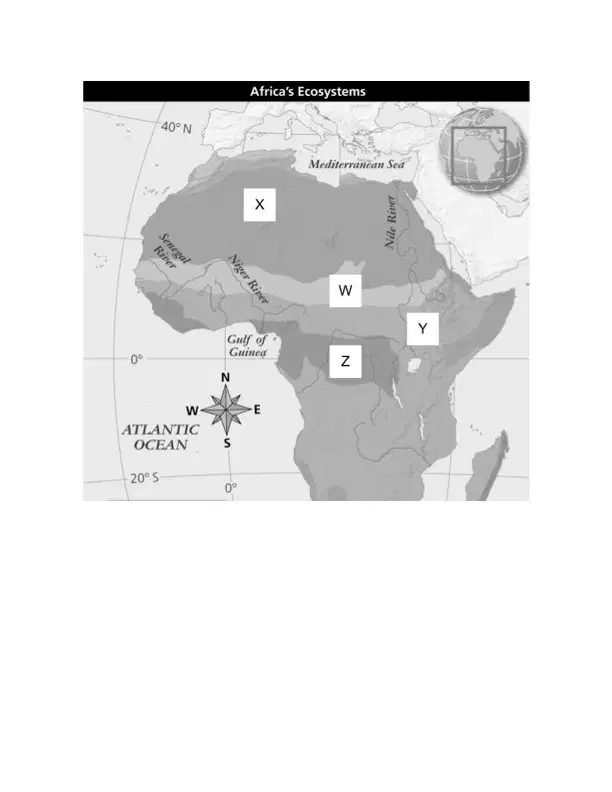
Which letter on the map indicates the Rainforest?
W
X
Y
Z
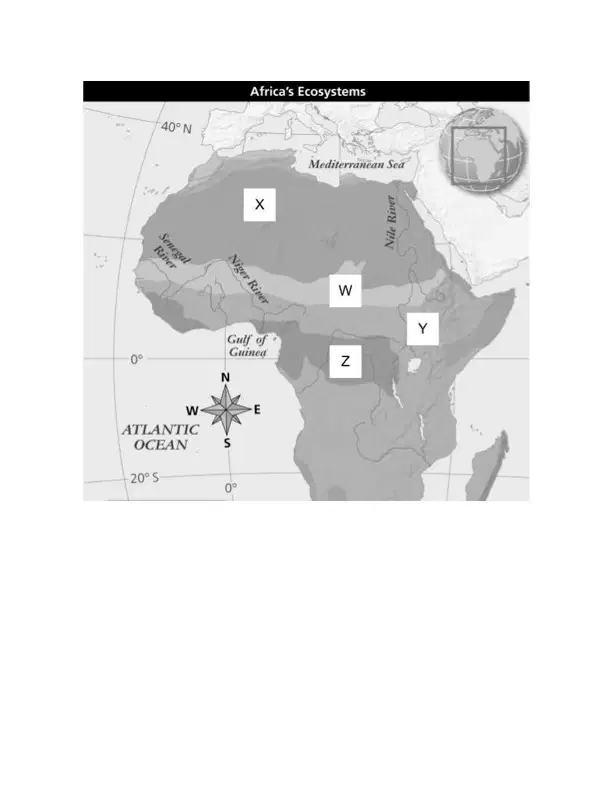
Which letter on the map indicates Savannah?
W
X
Y
Z
The region of open grasslands where most grazing of cattle and other livestock takes place is the
Rain Forest
Sahara
Savannah
Sahel
The wealth of Ghana, Mali, and Songhai was based on
Raiding other tribes
The gold and salt trade
Trade in ostriches and elephant tusks
Making iron tools and weapons
Griots contributed to West African societies by
Fighting battles
Collecting taxes
Preserving oral history
Trading with the Berbers
How did Ghana use metal and iron to become such a powerful state?
Improved farming tools
better/stronger weapons
Increase food supply
All of the above
Which of the following is not a West Africa tradition?
Dancing
Wooden Masks
Kente Fabrics
Silk
Which of the following is not a reason why salt was a very important trade item?
Salt was used to preserve food
Salt was used to make bland food tasty
People need salt in their diet
Salt is used to make explosives
Which Kingdom was the first to issue gold coins?
Kush
Songhai
Axum
Egypt
Why did people come to Timbuktu?
Vacation on the beach
To trade, worship, and study
Pilgrimage to Africa's sacred land
To see humans and wildlife live in harmony
What area separates the desert from the savanna?
Sahel
Savannah
Rainforest
Sahara
What two rivers became important in West Africa for trade and travel?
Niger and Senegal
Nile and Congo
Niger and Congo
Senegal and Nile
What is the definition of tradition?
The passing down of religion from one generation to another
The passing down of family names from one generation to another
The passing down of information from one generation to another
The passing down of artifacts from one generation to another
In the 700s, what helped trade across the Sahara Desert?
Invention of fast moving boats
Arrival of the first motive vehicle
Arrival of Camels
Climate change caused the desert to cool off
Which two kingdoms are known for pyramids?
Egypt and Kush
Egypt and Mali
Songhai and Kush
Ghana and Mali
How did Ghana raise money to pay government officials?
by mining salt
by selling gold
by taxing goods
by buying camels
Based on Ghana’s matrilineal system, who would rule next after the present king dies?
Sister
Nephew
Daughter
Son
Why do historians not know the location of the gold mines of Wangara?
The written records were lost.
Arab traders agreed not to tell.
Oral traditions name two places.
The miners kept the site a secret.
People who lived in the southern forests had to trade to get which essential product?
salt
gold
leather
iron
Which of these factors caused the resources of Ghana to decline?
decrease in the population able to produce food
raids that captured Ghanaian people to be enslaved
heavy rains that carried away the fertile topsoil
iron furnaces for which people cut trees for fuel
Which of these is the best example of an oral tradition?
a great-grandmother's photo album
a grandfather playing a game with his grandchildren
a grandmother's diary found at the base of ancient ruins
a grandfather telling a story about his childhood
Stories about Sundjata tell about
the king who founded Mali's empire.
the hajj by the great ruler Mansa Musa.
the trade caravans across the Sahara.
the tasks and importance of griots.
How did traditional West African folktales come to the Americas?
Traders sold them.
Enslaved people brought them.
Explorers discovered them.
Missionaries wrote them down.
Which of these musical styles was most influenced by West African call-and-response songs?
blues
opera
country
classical
Masks were often worn by
visitors to the king's palace.
dancers in ritual ceremonies.
weavers making special textiles.
traders conducting secret business.
How do West Africans make kente cloth, the most famous West African textile?
by appliqué with bits of fabric
by weaving a single huge cloth
by sewing narrow strips together
by stamping patterns onto squares
Sculptures from the ancient Nok culture were formed from
terra-cotta.
gold plate.
iron and brass.
rare wood.
The Benin empire (in what is now Nigeria) became particularly well-known for which art form?
printed textiles
brass sculptures
coiled-fiber baskets
wood-and-leather drums

