
 Worksheets
Econ 11 (Chapter 1 to 4)
Total questions: 71
Worksheet time: 2hrs 23mins
the study of how societies use scarce resources to produce valuable goods and services and distribute them among different individuals.
(a)
A situation in which goods are limited relative to desires or demands
(a)
the most effective use of a society’s resources in satisfying people’s wants and needs
(a)
______ requires that an economy produce the highest combination of quantity and quality of goods and services given its technology and scarce resources.
If there is _____, no individual’s economic welfare can be improved unless someone else is made worse off
(a)
branch of economics which today is concerned with the behavior of individual entities such as markets, firms, and households
(a)
major branch of economics which is concerned with the overall performance of the economy
(a)
Economists use the (a) approach to understand economic life.
Fallacies in Economic Reasoning (3):
Post hoc fallacy - 1st event caused 2nd event
Failure to hold other things constant - failing to realize that there are other factors that may affect the event.
Fallacy of composition - what is true for the part is also true for the whole
occurs when we assume that, because one event occurred before another event, the first event caused the second event
(a)
assuming that a factor causes an event while failing to realize that there are other factors that may affect the event.
(a)
When you assume that what is true for the part is also true for the whole
(a)
Deals with questions answerable by referring to analysis and empirical evidence
“What is —”
(a)
Involves ethical precepts and norms of fairness
No right or wrong answers since they involve ethics and values rather than facts
“What should be —”
(a)
The problems of Economic Organization
What commodities are produced and in what quantities?
How are goods produced?
For whom are goods produced?
Types of Economies
Market
Laissez-faire
Command
Mixed
Type of economy:
individuals and private firms make the major decisions about production and consumption
(a)
Type of economy:
the extreme case of a market economy, in which the government keeps its hands off economic decisions
(a)
type of economy:
the government makes all important decisions about production and distribution
(a)
Type of economy:
Combination of market and command economy
(a)
commodities or services that are used to produce goods and services
(a)
Three broad categories of Factors of production:
land / natural resources
labor
capital resources
Three broad categories of Factors of production:
represents the gift of nature to our societies
(a)
Three broad categories of Factors of production:
consists of the human time spent in production)
(a)
Three broad categories of Factors of production:
form the durable goods of an economy, produced in order to produce yet other good
(a)
Economy uses (a) to combine inputs to produce outputs
various useful goods or services that result from the production process and are either consumed or employed in further production
(a)
shows the maximum quantity of goods that can be efficiently produced by an economy, given its technological knowledge and the quantity of available inputs
(a)

Point (a) implies productive inefficiency
Point (a) Implies unattainable production possibility unless technology is improved and/or more resources are given
Poor countries that have no choice but to put all their resources in current consumption in order to survive falls behind rich countries that have some leeway to invest their resources in capital goods.
true
false
is the value of the good or service forgone
(a)
occurs when an economy cannot produce more of one good without producing less of another good
this implies that the economy is on its production-possibility frontier.
(a)
is a mechanism through which buyers and sellers interact to determine prices and exchange goods, services, and assets
(a)
The central role of markets is to determine the (a) of goods
is the value of the good in terms of money
represent the terms on which different items can be exchanged
serve as signals to producers and consumers
(a)
Higher prices tend to ______ consumer purchases and ____ production.
decrease, encourage
increase , encourage
decrease, incourage
represents a balance among all the different buyers and sellers
(a)
How Markets solve the 3 Economic Problems:
1. What goods and services will be produced
is determined by the dollar votes of consumers in their daily purchase decisions.
Firms, in turn, are motivated by the desire to maximize profits
How things are produced
is determined by the competition among different producers
For whom things are produced—who is consuming and how much
depends, in large part, on the supply and demand in the markets for factors of production
How Markets solve the 3 Economic Problems:
What goods and services will be produced
is determined by the (a) of consumers in their daily purchase decisions.
(a) are net revenues, or the difference between total sales and total costs
How Markets solve the 3 Economic Problems:
How things are produced
is determined by the (a) among different producers
How Markets solve the 3 Economic Problems:
For whom things are produced—who is consuming and how much
depends, in large part, on the (a) in the markets for factors of production
Forces affecting the shape of the economy are the dual monarchs of :
tastes
technology.
(a) of the population is one of the fundamental determinant in the PPF
It is expressed in the dollar votes of consumer demands— direct the uses of society’s resources
The economy cannot go outside the PPF which is determined by (a) available in the society
A theory:
private interest can lead to public gain when it takes place in a well-functioning market mechanism
(a)
Limited Scope of Iinvisible hand:
Market failures occur - monopolies and imperfect competition
Externalities - pollution or scientific discoveries
Concept of Invisible Hand:
Under perfect competition and with no market failures, markets will
squeeze as many useful goods and services out of the
available resources as is possible.
true
false
Who discovered the theory of Invisible Hand
(a)
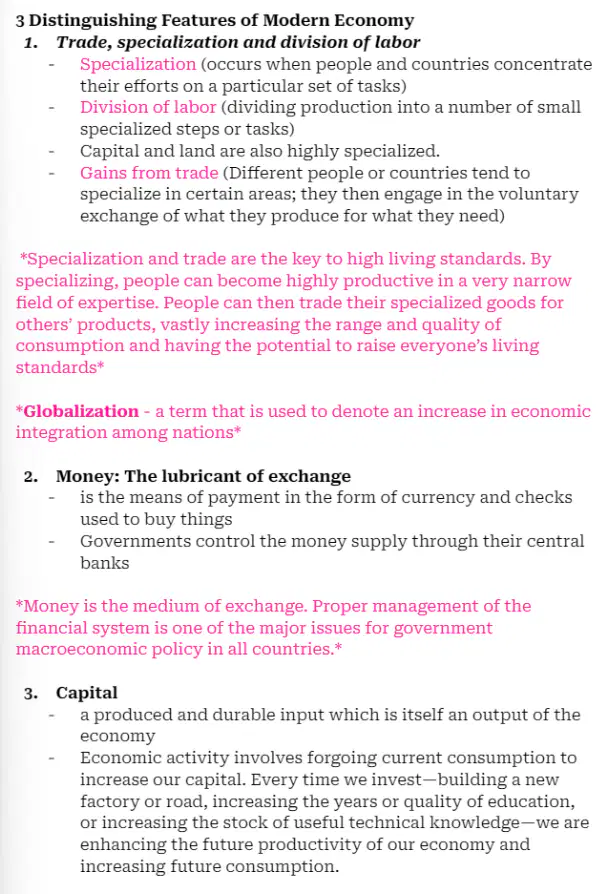
What are the distinguishing features of modern economy?
Trade, specialization and division of labor
Money
Capital
occurs when people and countries concentrate their efforts on a particular set of tasks
(a)
dividing production into a number of small specialized steps or tasks
(a)
Different people or countries tend to specialize in certain areas; they then engage in the voluntary exchange of what they produce for what they need
(a)
Specialization and trade are the key to high living standards.
true
false
a term that is used to denote an increase in economic integration among nations
(a)
is the means of payment in the form of currency and checks used to buy things
(the lubricant of exchange)
(a)
Governments control the money supply through their _____ ____.
(a)
a produced and durable input which is itself an output of the economy
(a)
Visible Hand of the Government
3 main economic functions of government in market economy
increase efficiency
by promoting competition, curbing externalities like pollution, and providing public goods.
promote equity by using tax and expenditure programs
to redistribute income toward particular groups.
foster macroeconomic stability and growth
reducing unemployment and inflation while encouraging economic growth—through fiscal and monetary policy.
main economic functions of the government
increase efficiency
promote equity
foster macroeconomic stability and growth
Governments increase efficiency by
promoting competition
curbing externalities
providing public goods
Governments promote equity by
using tax
using expenditures
redistribute income toward particular groups
providing public goods
Governments foster macroeconomic stability and growth by
reducing unemployment
reducing inflation
encouraging growth through fiscal and monetary policy
A market in which no firm or consumer is large enough to affect the market price
(a)
Types of Market Failures (promote inefficiency)
Imperfect Competition
Externalities
occurs when a buyer or seller can affect a good’s price
Extreme case is monopoly (sole supplier who determines the price alone)
(a)
Government intervention to do for imperfect competitions
antitrust laws
Reduce barriers to entry
Encourage competition
occur when firms or people impose costs or benefits on others outside the marketplace
(a)
What type of externality:
pollution
positive
negative
Type of externality:
public goods, national defense
positive
negative
commodities which can be enjoyed by everyone and from which no one can be excluded
(a)
The government use (a) to gain revenue to pay for public goods
Concept wherein the market can efficiently produce even if there is inequality
(a)
Government Intervention for inequality:
aggressive taxation
transfer payments
By careful use of fiscal and monetary policies, governments can affect output, employment, and inflation
true
false
policy that involves the power to tax and the power to spend
(a)
policy that involves determining the supply of money and interest rates; these affect investment in capital goods and other interest-rate -sensitive spending
(a)
denotes the growth in a nation’s total output
(a)
represents the output per unit input or the efficiency with which resources are used
(a)
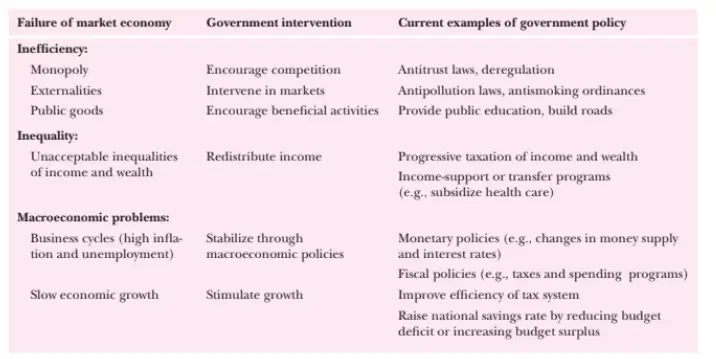
Failures of market economy
inefficiency
inequality
macroeconomic problems
This relationship between price and quantity bought is called the
(a)
Law of downward-sloping demand
When the price of a commodity is raised (and other things are held constant), buyers tend to buy less of the commodity. Similarly, when the price is lowered, other things being constant, quantity demanded increases
quantity demanded (a) when price decreases
Quantity Demanded tends to fall as price rises for 2 reasons:
Substitution Effect - buying B (less expensive than A instead of A (expensive)
Income Effect - as price goes up, i find myself poorer; curb consumption
occurs because a good becomes relatively more expensive when its price rises
(a)
A higher price generally also reduces quantity demanded
Price goes up feels like income is not enough
(a)
The fundamental building block of demand
(a)
the sum total of all individual demands
(a)
The ______ ________ curve is found by adding together the quantities demanded by all individuals at each price
(a)
Forces behind the Demand Curve
1. Average Income
2. Population
3. Prices of related goods
4. Tastes or preferences
5. Special Influences (ex. Weather)
high income = (a) demand
high population = (a) demand
Demand for good A tends to be (a)
if the price of substitute product B is low.
Happens when there are changes in factors other than a good’s own price which affect the quantity purchased
(a)
caused by a change in quantity demanded
(a)
The (a) for a commodity shows the relationship between its market price and the amount of that commodity that producers are willing to produce and sell, other things held constant.
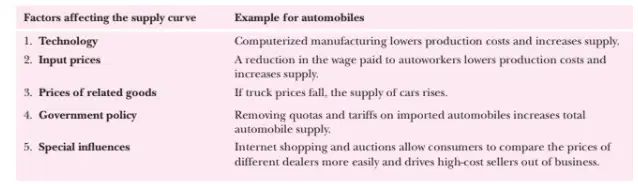
When changes in factors other than a good’s own price affect the quantity supplied
(a)
supply (a) when the amount supplied increases
the price at which quantity demanded equals quantity supplied.
(a)
At that equilibrium, there is no tendency for the price to rise or fall
true
false
Price above the equilibrium
Quantity supplied > Quantity Demanded
(a)
Price below the equilibrium
Quantity supplied < Quantity Demanded
(a)
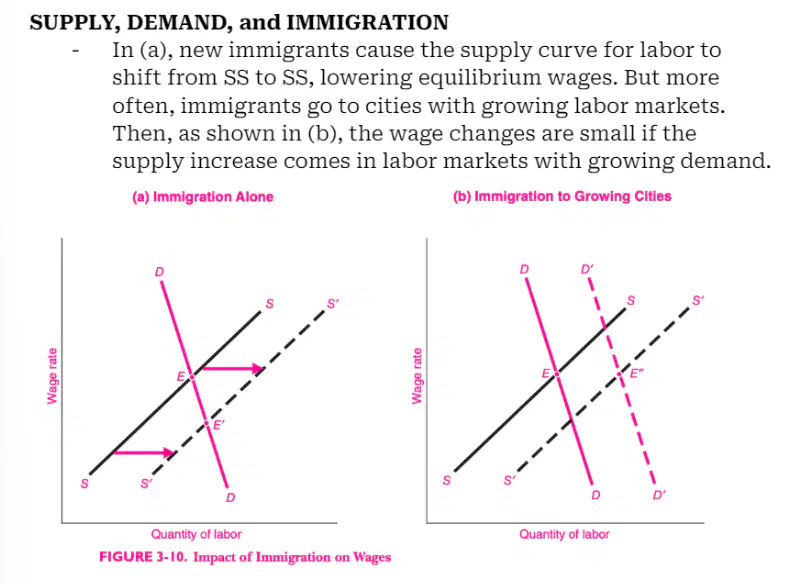
immigrants go to cities with growing labor markets. Thus the wage changes are small if the supply increase comes in labor markets with growing demand.
true
false
The marketplace, through the interaction of supply and demand, does the rationing
true
false
measures how much the quantity demanded of a good changes when its price changes
(percentage change in quantity demanded / the percentage change in price)
(a)
The price elasticities of demand for individual goods are determined by the economic characteristics of demand
Luxury Goods
elastic demand
inelastic demand
Necessities
elastic demand
inelastic demand
Luxury Goods
Elastic Demands
Inelastic demands
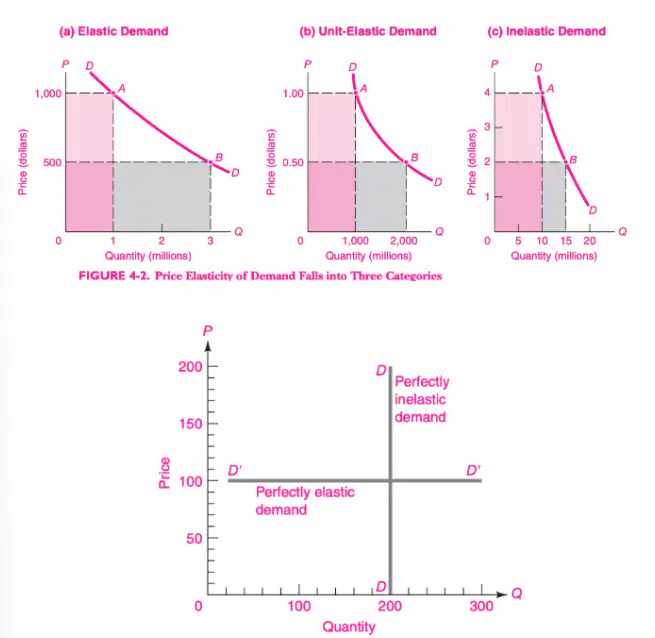
Value of Elasticity:
Price ELASTIC
(a)
Value of Elasticity:
Unit ELASTIC
(a)
Value of Elasticity:
Price INELASTIC
(a)
Value of Elasticity:
perfectly INELASTIC
(a)
Value of Elasticity:
perfectly ELASTIC
(a)
Elasticity is the same as slope
true
false
Total revenue when price change based on Elasticity
price-inelastic, a price decrease reduces total revenue.
price-elastic, a price decrease increases total revenue.
unit-elastic demand, a price decrease leads to no change in total revenue.
When demand is price-inelastic, a price decrease (a) total revenue.
When demand is price-elastic, a price decrease (a) total revenue.
In unit-elastic demand, a price decrease leads to (a) in total revenue.
the practice of charging different prices for the same service to different customers
(a)
the percentage change in quantity supplied divided by the percentage change in price
(a)
“The good weather and bumper crops have lowered their and other farmers’ incomes . “
(a)
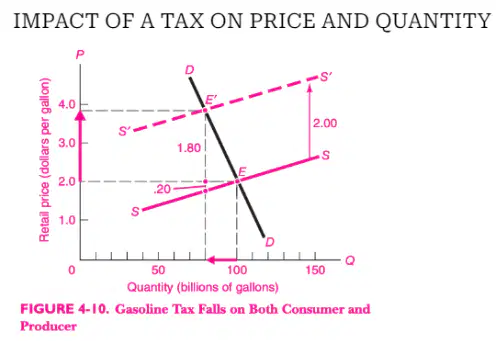
The consumer bears most of the burden, because supply is relatively price-elastic whereas demand is relatively price-inelastic.
true
false
If taxes are used to discourage consumption of a commodity, (a) are used to encourage production
A tax is shifted forward to (a) if the demand is inelastic relative to supply.
A tax is shifted backward to (a) if supply is inelastic relative to demand.

