
 Worksheets
PC: Unit 3A Day 1 Activity
Total questions: 38
Worksheet time: 34mins

1. A portion of the graph of the periodic function g is shown above. What is the least possible value of the period of g?
(a)

a. Using the graph above, find g(9).
(a)

Using the graph above, find g(-12).
(a)

Using the graph above, find g(29).
(a)
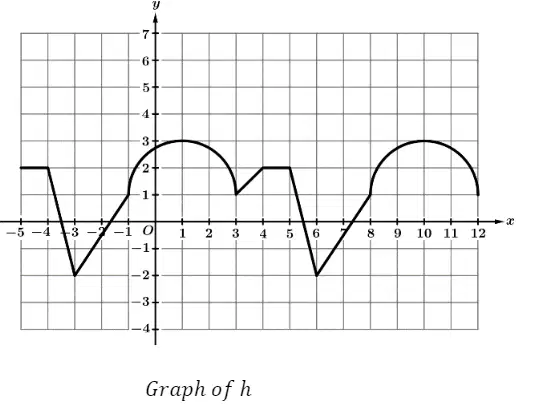
A portion of the graph of the periodic function h is shown above. What is the least possible value of the period of h?
(a)
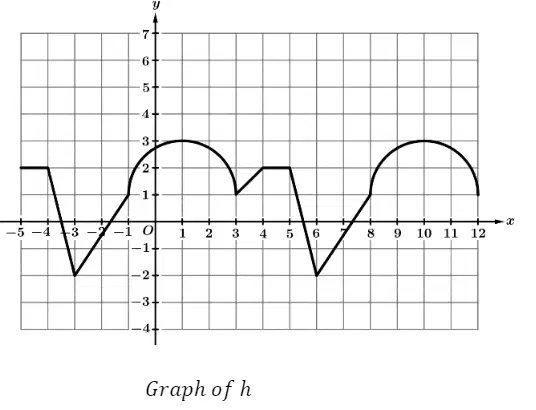
Using the graph of h above, find h(13).
(a)

Using the graph of h above, find h(-12).
(a)

Using the graph of h above, find h(82).
(a)

A portion of the graph is shown above. What is the least possible value of the period of f? (type the word pi for Π)
(a)
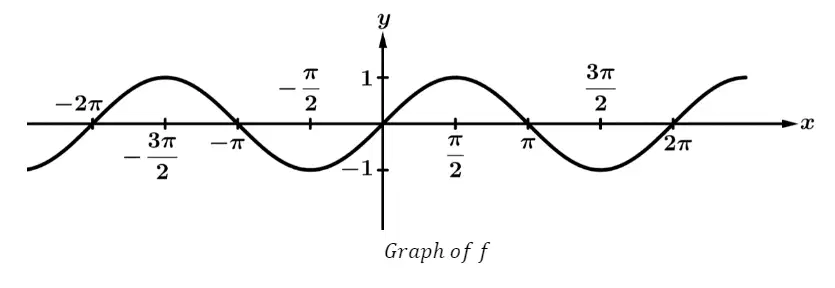
Using the graph of f above, find the value for f(10π).
(a)

Using the graph of f above, find the value for f(-5π).
(a)

Using the graph of f above, find the value for f(9π/2).
(a)

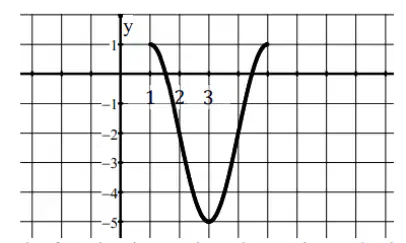
Two complete cycles of the periodic function k are shown above. What is the period of k (type pi for π when necessary).
(a)

Using the graph of h above, find the k(3π)
(a)

Using the graph of k above, find the value for k(5π/4).
(a)

Using the graph of k above, find the value for k(-5π/2).
(a)

The graph of f is periodic with a period of 7. Values of f are shown at the selected values of x. Find f(8).
(a)

The graph of f is periodic with a period of 7. Values of f are shown at the selected values of x. Find f(-6).
(a)

The graph of f is periodic with a period of 7. Values of f are shown at the selected values of x. Find f(f(10)).
(a)

The graph of f is periodic with a period of 7. Values of f are shown at the selected values of x. Find f(7k+4).
(a)

The graph of g is periodic where g(x+10)=g(x). Values of g are shown at the selected values of x. Find g(27)
(a)

selected values of x. Find g(-7)
(a)

selected values of x. Find g(g(10))
(a)

selected values of x. Find g(10k-3)
(a)

Is the function increasing, decreasing, or both on the interval 52<x<56?
increasing
decreasing
both

Is the function concave up, concave down, or both?
concave up
concave down
both

Is there a relative max, relative min, or neither at the point x =44?
relative max
relative min
neither

Is the function increasing, decreasing, or both on the interval 25<x<27?
increasing
decreasing
both

Is the function concave up, concave down, or both on the interval 34<x<36?
concave up
concave down
both
Is there a relative max, relative min, or neither at the point x =47?
relative max
relative min
neither

Is the function increasing, decreasing, or both on the interval 22<x<23?
increasing
decreasing
both

Is there a relative max, relative min, or neither at the point x=30?
relative max
relative min
neither

Using the graph given to you on your worksheet for 11(A) and the picture above, type the coordinates for F
(a)

Using the graph given to you on your worksheet for 11(A) and the picture above, type the coordinates for G
(a)
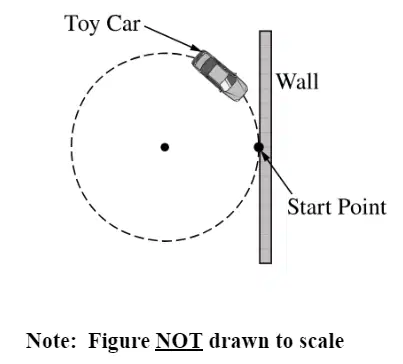
Using the graph given to you on your worksheet for 11(A) and the picture above, type the coordinates for J
(a)

Using the graph given to you on your worksheet for 11(A) and the picture above, type the coordinates for K
(a)

Using the graph given to you on your worksheet for 11(A) and the picture above, type the coordinates for P
(a)

Referring to the graph above for question 11A, the t-coordinate of J is t1 and the t-coordinate of K is t2 . On the interval (t1, t2), which of the following is true about d?
d is a positive and increasing
d is positive and decreasing
d is negative and increasing
d is negative and increasing

