
NEW
Font size
 Worksheets
M12.3 VIBRATION TYPES AND VIBRATION REDUCTION METHODS
Total questions: 28
Worksheet time: 9mins
What is vibration?
A) Linear motion
B) Oscillatory motion
C) Rotational motion
What can contribute to wear of mechanical, electronic, and airframe components due to vibration?
A) Low exposure
B) High exposure
C) Medium exposure
What defines forcing frequencies on helicopters?
A) Component rotation speeds and characteristics
B) Fuel load
C) Passenger comfort
Vibrations can accelerate wear and tear on various components of the helicopter, including the rotor blades, engine, transmission, and other critical parts, but they do not affect the stability and handling characteristics of the helicopter.
True
False
What is the primary source of vibratory forces on helicopters?
A) Aerodynamic Forces and Unbalanced components
B) Aerodynamic Forces and Structural configuration
C) Unbalanced components and Structural Configuration
Vibrations in helicopters are usually classified into two main groups: low frequency and high frequency.
True
False
Which type of vibration is associated with an unbalanced condition in helicopters?
A) High and medium frequency vibration only
B) Medium frequency vibration only
C) All types of frequency vibration
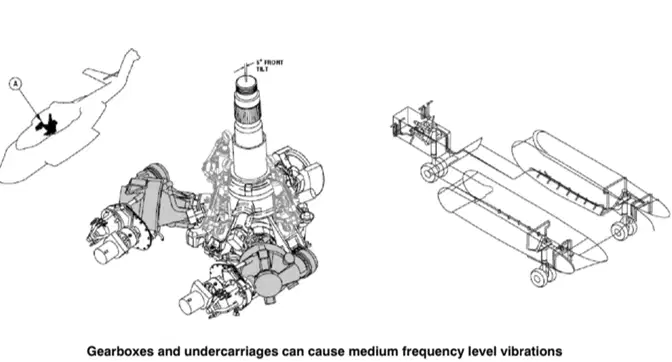
At what range do medium-frequency vibrations occur in helicopters?
What is the most common type of low-frequency vibration associated with the main rotor?
High-frequency vibrations, perceived as a buzz, typically affect the main rotor, engine, and drive train systems.
True
False
What is the most important reason for minimizing vibration in helicopters?
To reduce wear and tear on mechanical, electronic, and airframe components.
To increase noise pollution in populated areas
To increase fuel consumption and reduce fuel efficiency.
High-frequency vibrations are distinguishable only as a buzz and sometimes felt as a tingling sensation.
True
False
What is the potential consequence of allowing excessive vibrations in helicopters?
Why is it important to control vibrations in helicopters?
A) To increase wear factors
B) To reduce crew efficiency
C) To improve safety, comfort, and reliability
Unbalanced components and aerodynamic forces are not the main causes of helicopter vibrations.
True
False
What is a active vibration reduction methods?
A) Absorbers
B) Fuselage anti-vibration device
C) Isolators
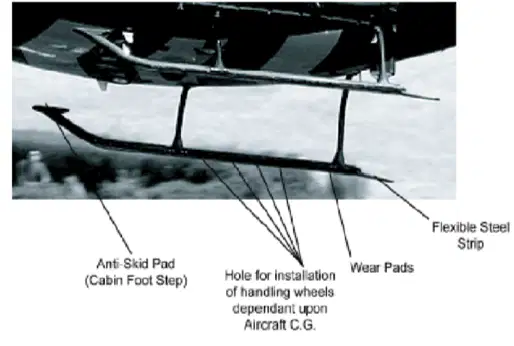
What is the purpose of the skid type undercarriage with dampers?
A) Reduce vibrations on the ground
B) Increase rotor speed
C) Enhance aerodynamic forces
Which component helps in reducing inplane forces transmitted from the rotor to the fuselage in helicopters?
A) Hydraulic dampeners
B) Pendulum vibration absorbers for main rotors
C) Tuned-mass absorber
Controlling vibrations in helicopters is not crucial for enhancing crew efficiency, passenger comfort, and aircraft equipment reliability.
True
False
Vibrations can accelerate wear and tear on various helicopter components, including the rotor blades, engine, transmission, and other critical parts.
True
False
What is the main function of the Active Vibration Control (AVC) system?
A) Reduce fuselage vibration
B) Increase vibrations
C) Synchronize rotor speed
What is the purpose of the MGB Attachment and Suspension system in helicopters?
A) Transmit vibrations to the entire structure
B) Increase the weight of the rotor
C) Filter vibrations to prevent transmission
What is the purpose of the Anti-Resonance Rotor Isolation System?
A) To increase main rotor loads
B) To reduce loads and vibrations from the main rotor
C) To enhance vibrations transmitted to the fuselage
What is the impact of vibrations on the stability and handling characteristics of the helicopter?
Discomfort, fatigue, and adverse health effects
Difficulty in controlling the aircraft, making it challenging for the pilot to maintain a stable and precise flight path
Accelerated wear and tear, leading to premature failure and increased maintenance requirements
What are the potential solutions for minimizing vibrations in helicopters?
Regular maintenance practices, training programs, and technology integration
Advanced rotor balancing, innovative aerodynamics, and enhanced monitoring systems
Both A and B
What are the three general areas of high-frequency vibration?
The tail rotor, engine, and drive train systems.
The main rotor, engine, and drive train systems.
The main rotor, tail rotor, and engine.
Controlling vibration in helicopters is crucial for several reasons, as excessive vibration can have significant implications on the safety, performance, and lifespan of the aircraft.
True
False
Vibrations can cause discomfort and fatigue for occupants, reducing their comfort and ability to perform tasks, but they do not contribute to the increased maintenance requirements of the helicopter.
True
False

