
 Worksheets
Atomic Structure and Mass Defect
Total questions: 15
Worksheet time: 14mins
The charge of protons
Positive
Negative
Neutral
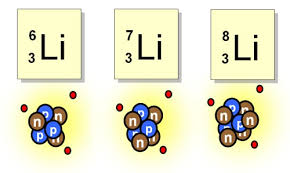
What does the atomic number tell us?
# of protons in an atom
# of neutrons in an atom
# of protons PLUS neutrons in an atom
What does the mass number tell us?
# of protons in an atom
# of neutrons in an atom
# of protons PLUS neutrons in an atom

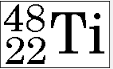
What does the 6 represent?
Atomic mass
atomic number
chemical symbol
element name

As the binding energy of a nucleus increases, the
energy required to separate the nucleus into
nucleons _____.
decreases
increases
stays the same
becomes negative to positive
The atom 714𝑁 has a mass of 14.0031 𝑢.
The mass defect equals ______.
m_p = 1.0073u, m_n = 1.0087 u
0.1089 u
0.2026 u
0.2341 u
0.0031 u
Mass defect is ..
the sum of parent particles and daughter particles
the difference of mass of parent particles and daughter particles
the sum of daughter particles
the sum of parent particles

The equation above shows uranium-238 decaying into thorium-234 by emitting alpha particle.
Given that the mass of uranium-238 is 238.0508 amu, thorium-234 is 234.0426 amu and helium is 4.0026 amu.
What the value of the mass defect in amu?
0.056 amu
0.0056 amu
0.0026 amu
0.026 amu
As the binding energy of a nucleus increases, the
energy required to separate the nucleus into
nucleons _____.
decreases
increases
stays the same
becomes negative to positive
Which of the following statements is/are correct
regarding the binding energy of the nucleus.
I. It is equivalent to the mass defect
II. It is the energy that holds the nucleus
together
III. It is the energy required to remove a
proton from the nucleus
I only
II only
III only
I and II only
The mass defect for an isotope is 0.00410 amu. The value of its binding energy is
3.82 MeV
3.82 J
8.32 MeV
8.32 J
Nuclear binding energy is
the energy required to overcome the electrostatic force between the protons in the nucleus
energy equivalent of the mass of the protons in the nucleus
the energy equivalent of the mass of all the nucleons in the nucleus
the energy equivalent of the difference between the total mass of the individual nucleons and their mass when they are contained in the nucleus

